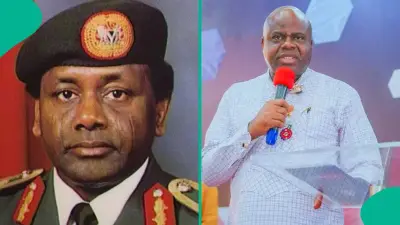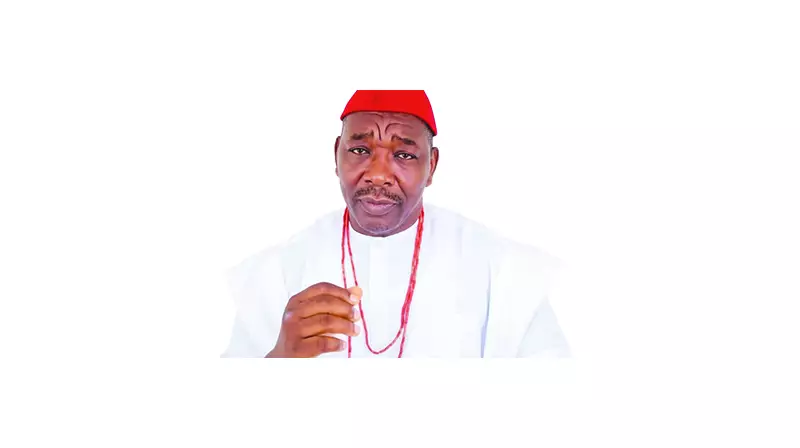
In a rare and extensive interview, Ambassador Thomas Aguiyi-Ironsi, a former Minister of Defence and seasoned diplomat, has addressed the pressing issues facing Nigeria, from ethnic tensions and international relations to security and governance. Speaking with journalist Oludare Richards, Aguiyi-Ironsi provided a candid assessment of the nation's challenges on the eve of the 60th anniversary of his father's assassination.
A Diplomatic Alarm: Nigeria's CPC Designation
Aguiyi-Ironsi expressed deep concern over the recent decision by the United States to designate Nigeria as a "Country of Particular Concern" (CPC) due to alleged violations of religious freedom. He described the move as a "diplomatic alarm" signalling serious international scrutiny of Nigeria's human rights record and rule of law.
He argued that the designation was a preventable outcome of failed proactive diplomacy. "When a country of Nigeria’s size has no ambassador in Washington during such deliberations, it signals institutional negligence," he stated. To reverse the status, he recommended immediate steps including appointing respected ambassadors, engaging the U.S. Congress, and implementing concrete domestic reforms on interfaith protection and justice for victims of violence.
Addressing Agitation and the Case of Nnamdi Kanu
On the renewed agitation in the South-East linked to the continued detention of IPOB leader Nnamdi Kanu, Aguiyi-Ironsi urged a shift from a purely legalistic to a statesmanlike approach. He framed Kanu's detention as a symbol of wider frustration among a people who feel unheard.
"Agitation thrives where dialogue fails," he noted. He suggested that releasing Kanu under conditions of national dialogue could be a step towards healing rather than chaos, emphasising that justice must be seen to be done.
"Igbos Don't Hate Nigeria" - A Call for Justice and Inclusion
Directly confronting narratives of ethnic hatred, Aguiyi-Ironsi firmly rejected the idea that Igbos hate Nigeria or that Yorubas hate Igbos. "What we see in Nigeria is not hatred; it is historical hurt that has never been properly healed," he explained.
He asserted, "Absolutely, the Igbos don’t hate Nigeria. But they are frustrated that Nigeria hasn’t loved them back fairly." He argued that the solution lies in building a foundation of equity, fairness, and inclusion in governance, which would naturally dissolve mistrust.
On other critical issues, the former minister:
- Supported special seats for women in politics as a necessary corrective measure for decades of exclusion.
- Assessed that Nigeria's security challenges are hybrid threats rooted in poverty, injustice, and weak governance, not solvable by military means alone.
- Urged a balanced approach to Artificial Intelligence (AI), viewing it as a tool for progress in agriculture and healthcare, but warning it could deepen inequality without proper human development.
Reflecting on History and a Father's Legacy
Addressing the events of 1966, Aguiyi-Ironsi dismissed the characterization of the January 15 coup as an "Igbo coup," calling it an intellectually dishonest narrative used to divide the nation. He stated he carries no bitterness over the counter-coup that killed his father, Nigeria's first military Head of State, Major General Johnson Aguiyi-Ironsi, but instead a conviction for Nigeria to learn from its past.
"His greatest lesson is simple: Leadership is service, not privilege," Aguiyi-Ironsi said of his father. "He envisioned a Nigeria where merit would matter more than tribe, and justice would speak louder than power. That dream remains unfinished." He concluded that the best tribute to all patriots is to build a Nigeria that finally deserves their sacrifice.