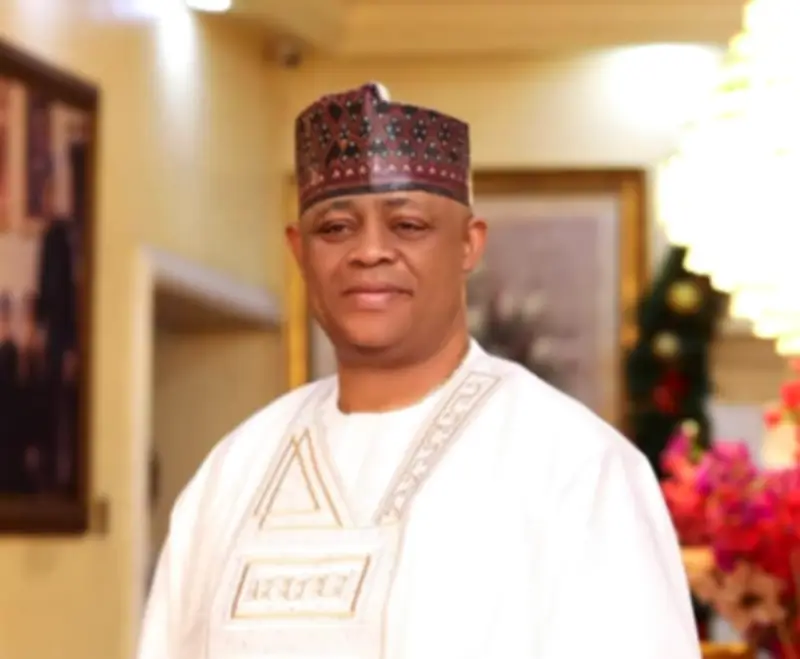
In a robust rebuttal to South Africa's Minister Khumbudzo Tshaveni, former Nigerian Minister Femi Fani-Kayode has declared that Nigeria is not a nation of drug dealers but a proud, resilient people with a noble heritage. Writing in response to remarks that seemingly painted Nigerians in a negative light, Fani-Kayode, who is also the Ambassador-Designate of Nigeria to South Africa, offered a history lesson to set the record straight.
A Legacy of Sacrifice and Struggle
Fani-Kayode reminded the minister that Nigeria's commitment to the liberation of South Africa is unmatched. He highlighted that under General Murtala Mohammed, Nigeria formally joined the 'front line states' against Apartheid, deploying 13,000 troops to battle Apartheid forces from bases in Tanzania, Zambia, Mozambique, and Angola. At the 1975 OAU summit in Addis Ababa, Mohammed delivered the powerful 'Africa Has Come of Age' speech, where he famously told US President Gerald Ford to 'shut up' and 'go to hell' after Ford attempted to dictate terms to African leaders.
Quoting from that historic address, Fani-Kayode recalled Mohammed's words: 'When I contemplate the evils of Apartheid, my heart bleeds... Africa has come of age. It is no longer under the orbit of any extra-continental power. It should no longer take orders from any country, however powerful.' The speech, Fani-Kayode noted, inspired African leaders to reject Western interference and intensify the struggle.
Unwavering Support for South Africa's Freedom
Fani-Kayode detailed Nigeria's continued support after Mohammed's assassination in 1976. General Olusegun Obasanjo, his successor, refused to shake the hand of British PM James Callaghan due to UK's support for the Apartheid regime. Nigeria nationalised British Petroleum and expelled Barclays Bank, imposed a 'Mandela Tax' on civil servants, and provided free education and passports to black South Africans. According to the South African Institute of International Affairs, Nigeria contributed no less than $61 billion between 1960 and 1994 to the anti-Apartheid struggle.
Both Nelson Mandela and Thabo Mbeki lived in exile in Nigeria. Mandela stayed in Ukpor, Anambra State, in 1962-63, while Mbeki lived in Nigeria from 1977 to 1984. Nigerian schoolchildren raised over $10 million by sacrificing their lunch allowances. Nigeria also chaired the UN Special Committee Against Apartheid and was instrumental in expelling South Africa from the Commonwealth and international sports.
Economic Realities and Contributions Today
Fani-Kayode pointed out that Nigeria continues to support South Africa's economy, being one of three countries providing 90% of its energy needs. Nigerian immigrants contribute 9% to South Africa's GDP, despite making up only 6.5% of the population, according to the Institute for Security Studies and the University of Johannesburg. He contrasted Nigeria's ownership of its resources with South Africa's, where 70% of land, 80% of the economy, and 90% of wealth are controlled by a white minority constituting just 7.2% of the population.
Highlighting Nigeria's achievements, Fani-Kayode noted that Nigeria has the largest oil refinery in Africa, the first and second largest cement factories, and the highest number of private jets (240). Nigeria's military is three times the size of South Africa's, and the country boasts the richest black man on the planet and four of Africa's 23 billionaires. He also cited Nigeria's educational milestones: the first African university graduate (Olu Atuwatse I, 1611), the first African lawyer (Christopher Sapara Williams, 1879), and the first African woman to attend Oxford (Kofoworola Aina Ademola, 1935).
A Final Word to Minister Tshaveni
Fani-Kayode concluded by reiterating that Nigeria is 'not a nation of drug dealers but a nation of strong-willed, determined, hard-working, versatile, resourceful, courageous, and resilient men and women.' He asserted that Nigeria's history and contributions to Africa's liberation are a source of pride and should not be diminished by misguided comments.