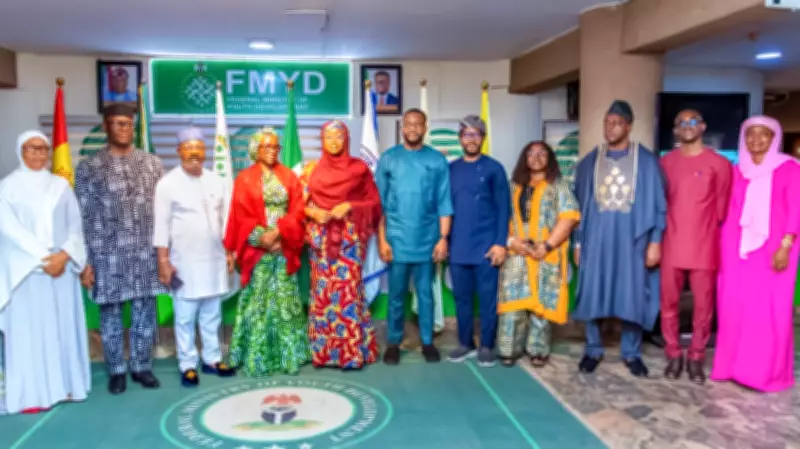
The Federal Government and key development partners have called for deliberate investments in the Nigerian boy-child through mentorship, emotional support, and value-driven leadership programs. This appeal was made in Abuja during the second edition of the Boy-Child Roundtable Mentorship Programme, organized by the Federal Ministry of Youth Development to mark the International Day of the Boy Child.
Event Highlights
Themed “Champions of Change: Growth, Grit and Global Impact,” the event gathered government officials, youth advocates, development partners, private sector leaders, and students to discuss the future of Nigerian boys and the need for intentional guidance in shaping responsible men.
Speaking on behalf of the Minister of Youth Development, Comrade Ayodele Olawande, the Permanent Secretary of the ministry, Dr. Maryam Ismaila Keshinro, emphasized that Nigerian boys require “deliberate guidance, strong role models, and safe spaces” to openly discuss their dreams, fears, and aspirations. She noted that the mentorship dialogue was designed to foster “honest conversations where real learning can happen,” moving beyond formal lectures.
“We recognize that in today’s rapidly changing world, our young boys need deliberate guidance, strong role models, and safe spaces to talk about their futures, their challenges, and their dreams,” she stated. Keshinro stressed that the initiative aligns with President Bola Tinubu’s Renewed Hope Agenda on youth empowerment and social inclusion, highlighting that mentorship is critical to raising emotionally intelligent and responsible young men. She added, “Teach the boys that vulnerability is a strength, and that compassion is their greatest armour.”
Government and Partner Perspectives
Earlier, Emmanuel Okonkwo, Director of Youth, Health, Mental and Psychosocial Affairs in the ministry, said the government is intentionally creating platforms where boys can learn resilience, discipline, and leadership. He explained that the mentorship initiative aims to nurture “responsible, resilient, and value-driven young boys” who can contribute positively to their families and communities. “We recognize that young boys require positive role models and platforms where they can openly discuss their aspirations, challenges, and responsibilities,” Okonkwo said. He urged participants to listen closely to mentors’ experiences and remain focused on building positive values.
Development partners warned that neglecting boys in conversations about gender and social development could undermine efforts to build safer communities. Laban Bako, Head of Social Development at Plan International Nigeria, recounted a distress call from a young female intern allegedly forced out of her residence by a male partner, arguing that many harmful behaviors stem from a lack of mentorship and emotional guidance for boys. “For us in Plan International, everything has largely been about the girl-child, but we must also ask ourselves, who are the perpetrators of violence against girls? They are boys who were never guided,” he said.
Bako stressed the need for balanced interventions supporting both girls and boys, warning that empowering girls alone without addressing boys’ behavior and mindset would yield limited results. “We have empowered the girls, yes, but have we sat down one day to intentionally talk to boys? Have we deliberately created mentors they can look up to?” he queried. He disclosed that Plan International operates “Male Champions” community engagement groups to mentor boys and address issues such as gender-based violence and mental health.
Similarly, Dr. Israel Olajumoke, CEO of House of Destiny Global Services, said investing in boys is an investment in societal stability. “We believe that investing in the boy-child is an investment in the very fabric of our society,” he said. Olajumoke cited a success story from the maiden edition, where a participant developed animation skills and established a media hub in his school after receiving mentorship. “It proves that when you give a young man the right guidance and tools, his potential is limitless,” he added.
Chima Enesopoli, Programmes Officer of the Girls and Youth Reintegration Network (GYRIN), emphasized that building an equitable society requires equal investment in boys and girls. “We cannot build a balanced, safe, and equitable society by leaving half of our youth behind,” he said. According to him, resilience and emotional intelligence are essential qualities for boys navigating social and economic challenges.
Gender Inclusion and Success Stories
Kehinde Charity Awujoola, Senior Special Assistant to the Honourable Minister of Youth on Gender Matters, argued that gender inclusion should not be reduced to advocacy for girls alone. “Often when people hear the word gender, they think we are only talking about girls. But true gender mainstreaming means supporting our young women and also helping boys redefine masculinity through accountability, emotional intelligence, and positive leadership,” she said. Awujoola recalled a participant from the previous edition who developed advanced digital storytelling skills and later established a student media hub to train his peers. “He is the living definition of a champion of change,” she said.
The event featured spoken word performances, mentorship conversations, and interactive sessions between students and mentors from the public and private sectors. Spoken word artist Ifeoluwa Daniel delivered a performance titled “The Voice of the Pressurised Nigerian Boy,” lamenting societal expectations that force boys to suppress emotions and “become men before leaving childhood behind.” He recited, “I was told to be strong before I learned to stand up. Men don’t cry, so I buried my pain where it won’t survive.”
Participants engaged mentors on topics including education, entrepreneurship, self-confidence, and gender equality. Rinsola Abiola, Senior Special Assistant to the President on Citizenship and Leadership, responded to a question about why society prioritizes girls’ education, explaining that the emphasis aims to correct longstanding inequalities denying girls access to schooling. “There is no gender more important than the other,” she said. “The reason government and advocates emphasize girls’ education is because many families still prioritize boys when resources are limited.”
Abiola Metilelu, CEO of PressPayNg, urged students to see themselves as solution providers rather than victims of circumstance. “Your future is hidden in the problems you are able to solve,” he said. Metilelu shared how financial difficulties once denied him university admission, inspiring him to establish an education financing platform that helps thousands of African students access school funding. “Failure is not the end. Failure is just a bend,” he told the students.
The mentorship programme also included representatives from the National Youth Service Corps (NYSC), Citizens Leadership Training Centre, civil society groups, and youth-focused organizations.