Five Governors Stand Firm Outside APC as Ruling Party Secures 31 States
Nigeria's political terrain is undergoing significant transformation in the lead-up to the 2027 general elections, with the ruling All Progressives Congress (APC) now asserting control over 31 out of the country's 36 states. This development follows a wave of defections by governors from various opposition parties, consolidating the APC's dominance across the nation.
The party recently underscored this commanding position through a post on its official X (formerly Twitter) account, featuring the inscription "31/36". This symbolic message highlights that only a handful of states remain under the governance of politicians outside the APC's expanding influence.
The Holdout Governors: Who They Are and Where They Stand
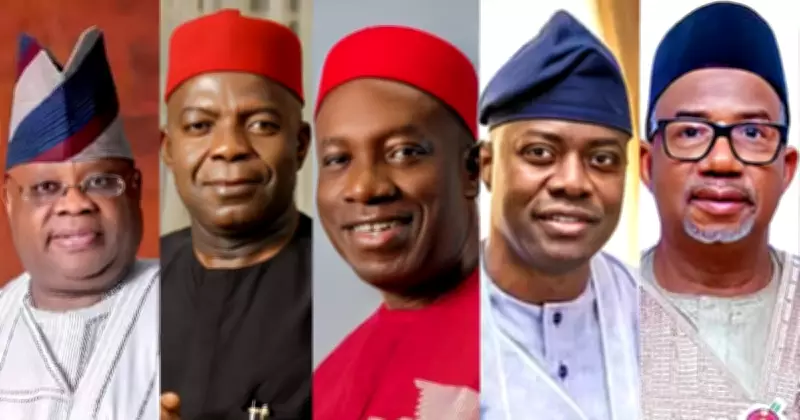
With numerous governors reportedly crossing over to the APC in recent months, political attention has sharply focused on the few state executives who have resisted joining the ruling party. Here are the five governors who continue to operate outside the APC framework and the political parties they currently represent:
- Bala Mohammed — Bauchi State (PDP): Governor Bala Mohammed of Bauchi State remains a steadfast member of the Peoples Democratic Party (PDP). He is a prominent figure within the opposition, having previously served as chairman of the PDP Governors' Forum. Mohammed stands as one of the key voices advocating for the PDP's continued relevance despite recent defections to the APC.
- Seyi Makinde — Oyo State (PDP): Oyo State Governor Seyi Makinde is another PDP governor who has not aligned with the APC. Makinde has consistently positioned himself as a leading opposition figure, emphasizing the importance of strengthening the PDP in preparation for upcoming electoral contests.
- Alex Otti — Abia State (Labour Party): Alex Otti, the governor of Abia State, maintains his affiliation with the Labour Party (LP). His victory in the 2023 governorship election was widely interpreted as part of the Labour Party's surge in popularity during the last general election cycle, marking a significant political achievement.
- Charles Soludo — Anambra State (APGA): Charles Soludo, governor of Anambra State, continues to govern under the banner of the All Progressives Grand Alliance (APGA). He secured the 2021 governorship election under this party and has remained with APGA despite the ongoing wave of defections to the APC.
- Ademola Adeleke — Osun State (PDP): Ademola Adeleke, governor of Osun State, also remains a member of the PDP. Adeleke achieved a notable victory by defeating the APC in the 2022 Osun governorship election, thereby keeping Osun among the states not controlled by the ruling party.
Implications of Growing Political Realignment
The diminishing number of opposition governors underscores the expanding political strength of the APC nationwide. Governors hold crucial roles in Nigerian politics due to their control over state political structures, grassroots mobilization networks, and influence in national party negotiations. Consequently, defections by governors can dramatically reshape the political landscape ahead of national elections.
Political analysts suggest that the governors who remain outside the ruling party could emerge as pivotal figures in determining the robustness of the opposition coalition as the 2027 polls approach. With more than a year before the next election cycle gains full momentum, experts anticipate that further political realignments may occur as parties and leaders reposition themselves for the forthcoming contest.
This evolving scenario highlights the dynamic nature of Nigeria's political environment, where alliances and affiliations are continuously negotiated and redefined in anticipation of electoral battles.