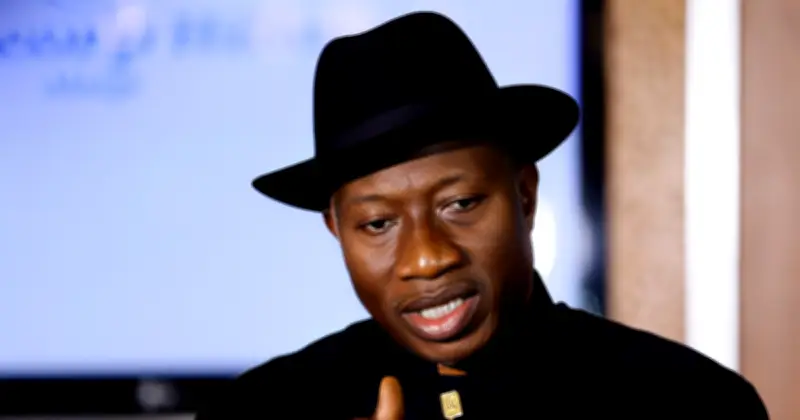
Former Nigerian President Goodluck Jonathan has disclosed that he risked his life by entering a Niger Delta militant camp unarmed while serving as vice president, a move that paved the way for the Niger Delta Amnesty Programme. He made the revelation on Monday while delivering the chairman's address at the De Mangrove Conversation in Yenagoa, an event organized in collaboration with the Bayelsa State Government, the Niger Delta Development Commission, and other stakeholders.
Jonathan ignored security warnings
Jonathan said that as vice president, he was tasked with leading peace negotiations with militant groups that had been disrupting oil facilities across the Niger Delta. To build trust, he decided to visit their camps personally. When militants agreed to receive him but refused armed escorts, Jonathan accepted their terms despite fierce objections from his security detail.
According to Jonathan, the Commissioner of Police in Delta State told him he could not go. The State Director of the State Security Service gave the same warning. But Jonathan went anyway, insisting, 'There must be peace and development in the Niger Delta.'
Unarmed entry into militant camp
Jonathan ordered everyone in uniform to stay behind. He instructed only his Chief Security Officer and Aide-de-Camp to accompany him and directed both men to surrender their weapons to state security officials before entering the camp. 'I told them if we come back alive, you get your guns back and we will go back to Abuja,' he said.
At the camp, Jonathan and his unarmed aides walked through a corridor of armed young men lined up in two rows with assorted rifles. The meeting lasted approximately one and a half hours.
Outcome led to Amnesty Programme
Jonathan said the outcome of that meeting set in motion a chain of events that led directly to the Niger Delta Amnesty Programme, which granted pardons to militants who surrendered their weapons and remains active to this day. He described the engagement as the foundation of the relative peace the region has experienced since, arguing that the willingness to show up without weapons sent a message that dialogue, not force, was the government's true intention.
Personal connection to Niger Delta
Jonathan also spoke about his personal connection to the Niger Delta, recalling how he grew up watching oil facilities develop near his community in Bayelsa State and later worked as an environmental scientist studying the impact of oil exploration across the region before entering politics. He stressed that lasting peace in the Niger Delta depends on addressing decades of environmental degradation and neglect, describing the region's development as a national priority that successive governments must take seriously.