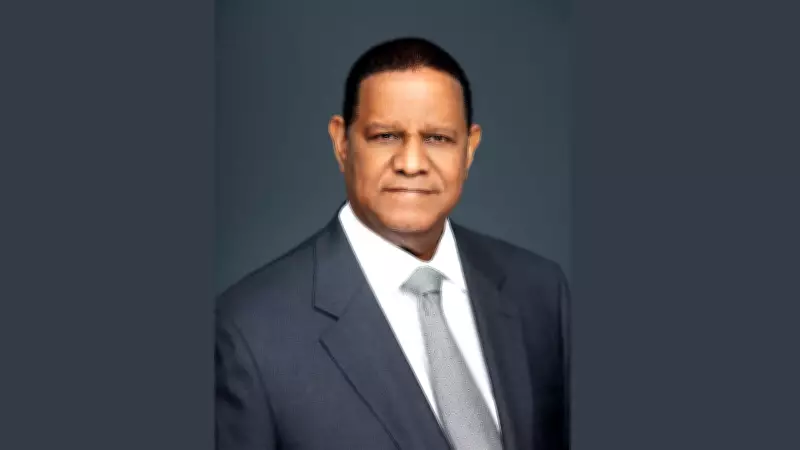
Presidential aspirant Mohammed Hayatu-Deen has detailed his approach to addressing Nigeria's security challenges, emphasizing that the crisis is intertwined with the economy. He argued that when farmers cannot access their fields, food prices increase; when traders cannot transport goods, the cost of living rises; and when young men lack employment, criminal networks gain recruits. Insecurity, he noted, fuels poverty, and poverty fuels insecurity. To break this cycle, Nigeria must restore state authority.
Hayatu-Deen stated that he has spent years studying this cycle and outlined actions he would take from his first day in office if elected. He would designate specific groups as terrorist organizations using Section 54 of the Terrorism Prevention Act, which grants the President that power. Groups such as Yan Bindiga, ISWAP-affiliated kidnapping syndicates, and other identifiable criminal networks operating across Nigeria would be formally proscribed. “The Nigerian state must stop treating organized mass violence as ordinary crime,” he said.
He promised to prosecute every bandit, kidnapper, and collaborator under terrorism laws, with accelerated procedures through designated terrorism courts. Light sentences, quiet releases, and cases disappearing into judicial backlog would end. His administration would dismantle the financial networks sustaining terrorism. “The EFCC and CBN will be directed from Day One to identify, freeze, and seize the assets of financiers, ransom collectors, arms suppliers, and money launderers. A joint financial intelligence and telecom surveillance task force will track ransom flows, criminal communications, and interstate kidnapping networks using modern technology and real-time intelligence sharing. You cannot aim to kill the foot soldiers while leaving the treasury intact,” he declared.
Hayatu-Deen vowed to end federal complicity in ransom payments and negotiated amnesties. Not one naira of federal funds would go to proscribed groups. Where state governments seek federal security cooperation, that cooperation would be conditioned on compliance with this policy. “The Federal Government will not legitimize criminal violence by rewarding it with public funds or political concessions,” he asserted.
He promised to rebuild the Multi-National Joint Task Force, restore regional security cooperation, and reform intelligence coordination across all relevant agencies. “Military, police, DSS, immigration, customs, and financial intelligence must stop operating in silos. Nigeria does not only need more force. Nigeria needs better intelligence, better shared, faster acted upon,” he said. He also pledged to strengthen policing capacity nationwide with better training, modern technology, rapid response systems, and tighter coordination between federal and local security structures. “The military cannot permanently police every community in Nigeria. That is not a sustainable security architecture and we will end it,” he added.
Hayatu-Deen promised to launch targeted economic recovery programs in high-risk regions, focusing on young people vulnerable to recruitment by criminal and extremist networks. “Enforcement alone will not hold. Lasting security requires both the rod and the opportunity. These are not long-term aspirations or second-term promises. They are immediate actions. Nigerians have lived with fear for too long. Farmers deserve to farm. Traders deserve to trade. Children deserve to travel safely. Citizens deserve a government that can defend them. It is time to restore order, restore confidence, and restore the authority of the Nigerian state,” he concluded.