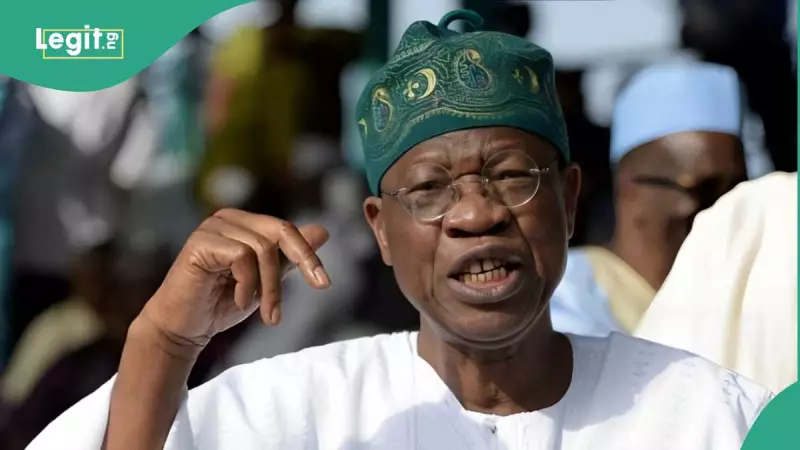
Alhaji Lai Mohammed, the immediate past Minister of Information and Culture, has publicly described the suspension of the social media platform Twitter, now known as X, as one of the most challenging decisions he made while in office.
The Tough Call for National Security
Mohammed made this revelation during the launch of his new book, "Headlines & Soundbites: Media Moments That Defined An Administration," in Abuja on Wednesday, December 17, 2025. He detailed the internal conflict surrounding the decision taken by the administration of the late President Muhammadu Buhari in June 2021.
The former minister acknowledged he was acutely aware of the decision's significant downsides. He highlighted two primary concerns that made it a tough call.
First, was the negative impact on Nigerian entrepreneurs and influencers who relied on the platform for advertising their goods, services, and personal brands to earn a living.
Second, was the damaging optics it created regarding the government's commitment to freedom of expression and the expansion of the democratic space in Nigeria.
Why Public Interest Prevailed
Despite these considerable drawbacks, Mohammed stated that a greater imperative guided the final decision. He explained that "none of the reasons outweighed the threat to national security posed by the irresponsible use of Twitter."
Emphasizing a core principle of governance, the former minister asserted that "in governance, public interest must always take precedence over individual interest." The government's position was that the platform's activities at the time were capable of undermining Nigeria's corporate existence, necessitating the drastic action.
In his book, Mohammed also provides a detailed account of the negotiations that eventually led to an agreement with the platform's owners, resulting in the resumption of its services in Nigeria after a months-long blackout.
Book Sheds Light on Administration's Media Strategy
The launched book promises an insider's perspective on government communication and media management throughout the Buhari administration. Mohammed described it as an account of the media moments that defined that era.
In related revelations from the book and recent interviews, the Kwara-born politician disclosed that he nearly resigned from office during what he termed the toughest period of the Buhari administration, though he did not specify the exact incident.
Furthermore, he recently restated the controversial official position on the 2020 EndSARS protests, describing reports of a massacre at the Lekki Toll Gate in Lagos as "fake news." He argued that five years later, no families had come forward to report relatives missing from the toll gate incident.