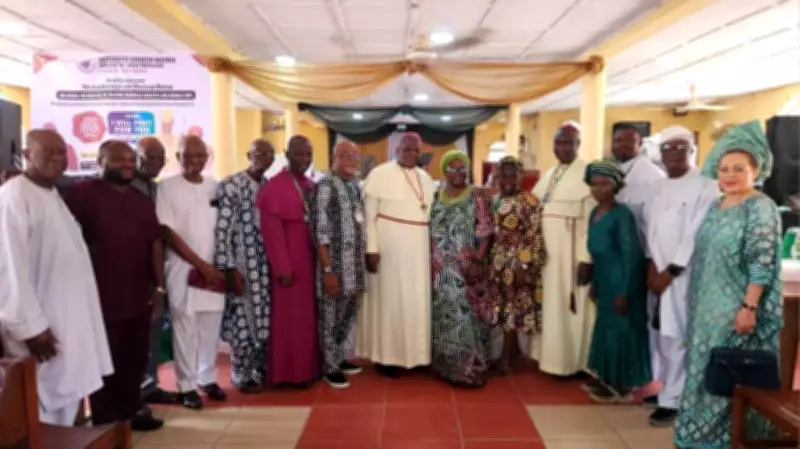
The Methodist Church Nigeria, Diocese of Lagos Mainland, has urged all levels of government to implement inclusive and people-centered policies designed to alleviate the suffering of citizens, particularly the vulnerable. The church also called for transparent and accountable management of public funds, promotion of local production and economic diversification, and increased investment in infrastructure, education, and human capital development. This appeal was contained in a communique issued yesterday at the conclusion of the church's 32nd Synod.
Commendation and Concerns on National Issues
Regarding the state of the nation, the Synod commended the Lagos State Government for improvements in educational and healthcare infrastructure. However, it urged greater attention to community policing and intelligence gathering to combat insecurity. The Synod expressed deep concern over the persistent hardship facing Nigerians, including insecurity, inflation, unemployment, high fuel prices, declining purchasing power, inequality, and unstable electricity supply.
Call for Good Governance and Anti-Corruption
In the communique signed by the Diocesan Lay President, Sir Olusola O. Adu, and the Archbishop and Bishop of Lagos Mainland, His Grace, Most Rev. Dr. Obafemi B. Adeleye, the Synod emphasized that good governance must be built on integrity, accountability, justice, and selfless service. It called for stronger democratic institutions, strict adherence to the rule of law, credible elections, and a sincere fight against corruption. Political leaders were urged to place national interest above ethnic, religious, and personal considerations.
Addressing Insecurity and Root Causes
The Synod described insecurity as a major threat to national stability and economic growth. It urged security agencies to adopt more proactive and intelligence-driven approaches, while the government should address the root causes of insecurity, especially poverty and unemployment. The communique further stressed the need for justice, fairness, inclusion, and peaceful coexistence among all Nigerians, regardless of ethnic or religious differences. It advocated continuous dialogue, reconciliation, protection of human rights, and equal opportunities for all citizens.
Church's Prophetic Role and National Development
The Synod reaffirmed the prophetic role of the Church in speaking truth to authority, defending justice, and offering hope to society. It encouraged the Church to continue contributing to national development through education, healthcare, empowerment programs, humanitarian services, and the promotion of religious tolerance and peaceful coexistence. The Synod noted that despite Nigeria's challenges, the nation could attain peace, unity, and sustainable development through faith in God, responsible governance, justice, and active participation of all citizens. It pledged continued prayers for the peace, progress, and prosperity of Nigeria.
Details of the 32nd Synod
The 32nd Synod was held at Methodist Church Nigeria, Gowon Estate Circuit, Lagos, from Friday, May 1 to Sunday, May 3, 2026, under the leadership of Most Rev. Dr. Obafemi B. Adeleye, alongside the Diocesan Lay President, Sir Olusola O. Adu. The theme was "I Will Fight for You" (Exodus 14:14). After prayerful deliberations on spiritual, ecclesiastical, socio-economic, and national matters, the Synod reaffirmed the Church's commitment to serving as a moral and spiritual guide in society. It acknowledged that although Nigeria is richly blessed with human and natural resources, the nation continues to face serious economic, political, and security challenges. In view of this, the Synod stressed the need for faith in God, responsible leadership, and collective action toward national renewal and development. On spiritual matters, the Synod emphasized the importance of aggressive evangelism and set a vision of winning an additional five million worshippers for Christ by the year 2050. It further recommended that worship services be made more vibrant and spiritually engaging.