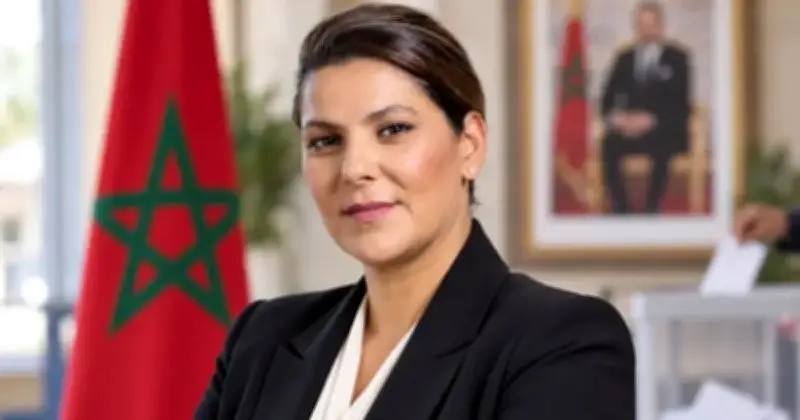
Fatima Ezzahra El Mansouri has been appointed Morocco's first woman prime minister, making her only the second woman to lead a government in the Arab world. King Mohammed VI appointed El Mansouri on Tuesday, September 29, 2026, and tasked her with forming a new government after her Authenticity and Modernity Party (PAM) emerged as the biggest party in Morocco's September 23 parliamentary election.
Morocco officially refers to the position as head of government, although it is commonly described internationally as prime minister. El Mansouri's appointment marks the first time a woman has occupied the position since Morocco established its modern government system.
Historic Appointment After Election Victory
The appointment came after PAM won the largest number of seats in Morocco's 395-member House of Representatives. The party secured 97 seats, but fell well short of the 198 seats needed for a majority, meaning El Mansouri will have to negotiate with other political parties to form a coalition government.
The appointment is also significant because Morocco operates as a constitutional monarchy in which the king remains head of state, while the head of government leads the cabinet and oversees the government's day-to-day administration. Under Morocco's constitutional system, the king appoints the head of government from the political party that wins the most seats in the House of Representatives.
El Mansouri's Political Career
El Mansouri, 50, is a lawyer and experienced politician who has held several prominent positions in Moroccan public life. Before her appointment as head of government, she served as Morocco's minister responsible for national planning, urban planning, housing and urban policy. She also served as mayor of Marrakesh, a position she first won in 2009, making her the city's first woman mayor. She later returned to the position in 2021. She is also a senior figure in PAM, a liberal-centrist party founded in 2008.
Her rise also places her in a particularly small group of women who have headed governments across the Arab world. She becomes only the second woman to serve as prime minister in an Arab country, following Tunisia's Najla Bouden, who served as Tunisia's prime minister from 2021 to 2023.
Challenges Ahead for New Government
El Mansouri's appointment comes at a significant moment for Morocco, with the new government expected to deal with economic pressures, unemployment and public concerns over living standards. The government will also oversee preparations for the 2030 FIFA World Cup, which Morocco will co-host with Spain and Portugal. The tournament is expected to involve major infrastructure and investment projects across the country.
The September 23 election recorded turnout of about 38%, down from roughly 50% in the previous parliamentary election, according to Reuters. The low turnout came amid concerns about economic conditions and frustration among parts of Morocco's population, particularly young people.
El Mansouri now faces the task of turning her party's electoral lead into a functioning government. Because PAM does not have a parliamentary majority, she will need to reach agreements with other parties before she can form her cabinet and begin governing. Her appointment nevertheless represents a major milestone in Moroccan political history, as she becomes the first woman to occupy the country's top government position and only the second woman in the Arab world to lead a national government.