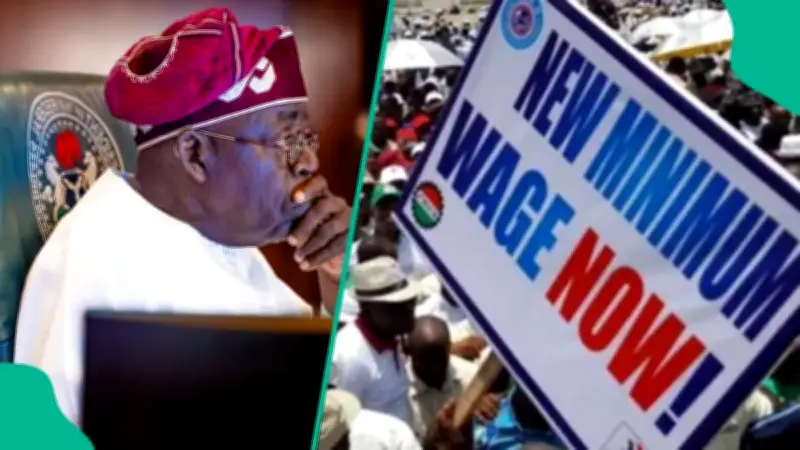
Nigeria has once again reviewed its minimum wage upward, marking the seventh adjustment since 1989, the year of the country's second republic. Alongside the minimum wage, the National Youth Service Corps (NYSC) allowance has also seen periodic increases. The most recent review occurred in 2024, driven by the removal of the fuel subsidy and the unification of Nigeria's foreign exchange rate.
Historical Breakdown of Minimum Wage and NYSC Allowance
The table below shows the progression of Nigeria's minimum wage and NYSC allowance from 1989 to the projected 2026 figures, as reported by The Cable.
- 1989: Minimum wage N250, NYSC allowance N200
- 1998: Minimum wage N3,000, NYSC allowance N200
- 2001: Minimum wage N7,500, NYSC allowance N3,500
- 2011: Minimum wage N18,000, NYSC allowance N19,800
- 2018: Minimum wage N30,000, NYSC allowance N19,800
- 2019: Minimum wage N30,000, NYSC allowance N33,000
- 2026: Minimum wage N70,000, NYSC allowance N77,000
While states like Lagos and Rivers pay salaries above the federal approved minimum, the federal government aligns with the national standard.
Reasons for the Recent Review
The latest adjustment of the minimum wage and NYSC allowance stems from the removal of the fuel subsidy and the unification of Nigeria's exchange rate. These policies led to a sharp increase in the cost of living across the country.
President Bola Tinubu, during a meeting with investors in Paris, defended the subsidy removal, stating it eliminated economic bottlenecks and stabilized the foreign exchange market. He noted that he inherited a near-collapse economy and described the reforms as a serious turnaround.
Criticism from Prominent Figures
Muhammadu Sanusi II, the Emir of Kano, has criticized President Tinubu over continued borrowing despite the subsidy removal. Sanusi questioned why the government still borrows after implementing such reforms, sparking mixed reactions from Nigerians.