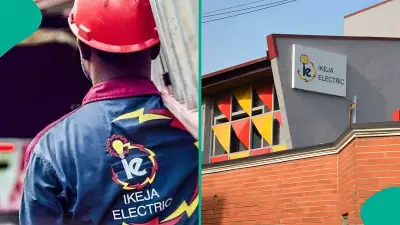
The Northern Elders Forum (NEF) has launched a strong constitutional challenge against the Federal Government's decision to establish the National Gold Refinery in Lagos State. The group condemns the move as a policy that extracts mineral wealth from the North while placing value addition far away in the South-West.
A Constitutional and Economic Intervention
In an open letter dated 18th January 2026 and signed by its spokesperson, Professor Abubakar Jika Jiddere, the NEF addressed President Bola Ahmed Tinubu and the Federal Executive Council. The forum framed its opposition not as a mere protest but as a necessary intervention based on the Nigerian constitution.
The controversy stems from an announcement by the Minister of Solid Minerals Development, Dele Alake, on Tuesday, 13th January. During a meeting with Saudi Arabia's Minister of Industry and Mineral Resources, Alake revealed that a high-purity gold refining plant had begun operations in Lagos. He also noted three other refineries in development and a $600 million lithium plant in Nasarawa State ready for commissioning.
Violation of Federal Character and Derivation
The NEF's letter argues the decision violates the spirit of Section 14(3) of the 1999 Constitution, which enshrines the federal character principle. The forum insists this principle should apply to strategic economic infrastructure, not just political appointments, to prevent marginalising any region.
More critically, the elders cite Section 162(2) on derivation, which entitles resource-bearing areas to a fair share of benefits. "A policy that extracts mineral wealth from one region while systematically locating value addition, industrial jobs, and capital accumulation elsewhere fundamentally contradicts this directive," the letter states. It asserts that denying gold-producing regions the refining benefits reduces derivation to a token exercise.
An Economically Regressive and Unjust Model
The forum compared Nigeria's approach unfavourably to international best practices in countries like Australia, Canada, Ghana, and South Africa, where processing is done near mining sites. It labelled the Lagos siting as "economically regressive" and reminiscent of colonial economics where raw materials are taken from the periphery and wealth accumulated at the centre.
The NEF highlighted that Northern states like Zamfara, Kebbi, Niger, Kaduna, and Katsina endure the environmental and security costs of mining but are bypassed for the skilled jobs and industrial development refining would bring. "This is not an abstract policy choice; it is a lived injustice," the letter read.
The group warned that deepening the existing economic imbalance, with assets clustered in Lagos, fuels political resentment and pushes the federation toward a legitimacy crisis. It pointed out the inconsistency in governments insisting oil refineries be sited near crude sources while refusing the same logic for gold.
Demands and a Warning to Northern Elites
The NEF demanded a decentralised refining framework, insisting that at least one primary gold refinery must be located within Nigeria's northern gold-producing corridor. Lagos could be limited to trading and export functions.
The forum issued a direct warning to northern elites and political leaders, describing the refinery location as a "deliberate act of economic dispossession." It stated that history would remember silence on this matter as betrayal.
In closing, the NEF called its letter a "constitutional warning," urging the government to act out of duty and a commitment to national cohesion, lest it face destabilising political consequences.