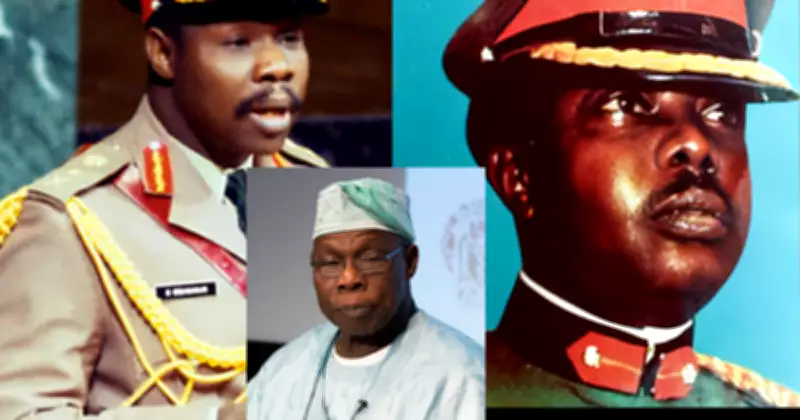
Former Nigerian President Olusegun Obasanjo has admitted that the naivety of his military administration played a significant role in the assassination of General Murtala Muhammad in 1976. In a recent interview with veteran journalist Sonny Irabor on News Central television, Obasanjo reflected on the events that shaped his tenure as both a military and civilian leader.
Naivety and Security Lapses
Obasanjo, who served as deputy to Murtala Muhammad from July 1975 to February 1976, stated that their youthful inexperience led to poor security measures. He noted that Muhammad often drove himself around Lagos with minimal protection, making him an easy target. "Part of our naivety is the way we treated security. Murtala wouldn't have been killed the way he was killed if not for our naivety," Obasanjo said. "Murtala was going around Lagos driving himself as Head of State. Our belief was that we had nothing to fear because we were doing the right thing."
The former president recalled advising Muhammad to avoid driving at night without security, but their confidence in their mission gave them audacity. "We had nothing to fear, and we genuinely believed that we could lift Nigeria up as the leader of the black race," Obasanjo added.
Youth and Inexperience
At the time of their takeover from General Yakubu Gowon in 1975, Murtala Muhammad was 37 years old, and Obasanjo was 38. Their youth and inexperience in governance, Obasanjo suggested, contributed to their naivety. Despite this, they led Nigeria with pan-African nationalism, supporting independence movements in other African nations.
Assassination of Murtala Muhammad
General Murtala Muhammad's eight-month rule ended on February 13, 1976, when he was assassinated in Lagos during a failed coup led by Lt. Colonel Bukar Suka Dimka. The coup plotters sought to reinstall deposed General Yakubu Gowon. Muhammad was killed on his way to work, along with his aide-de-camp, Lieutenant Akintunde Akinsehinwa, and his driver, Sergeant Adamu Michika.
Obasanjo succeeded Muhammad and ruled until 1979, when he handed over power to civilian President Shehu Shagari after the 1979 elections, which saw Chief Obafemi Awolowo and Dr. Nnamdi Azikiwe as contenders.
Legacy of Murtala Muhammad
Murtala Muhammad is remembered for his pan-Africanist policies, including support for Angola and Mozambique's independence and South Africa's anti-apartheid struggle. His portrait appears on the Nigerian 20 naira note, and Lagos International Airport bears his name.