Former President Olusegun Obasanjo has disclosed that, with the benefit of hindsight, he would not have chosen the same running mate for the 1999 presidential election. The former leader made this revelation on Friday during a fireside conversation with veteran entertainer and activist Charles “Charly Boy” Oputa in Lagos.
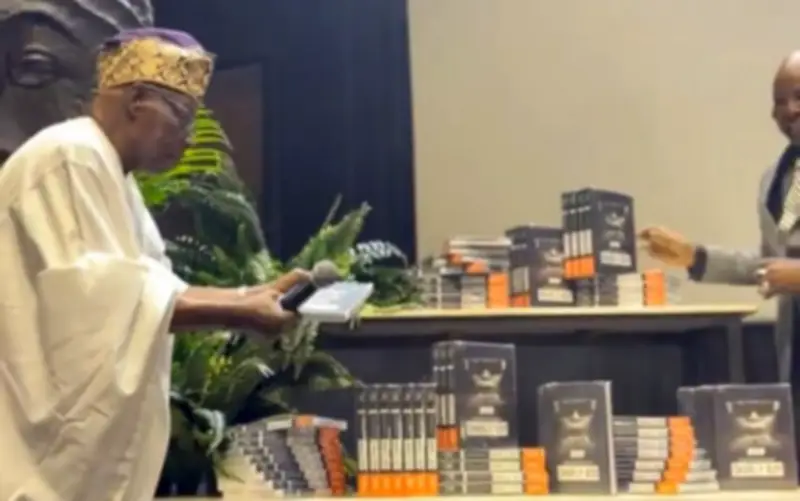
The conversation was one of the highlights of an event that marked the official unveiling of the Charly Boy Foundation and the presentation of Oputa’s memoir, 999: A Memoir in Tribute to Late Justice Chukwudifu Oputa. The event, which blended politics and entertainment, also had former presidential candidate Peter Obi in attendance, as seen in images shared on social media.
Hindsight and the 1999 Ticket
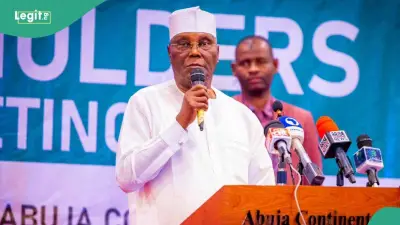
Although Obasanjo did not mention Atiku Abubakar by name during the discussion, his repeated references to “my running mate,” “my number two” and “my vice president” left no doubt about whom he meant. Atiku was Obasanjo’s running mate in the 1999 presidential election and served as vice president for the entire eight-year tenure from 1999 to 2007.
The duo won the 1999 poll on the platform of the Peoples Democratic Party and went on to secure a second term in 2003. However, their once-close political alliance later unravelled, producing decades of public disputes and conflicting narratives about the inner workings of their administration.
Reflecting on his years in government, Obasanjo said that some mistakes that could have had serious consequences were ultimately prevented from overwhelming his administration. He spoke at length about the choice of his running mate, saying: “What I have found in my own life is that what could have been all my life mistakes that could have been fatal, God had taken care of them for me, mistakes when I was in government. The man I picked as my running mate, my number two, if I had known him as I came to know him later, I would not have picked him. My vice president. I don’t know what name you want to give him, but my vice president. What I know about him later makes me thank God, because God did not allow his actions and reactions to overwhelm me.”
The former president, however, did not specify what actions or discoveries had prompted his retrospective judgment.
No Bitterness, He Insists
Despite his regret over the choice, Obasanjo insisted that he harboured no bitterness about the breakdown of his relationship with his former deputy. He expressed gratitude that the conflict did not distract him from his official responsibilities or prevent him from pursuing the goals of his administration.
“Or to divert my own focus from Nigeria, or to harm Nigeria, even. And then there’s no bitterness, because, well, he did things that he believed he should do. God did the things that God had to do, which makes me able to achieve what I was able to achieve,” he said.
A Long-Running Political Rift
Obasanjo and Atiku’s relationship has remained a recurring theme in Nigerian politics ever since they left office in 2007. Their disagreements became public in the final years of the administration, and both men have since offered divergent accounts of their time together, touching on their working relationship, political ambitions and internal government disputes.
Obasanjo has publicly criticised his former deputy on multiple occasions, while Atiku has also pushed back against the former president’s claims and assessments of their years in power. The latest comments arrive amid a fresh round of exchanges between the two.
Atiku recently accused Obasanjo of relying on old and disputed claims to tarnish his political reputation, following the former president’s revisiting of an allegation about an attempted impeachment proceeding against Atiku during their time in office. Atiku argued that the allegations, which involve the late former Speaker of the House of Representatives, Ghali Na’Abba, could no longer be properly examined because the main figure in the account was deceased.
Obasanjo’s latest statement did not introduce a new accusation against Atiku. It instead reiterated his long-held position that, with the clarity of hindsight, he would have made a different decision about his running mate.
The remark adds another layer to the complex legacy of the 1999-2007 administration, one that continues to shape political discourse in Nigeria.