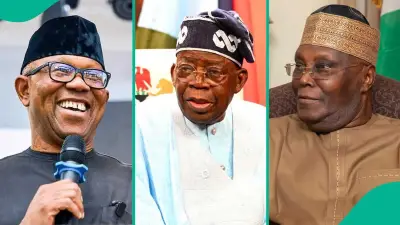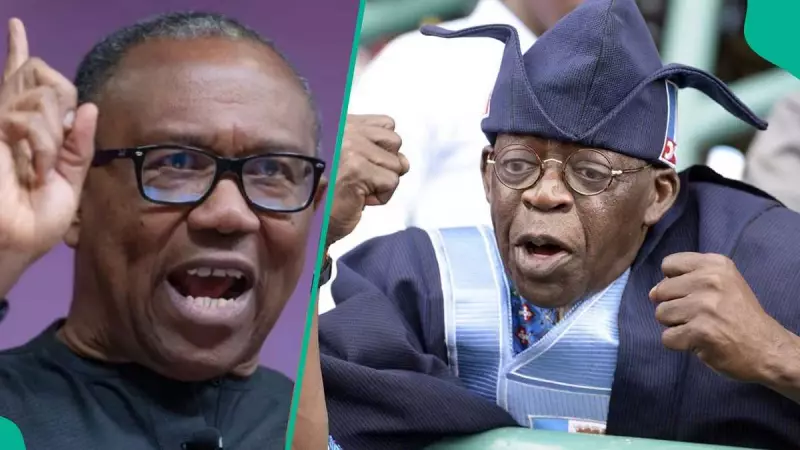
Former presidential candidate Peter Obi has launched a scathing critique of President Bola Ahmed Tinubu's administration following the reported cancellation of approximately ₦8 trillion in debts owed by the Nigerian National Petroleum Company Limited (NNPCL). Obi labeled the move a profound betrayal of Nigerians, especially amidst severe economic challenges.
A Stinging Rebuke on Social Media
In a statement released on his verified social media accounts on Tuesday, January 6, 2026, the Labour Party stalwart accused the Federal Government of normalizing financial recklessness. He expressed dismay that such a decision was taken while citizens grapple with the harsh realities of subsidy removals on fuel and electricity, without seeing corresponding improvements in their welfare.
"Just last week, it was alarmingly reported that the President approved the write-off of ₦5.57 trillion and $1.42 billion (about ₦8 trillion) in debts owed by NNPC, a company that recently declared profits and claimed it had turned a new leaf," Obi stated.
Unresolved Audit Queries and Questionable Timing
The former Governor of Anambra State pointed to the elephant in the room: the ongoing audit scrutiny of the state-owned oil giant. He highlighted that the NNPC is still facing unresolved queries over a staggering ₦210 trillion allegedly unaccounted for in its books.
"This is the same agency under serious audit scrutiny for failing to account for sums that exceed the combined federal budgets of Nigeria from 2023 to 2026," Obi emphasized. He noted that the total budgets for those four years amount to roughly ₦178.56 trillion, and Nigerians are still awaiting outcomes from investigations into missing funds and spending on non-functional refineries.
Obi argued that the debt forgiveness arrives at a time when the government is aggressively seeking revenue through increased taxation. "Nigerians, already suffering from subsidy removals, are now confronted with unexplained debt forgiveness that will simply replace revenue the government is trying to raise through unfair taxation," he declared.
The Staggering Opportunity Cost for Nigeria
Obi framed the financial decision in terms of its crippling opportunity cost for national development. He provided a stark comparison, revealing that the ₦8 trillion write-off surpasses the ₦7.1 trillion collectively allocated to education, health, and agriculture in the 2025 national budget.
"In practical terms, this money could fund critical sectors, lift millions out of poverty and significantly reduce the over 130 million Nigerians currently living in poverty," he asserted.
Furthermore, he observed that the cancelled debt is nearly double the ₦4.9 trillion earmarked for national security in the 2025 budget, despite escalating insecurity across the country. Obi insisted that these resources could have been channeled into massive job creation initiatives, empowering unemployed youth and stimulating grassroots development.
A Call for Transparency and Accountability
Demanding clear answers, Obi stressed that President Tinubu, who also serves as the Minister of Petroleum Resources, owes Nigerians a transparent and justified explanation for such a significant financial decision.
"Citizens deserve honesty, fiscal discipline and governance that protects public interest, not the interests of mismanaged corporations or political elites," he stated.
Concluding his forceful statement, Obi described the approval as unacceptable: "This betrayal of the people must be stopped. A new Nigeria is possible."
This critique stands in contrast to views like that of Philip Agbese, Deputy Spokesperson of the House of Representatives, who, in a statement on Friday, January 2, hailed Tinubu's decision as a "resounding endorsement" of the NNPCL's transparent and transformative leadership under Group CEO Engr. Bashir Bayo Ojulari.