Political Showdown: Omokri Predicts Tinubu's Victory Over Atiku-Obi Ticket in 2027
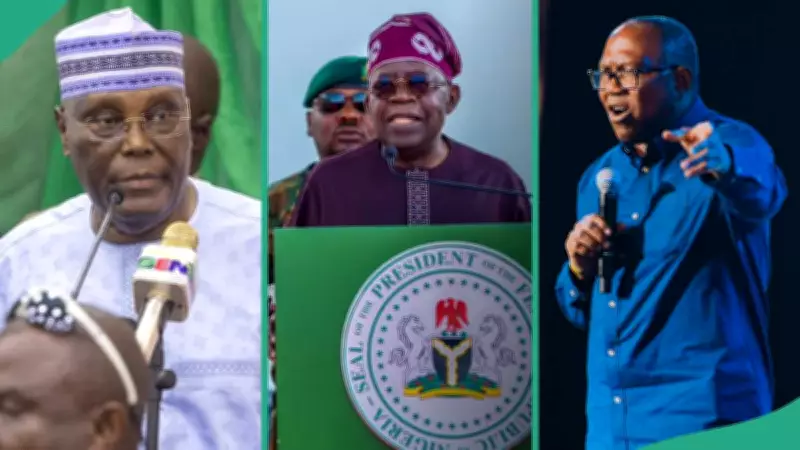
Nigerian ambassador to Mexico, Reno Omokri, has made a bold projection regarding the 2027 presidential election, stating that President Bola Tinubu would emerge victorious against a potential joint ticket featuring former Vice President Atiku Abubakar and former Anambra state governor Peter Obi. This statement comes amid growing political realignments as the country prepares for the next electoral cycle.
Contrasting Views on Electoral Prospects
Omokri's projection directly contradicts the position of veteran journalist Dele Momodu, who recently claimed that an Atiku-Obi partnership would successfully unseat President Tinubu and the ruling All Progressives Congress (APC) in the 2027 polls. The former presidential aide offered his analysis while responding to Momodu's assertion, highlighting what he perceives as fundamental weaknesses in the proposed opposition alliance.
The ambassador elaborated that even in Adamawa state, Atiku's home territory, the joint ticket would face significant challenges. Omokri emphasized that while northern Nigeria values political considerations, religious factors carry even greater weight among the electorate. He specifically referenced controversial statements allegedly made by Peter Obi regarding religious tensions, suggesting these would alienate Muslim voters across northern states.
Coalition Movement and Political Realignments
This political discourse unfolds as Atiku Abubakar and Peter Obi lead a coalition movement that has recently adopted the African Democratic Congress (ADC) as its political platform. Their stated objective is to remove President Tinubu from office in the 2027 presidential election, creating what they hope will be a formidable opposition force against the ruling APC.
The timing of these projections coincides with ongoing political realignments across Nigeria's political landscape. Recent defections of three senators from the Peoples Democratic Party (PDP) to the APC highlight the fluid nature of political affiliations as parties position themselves for the upcoming electoral contest.
Public Reactions and Counterarguments
Omokri's statements have generated diverse reactions from Nigerian citizens and political observers. Some northern commentators have challenged the ambassador's emphasis on religious considerations, arguing that governance issues take precedence.
"As a Northerner, our primary concern is who will provide security, improve living standards, and advance education," countered one respondent. "We will support candidates who address these fundamental needs rather than those who emphasize religious divisions."
Other reactions have focused on the credibility of the various political figures involved in the discussion. Some critics have questioned Dele Momodu's political influence, noting his limited electoral track record and questioning his capacity to determine winning political combinations.
Meanwhile, additional commentary has centered on the qualifications of political appointees, with some defending the credentials of recently appointed ambassadors against criticism from media figures.
Broader Political Context
The debate over potential 2027 electoral scenarios occurs against a backdrop of significant political developments. The defection of state governors and senators from opposition parties to the ruling APC demonstrates the ongoing realignment of political forces ahead of the next election cycle.
These movements suggest that both major political blocs are actively working to strengthen their positions, with the opposition seeking to consolidate anti-APC sentiment while the ruling party works to expand its coalition through strategic defections.
As Nigeria moves closer to the 2027 elections, political analysts anticipate increased speculation about potential alliances, candidate combinations, and electoral strategies. The contrasting projections from prominent figures like Omokri and Momodu highlight the uncertainty surrounding the political landscape and the diverse perspectives on what factors will ultimately determine electoral outcomes.
The coming months will likely see continued debate about the viability of various political partnerships and their potential impact on Nigeria's democratic process.