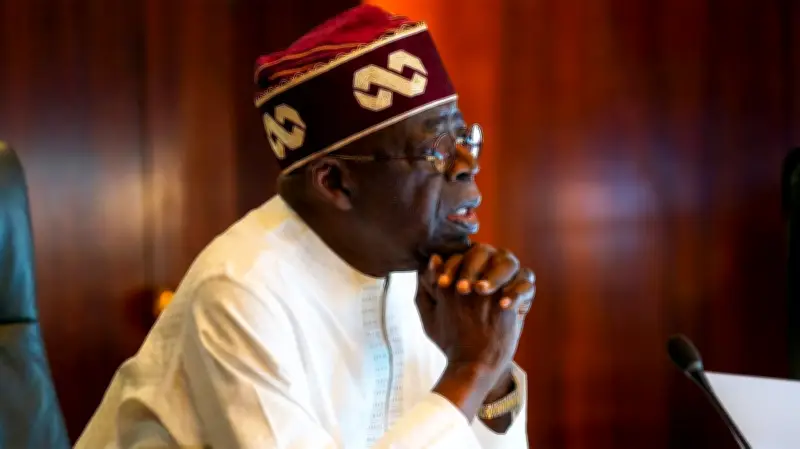
The minority caucus in the House of Representatives has called on President Bola Tinubu to suspend all political activities related to the 2027 elections and instead focus on addressing the nation's pressing security and economic crises. This demand comes as terrorist attacks and banditry continue to claim lives across Nigeria.
Minority Leader's Statement
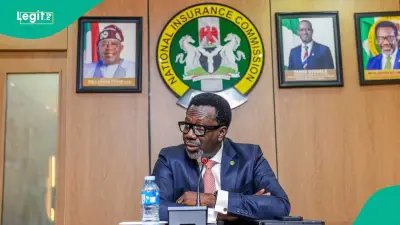
Speaking to journalists in Abuja on Wednesday, House Minority Leader Fred Agbedi accused the President of prioritizing re-election politics over the safety and welfare of citizens. He described the current situation as an unprecedented crisis marked by killings, kidnappings, economic hardship, and attempts to weaken opposition parties ahead of the 2027 elections.
Agbedi stated: "The life of every Nigerian matters. Politics must take the back seat when the nation bleeds. We must secure Nigeria first. President Tinubu must suspend all 2027 political activities and declare a six-month national security and economic recovery plan. Lead or leave."
Former Military Governor's Open Letter
Retired Colonel Dangiwa Umar, former Military Governor of Kaduna State, also weighed in with an open letter to President Tinubu. While commending the President for honoring the heroes of the June 12 struggle, Umar offered a sobering critique of the nation's current trajectory. He urged the administration to urgently address pressing national crises, particularly insecurity and poverty.
Calls for State Police Intensify
Retired Assistant Inspector-General of Police Ade Ajakaiye has renewed calls for the creation of state police, warning that Nigeria's worsening security situation makes decentralized policing an urgent priority. Citing a National Human Rights Commission (NHRC) report indicating that 2,266 persons were killed in just six months, Ajakaiye argued that the centralized policing structure is overstretched and incapable of responding effectively to emerging security threats.
He highlighted rising incidents of kidnapping, terrorism, armed robbery, farmer-herder clashes, and communal violence as evidence of the current system's limitations. According to him, state police would provide faster response, stronger intelligence gathering, and improved community-based security.
The Aare Ona Kakanfo of Yorubaland, Iba Gani Adams, and Professor Akin Alao of Obafemi Awolowo University echoed these calls, stressing the need for effective security reforms and speedy completion of legislative processes to establish state police. They urged President Tinubu and the Senate to expedite action on passing the state police bill into law, following the House of Representatives' approval of a constitutional amendment last week.
The state police bill is expected to be a priority when the Senate convenes for an emergency sitting on Tuesday, June 23, to deliberate on national security and other urgent matters.
Bandit Attack in Kaduna
Just yesterday, bandits killed nine people and injured 11 others in Unguwar Magaji community, Kamaru Ward of Kauru Local Government Area in Kaduna State. Joseph Yonkpa, spokesperson for the Irigwe Youth Movement, confirmed the incident on Wednesday. Initial reports indicated two deaths, but subsequent search and recovery operations uncovered seven additional bodies. The attackers used firearms and targeted children with machetes, leaving residents deeply traumatized.
Criticism of Security Failures
Minority Leader Agbedi described the killing of retired Major General Rabe Abubakar, who died while in captivity after being abducted with his wife in Katsina State, as a "national shame" and evidence of a failed security architecture. He also condemned the continued captivity of schoolchildren and their tutors abducted in Oyo State, accusing the government of failing to take decisive action against mass kidnappings.
Agbedi called for a special military operation to secure the release of the victims within 72 hours, stating that every hour in captivity represents "an hour stolen from Nigeria's future." He emphasized that from Sokoto to Enugu, from Borno to Lagos, the story is the same: hunger, killings, kidnappings, collapse of the naira, and collapse of hope.
"Yet what preoccupies the ruling party and the Presidency is 2027, endorsement rallies, defections, re-election strategies and town hall meetings to discuss tenure security. The life of every Nigerian matters. Politics must take the back seat when the nation bleeds. We must secure Nigeria first. Government exists primarily for the security and welfare of the people. Section 14(2)(b) of the 1999 Constitution is not a suggestion. It is a mandate," Agbedi said.
IGP's Response
Meanwhile, Inspector-General of Police Olatunji Rilwan Disu has charged officers to take the fight directly to criminals. Speaking in Kano during a strategic meeting with officers of the Kano State Command, the IGP stated: "It is far better to strike first and stay on the offensive than to remain only reactive. When bandits know we fire back decisively, they will think twice. Keep pushing hard, stay sharp, and sustain this momentum."
Represented by Deputy Inspector-General of Police for the North-West region, Suleiman Abdul, the IGP announced the establishment of six core administrative pillars to strengthen internal security. Notable among these is the operationalisation of "Handshake Patrols" between contiguous states to deny criminals jurisdictional escape routes.
IGP Disu also announced a renewed commitment to intelligence-led and technology-driven security management, moving away from purely conventional, reactive methods towards evidence-based law enforcement powered by data analytics, digital forensics, and a centralized information framework. He further committed to restructuring elite tactical units, with operations governed by strict rules of engagement and civilian oversight, stressing that modern urban policing must be powered by timely, accurate, and actionable information.