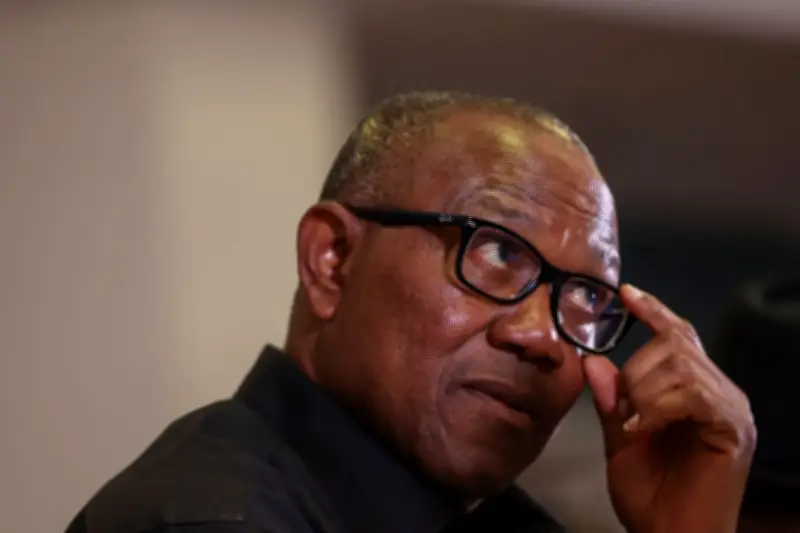
Former presidential candidate Peter Obi has declared that it is impossible to provide Nigerians with 24-hour electricity within the next four years under the current conditions of the power sector. Speaking at an energy summit in Abuja on Wednesday, Obi argued that the challenges plaguing the industry are too deep-rooted for such a quick fix.
Obi's Remarks at the Energy Summit
Obi, who was the Labour Party candidate in the 2023 presidential election, stated that achieving uninterrupted power supply requires more than political will. According to him, the country's power generation capacity has stagnated, and the distribution network remains inefficient. "It is impossible to give Nigerians 24-hour electricity in four years given the current state of our power infrastructure," Obi said. He added that the privatization of the Power Holding Company of Nigeria (PHCN) in 2013 failed to deliver expected improvements due to lack of investment and regulatory bottlenecks.
Current State of Nigeria's Power Sector
Nigeria's installed generation capacity stands at about 13,000 megawatts (MW), but actual generation often hovers around 4,000 MW due to gas shortages, transmission constraints, and dilapidated infrastructure. This is far from the estimated 30,000 MW needed to support reliable supply for over 200 million people. Obi noted that even if generation increases, the transmission grid can barely handle more than 5,000 MW without collapsing. He cited data from the Nigerian Electricity Regulatory Commission (NERC) showing that many customers receive less than six hours of power daily.
The Four-Year Mirage
Obi criticised politicians who promise 24-hour electricity during campaigns, calling such pledges deceptive. He referred to previous administrations that made similar promises but failed. "We have been hearing these promises since the 1990s. It is not about slogans; it is about fixing the entire value chain – generation, transmission, and distribution," Obi said. He emphasised that crucial reforms, including metering and tariff restructuring, have not been implemented effectively. "If we cannot get the basics right, how can we dream of 24-hour supply in four years?" he asked.
Path to Sustainable Power
The former Anambra State governor proposed a gradual approach focusing on improving gas supply to power plants, expanding the grid, and encouraging off-grid solutions like solar mini-grids. He called for increased private sector participation and a stable regulatory environment to attract investment. "We need to be honest with ourselves. The target should be to double generation to 10,000 MW in four years, not unrealistic claims of 24-hour electricity," Obi stated.
Reactions and Implications
Obi's comments have sparked debate among stakeholders. The Association of Power Generation Companies (APGC) supported his view, noting that without debt recovery and gas supply guarantees, investments will not flow. Meanwhile, the Minister of Power, Adebayo Adelabu, had earlier expressed confidence in achieving 24-hour power by 2030. Obi dismissed this as overly ambitious. "We are not even close to where we need to be. Let us focus on incremental improvements rather than fairy tales," he said.
Conclusion
Peter Obi's statement underscores the persistent electricity crisis in Africa's largest economy. While the government continues to seek solutions, his call for realism highlights the gap between political rhetoric and ground realities. The next four years may see marginal gains, but as Obi argues, 24-hour electricity remains a distant goal without systemic overhaul.