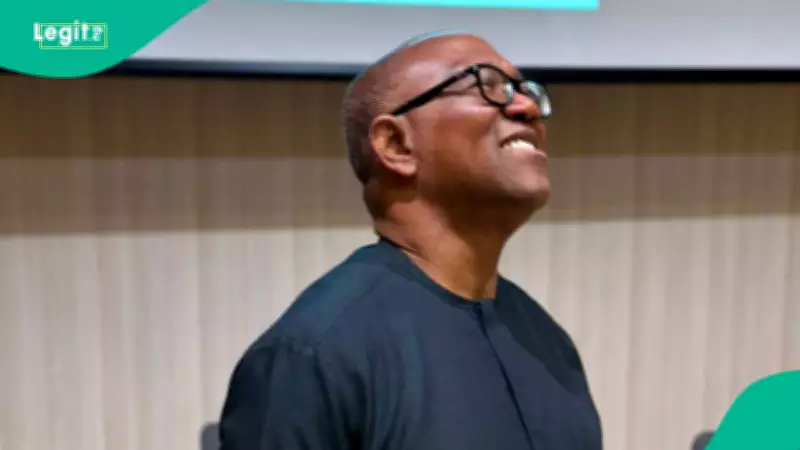
In a significant political development, Peter Obi, the prominent chieftain of the African Democratic Congress (ADC), has formally declared his intention to contest the 2027 presidential election in Nigeria. This announcement marks a pivotal moment in the nation's political landscape as the former Anambra State governor positions himself for another presidential run.
Obi's Presidential Declaration in Abuja
The declaration came during a campaign event for ADC candidates ahead of the Federal Capital Territory Area Council elections in Abuja Municipal Area Council (AMAC). According to reports from Daily Trust on Monday, February 2, Obi made his presidential ambitions clear while addressing supporters, stating emphatically that he would be contesting as the principal candidate in the upcoming election.
Obi, who recently transitioned from the Labour Party to the ADC, told his enthusiastic supporters: "I am involved and contesting the coming election as number one. When I come back, you will see. I assure you." This statement has generated substantial political buzz across Nigeria's political circles.
Strategic Political Positioning
The 64-year-old politician has been intensifying consultations under the ADC platform, which serves as a coalition for his presidential ambitions. His supporters, particularly members of the influential Obidient Movement, have been actively urging ADC leadership to present Obi as the party's presidential flagbearer. Many have adopted an "Obi or nothing" stance, demonstrating the strong loyalty he commands among certain voter demographics.
During the Abuja campaign, Obi emphasized the importance of local support for his national ambitions, telling supporters: "You see this coming election, support us in AMAC; it will help me. Your support in AMAC is critical to our journey." This strategic approach highlights his understanding of grassroots politics as fundamental to national success.
Political Context and Challenges
Obi's political journey has been marked by both significant achievements and controversies. He finished third in the 2023 presidential election, which was won by President Bola Ahmed Tinubu of the All Progressives Congress (APC). Following that election, both Obi and former Vice President Atiku Abubakar, who placed second, challenged the results in court, alleging widespread electoral malpractices, though their legal challenges were ultimately unsuccessful at all judicial levels, including the Supreme Court.
The political veteran faces several challenges as he prepares for 2027:
- Party Unity: ADC national spokesperson Bolaji Abdullahi has urged Obi's supporters to prioritize party unity, indicating potential internal dynamics that need careful navigation.
- Regional Ambitions: Before the 2023 election, there were significant agitations from Igbo-speaking communities in Nigeria's South-east region advocating for the region to produce Nigeria's next president. While Obi wasn't the only presidential candidate from the South-east in 2023, he was widely perceived as the strongest candidate through whom this regional ambition could potentially be realized.
- Youth Appeal: Obi has generated substantial support among younger voters in Africa's most populous democracy. Many of his backers were prominent in the 2020 protests against police brutality, creating a base particularly keen on political change and ousting older political leaders.
Controversies and Responses
As a political veteran, Obi has attracted his share of controversies. Assets he controlled appeared in the Pandora Papers leaks, and during the 2019 campaign, both he and Atiku faced questions about their track records regarding corruption and investments of government funds in private businesses. Obi has consistently denied any allegations of graft, explaining that the Pandora Papers accounts were part of legal and legitimate asset management practices.
Regarding his 2027 election strategy, Obi has emphasized a non-violent approach focused on ensuring that votes count. This commitment to electoral integrity aligns with his previous criticisms of Nigeria's electoral processes.
The Road to 2027
Obi's political movement represents an attempt to harness Nigerians' dissatisfaction with the status quo to power a third-party presidential bid. His followers, who call themselves "Obidients," believe he can address Nigeria's pressing challenges, including lingering insecurity issues and allegations of misgovernance that have persisted despite the APC's promises to eradicate such problems over a decade ago.
The coming months will be crucial as Obi consolidates his position within the ADC, builds broader coalitions, and prepares for what promises to be a highly competitive 2027 presidential election. His declaration has already set in motion significant political realignments and discussions about Nigeria's future leadership direction.