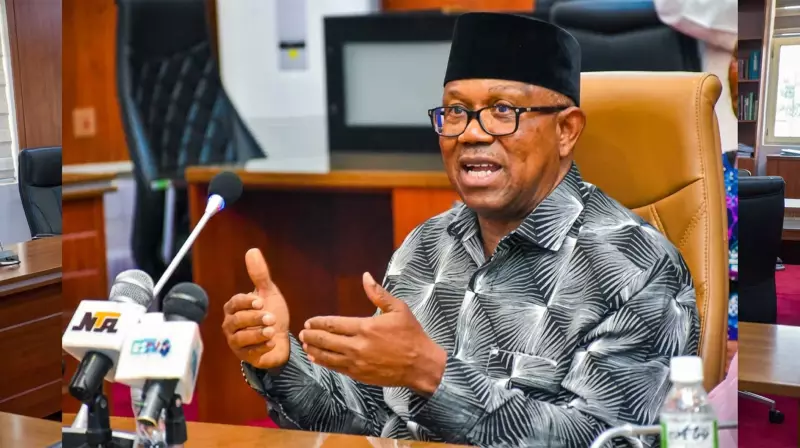
Peter Obi, the presidential candidate of the Labour Party in Nigeria's 2023 election, has made a compelling appeal to the European Union, urging a fundamental shift in how it views and engages with Africa.
A Call for a New European Perspective on Africa
Speaking directly to Members of the European Parliament on 5 December 2025, Obi argued that a significant knowledge gap exists. He stated that much of the Western world, including Europe, lacks a deep understanding of Nigeria and Africa at large. This gap, according to him, leads to policies and decisions that do not align with the continent's actual realities and needs.
Obi positioned Africa as the undeniable "last frontier of global development." He backed this claim by highlighting the continent's vast size, its massive population, and its incredible wealth of natural resources and youthful talent. Despite these advantages, he pointed out the stark contradiction: Africa remains a continent plagued by widespread poverty.
Nigeria's Pivotal Role in Continental Transformation
The former Anambra State governor placed Nigeria squarely at the centre of this required transformation. He presented a powerful demographic and economic comparison to drive his point home.
Nigeria's population of approximately 240 million represents more than half of the entire European Union's population of 450 million. However, the economic disparity is staggering. While Europe's per capita income surpasses $40,000, Nigeria's is a mere 2.5% of that figure.
"The potential for growth is enormous," Obi declared. "If Africa prospers, Europe benefits. If Africa collapses, the consequences will be felt globally. Nigeria must lead this transformation."
He did not shy away from naming the obstacles holding Nigeria and Africa back. Obi cited corruption, poor leadership, and deep social inequality as the primary drivers of insecurity and criminal activity. "Mass poverty and a lack of education create fertile ground for crime," he noted.
Leadership Failures and Nigeria's Health Crisis
In a related development, Peter Obi also connected governance failures directly to Nigeria's declining social indicators. Speaking at the 2025 Leadership Forum Conference at the University of Nigeria, Enugu Campus, he addressed the country's critically low life expectancy.
Obi stated that Nigeria's average life expectancy, which recent global estimates place at about 55 years, is a direct result of systemic leadership failure. He argued that this low figure reflects years of neglect in healthcare, education, and human capital development.
"Our low life expectancy is not because Nigerians are naturally predisposed to early death. It is because we have not built the systems that keep people alive," he asserted.
He pointed to nations like India and Indonesia, which face similar demographic pressures but have achieved steady improvements by consistently investing in basic healthcare and education. Obi lamented that Nigeria, with its immense potential, has failed to outperform emerging economies due to policy reversals and weak institutions.
Concluding his address to the EU Parliament, Obi framed the relationship as a mutually beneficial partnership. "To develop Africa, which will benefit you, you must start with Nigeria," he advised, describing the nation as Africa's most populous market brimming with resources. He invited continued dialogue and collaboration, stating, "I am here to start a conversation and invite collaboration to turn around Nigeria and, by extension, Africa."