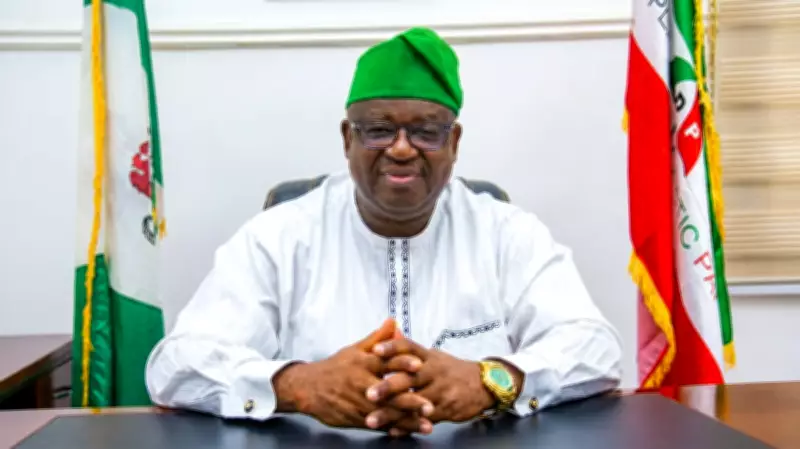
Plateau State is emerging as a major test case for the All Progressives Congress (APC) ahead of the 2027 elections. Although Governor Caleb Mutfwang's defection from the Peoples Democratic Party (PDP) has strengthened the ruling party's grip on the state, growing tension between old APC loyalists and the governor's camp now threatens party cohesion. ISA ABDULSALAMI reports on how the internal power struggle may shape the APC's fortunes in the North-Central region.
Security Crisis Amid Political Turmoil
Plateau State, once celebrated as one of Nigeria's most peaceful and agriculturally productive states, has in recent years become one of the country's bloodiest conflict zones. From the rocky hills of Bokkos to the troubled plains of Bassa, Mangu and Riyom, recurring attacks, reprisals and communal violence have turned many rural communities into landscapes of fear, displacement and destruction. The scale of insecurity has been staggering. Between 2023 and 2025 alone, roughly 160 coordinated attacks were recorded across several local government areas, leaving thousands dead, while many others were injured, maimed or displaced from their ancestral homes. Entire communities have been overrun, with no fewer than 167 villages reportedly attacked within the period. Women, children and the elderly have borne the brunt of the violence, while survivors continue to struggle in overcrowded displacement camps and neighbouring communities.
With an estimated population of between 4.5 million and five million people, Plateau today reflects the dangerous intersection of insecurity, displacement, weak rural infrastructure and deep-seated ethno-communal tensions. Yet, despite the harrowing situation, political leaders in the state appear largely consumed by power struggles. Rather than confronting the worsening security crisis, attention has increasingly shifted to political calculations ahead of the 2027 elections.
Internal APC Dynamics
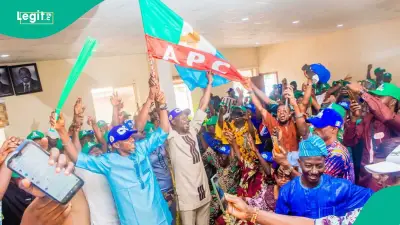
The political atmosphere in Plateau State is now being shaped largely by the evolving dynamics within the APC, particularly following Governor Caleb Mutfwang's defection from the PDP to the ruling party. What initially appeared to be a straightforward political realignment has gradually transformed into a complex contest involving loyalty, party ownership, elite interests, reconciliation efforts and underground political manoeuvring among competing blocs within the APC. Today, Plateau politics is no longer defined primarily by the rivalry between the APC and the PDP. Instead, the fiercest battle appears to be unfolding within the APC itself, where old party loyalists, new entrants, political powerbrokers and emerging alliances are positioning strategically ahead of 2027.
Mutfwang's Political Journey
Mutfwang's political journey remains one of the most dramatic chapters in Plateau's recent political history. The governor emerged from the fiercely contested 2023 governorship election on the platform of the PDP after prolonged legal battles that traversed the Election Petition Tribunal, the Court of Appeal and eventually the Supreme Court. Initially, the Independent National Electoral Commission (INEC) and subsequent court rulings questioned the PDP's party structure and electoral validity, leading to a series of judicial setbacks for Mutfwang. Both the tribunal and the Court of Appeal ruled against him, but the Supreme Court eventually overturned those decisions and affirmed him as the duly elected governor of Plateau State. That legal victory not only consolidated his political relevance but also strengthened his relationship with the PDP establishment, which had stood behind him throughout the legal crisis.
However, his eventual defection to the APC has since generated mixed reactions across Plateau's political landscape. While the move was publicly presented as a "political realignment," many actors within both the APC and PDP interpret it differently. Within the APC, Mutfwang's entry was far from universally welcomed. Some longstanding APC members openly opposed his defection, insisting that the governor should have remained in the PDP rather than assume control of a structure they had spent years building from the opposition trenches. For several old APC loyalists, the issue goes beyond politics; it is deeply tied to sacrifice, loyalty and ownership of the party structure. That resentment has since become one of the defining undercurrents of APC politics in Plateau.
To many party faithful, Mutfwang arrived in the APC as a beneficiary of a structure he neither built nor defended during the difficult years of opposition politics. That sentiment explains why sections of the party remain cautious about fully embracing him despite his position as governor. Yet, despite these tensions, Mutfwang has attempted to project inclusiveness since joining the APC. Party faithful note that the governor has avoided openly weaponising state power against opposition parties or old APC blocs. Rather than aggressively favouring APC loyalists alone, he has maintained relatively cordial relationships across party lines, creating the impression of a leader seeking to stabilise a politically divided environment. Still, beneath the surface, mistrust persists.
Relationship with APC National Chairman
One of the most sensitive dimensions of Plateau's current political equation is the relationship between Governor Mutfwang and APC National Chairman, Prof. Nentawe Yilwatda Goshwe. The political history between the two men is significant. Nentawe, who hails from Plateau State, contested against Mutfwang in the 2023 governorship election under the APC and was initially favoured by lower court rulings before the Supreme Court eventually ruled in Mutfwang's favour. Although the APC National Chairman has publicly maintained cordial relations with the governor and appears committed to party unity, many observers believe the political history between both men remains too deep to be completely ignored. As quietly observed, political forgiveness does not necessarily erase political memory. This reality contributes to the cautious atmosphere within the Plateau APC, where many stakeholders publicly display unity while privately protecting their long-term interests ahead of 2027.
The Legacy Group
Beyond Nentawe, another critical force shaping the APC's internal dynamics in Plateau is the Legacy Group. The group, which predates Mutfwang's defection, has emerged as one of the most influential political blocs within the party. Led largely by loyalists of former governor and current senator Simon Lalong, the Legacy Group represents the old APC establishment in the state. Its membership includes several influential politicians, including APC National Chairman Nentawe Yilwatda, House of Representatives member Yusuf Gagdi, Danladi Atu, former lawmaker Istifanus Gyang, Idris Maje and other key stakeholders. The group commands significant grassroots structures and remains deeply influential across party wards and local government areas.
For many within the Legacy Group, the current struggle is not merely about appointments or patronage. It is about preserving the APC's soul and identity in Plateau. Their argument is rooted in political history, that those who built the party during difficult periods should not suddenly become politically irrelevant simply because a sitting governor defected into the APC. This explains the growing contest between what many now describe as two major power centres within the Plateau APC, the governor's camp and the Legacy Group.
Incumbency vs. Grassroots Legitimacy
Governor Mutfwang enters the political contest with the enormous advantages of incumbency. He controls state structures, appointments, visibility and access to government resources. To his supporters, he represents stability, continuity and a strategic bridge between Plateau and the Federal Government. On the other hand, the Legacy Group commands deep grassroots loyalty and enjoys the historical legitimacy of having sustained the APC before it became politically dominant in the state. Political analysts believe both camps possess genuine strengths and vulnerabilities. A complete takeover of the APC by Mutfwang's camp could alienate longstanding party loyalists and weaken the grassroots machinery that often determines elections at ward and polling-unit levels. Conversely, any attempt by the Legacy Group to politically isolate the governor could destabilise the party and weaken the APC's hold on power ahead of 2027. This delicate balancing explains why many stakeholders continue to advocate reconciliation rather than confrontation.
Interestingly, former governor Simon Lalong initially attempted to ease tensions after Mutfwang joined the APC by publicly handing over party leadership in the state to the governor, a gesture widely interpreted as strategic and conciliatory. However, despite that public display of unity, many underlying grievances remain unresolved.
Strained Relationship with Former Mentor
Another major dimension of Plateau's unfolding political drama is the deteriorating relationship between Governor Mutfwang and his former political mentor, former governor Jonah David Jang. What was once perceived as a stable political alliance now appears severely strained following Mutfwang's defection from the PDP. Sources close to the former governor indicate that Jang views Mutfwang's movement to the APC as a betrayal of political loyalty, particularly considering the support the PDP provided during the governor's legal battles after the 2023 election. To Jang and many PDP loyalists, the governor's eventual departure after benefiting from the PDP platform represents a painful political setback.
Associates of the former governor insist that Jang remains convinced that the PDP still retains political relevance in Plateau despite recent defections. According to insiders, the former governor believes the PDP's current difficulties are temporary and that the party can eventually rebuild through internal democracy and strategic mobilisation. His camp also reportedly believes that politicians who abandoned the PDP during difficult moments could face political complications if the party regains momentum in the future. That calculation partly explains why the PDP, despite its weakened condition, cannot yet be entirely dismissed in Plateau politics.
Opposition Landscape
While smaller parties such as the African Democratic Congress (ADC), Labour Party (LP) and New Nigeria Peoples Party (NNPP) remain relatively weak in the state, the PDP still retains pockets of influence capable of exploiting any major fracture within the APC. The Labour Party, particularly after the weakening of Peter Obi's national momentum, has largely become a shadow of its former self in Plateau. But the PDP continues to maintain structures and historical support that could become significant should the APC's internal crisis deepen. This possibility explains why many political observers believe the greatest threat to the APC ahead of 2027 may not come from external opposition, but from internal implosion.
Already, political actors across Plateau are quietly calculating future ticket allocations, local government control, appointments and succession arrangements. At the grassroots level, ward leaders, youth groups and local stakeholders remain sharply divided between loyalty to the governor and allegiance to the old APC structure represented by the Legacy Group.
Grassroots Concerns
Chief Daniel Kura, an APC chairmanship aspirant in Langtang North Local Government Area, perhaps captured the mood best when he described the current situation as a "showdown" between two powerful political forces competing for the soul of the Plateau APC. According to him, the real danger lies in allowing personal ambition to destroy the party's collective future. His position reflects growing concern among grassroots members that a prolonged internal conflict could weaken the APC and inadvertently create opportunities for the opposition ahead of 2027.
Conclusion
Ultimately, Plateau politics now stands at a delicate crossroads. On the surface, the APC appears united under Governor Mutfwang, with the support of influential stakeholders and the backing of the Federal Government. But beneath that facade lies a fragile coalition held together more by political necessity than genuine trust. Whether the party survives this delicate balancing act may depend on the willingness of both the governor's camp and the Legacy Group to accommodate one another rather than pursue total dominance. For now, the APC remains the dominant political force in Plateau State. But as 2027 draws closer, the real political battle may not be between the APC and the PDP. It may instead be the unresolved struggle within the APC itself, a battle over power, loyalty, recognition and the future direction of Plateau politics.