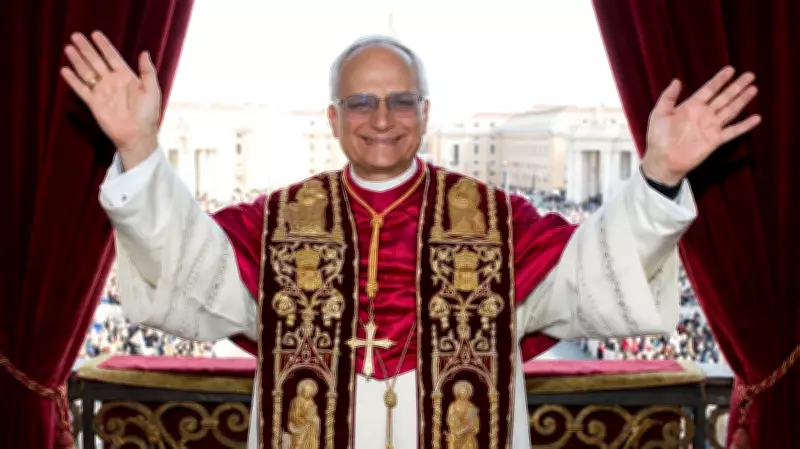
Pope Leo XIV's recent 10-day visit to Africa was, in many ways, a missed opportunity for Nigeria to benefit from 'the bridge with the African continent'. If the last Papal visit to Nigeria by Pope John Paul II in March 1998 is anything to go by, the incomparably powerful moral voice of the Holy Father does speak truth to power, albeit in a gentle but unmistakable way, as exemplified by a spiritual leader of his stature. And it can produce a change of heart and direction. A pastoral trip to Nigeria, therefore, would not be just another head of state visit but an opportunity for the host state leaders to benefit from counsel of both temporal and spiritual dimensions. Alas, it never happened for the most populous black country, which, to boot, has the second-largest Catholic population (35 million) in Africa.
Pope Leo XIV had reportedly wished that his first apostolic journey would be to Africa, for good reason. The continent's 281 million Catholic members constitute 20 per cent of the global number; African priests are 55,000 and form more than 13 per cent of the global figure; and the 35,000 seminarians are about 30 per cent of the global priestly population. As observed, however, by Bishop Christian Carlassare of the South Sudanese Diocese of Bentiu, and reported in National Catholic Reporter (NCR), 'going to Algeria, Cameroon, Angola, and Equatorial Guinea means declaring through actions that the Gospel does not follow the maps of power but crosses them and overturns them'. He added: 'In a world that measures the value of people according to economic weight, this journey reversed the perspective: the so-called “margins” become the “centre”.' The second part of his pastoral trip took the Pope to four African countries, starting with Algeria, through Cameroon and Angola, to Equatorial Guinea, from Monday, April 13 to 23.
All the issues – social, political, religio-spiritual, and economic – that he addressed to both the faithful and their leaders apply to Nigeria at this time, indeed, to all of Africa. Apostolic journey derives from Apostle Paul's evangelising trips that helped to spread Christianity far into the ancient world. It is usual for popes to embark on such trips to strengthen the faith of the flock, or to plant Christianity in new lands like Paul did. Bishop Christian Carlassare noted, perceptively, that African Christians are not mere communities to be assisted, but living subjects of missions.
Algeria: Interreligious Dialogue
In Algeria, where, in the words of the Augustinian pope, he was 'revisiting the roots' of his 'spiritual identity', where Church Father Augustine of Hippo was born and served as bishop from 396 to 430 AD, the august visitor spoke for understanding and tolerance among the religions, 'crossing and strengthening bridges that are very important for the world… [including] the bridge with the Islamic world'. This is a message applicable to, nay, urgently needed in a Nigeria burdened by persistent tension, life-destroying intolerance and extremism between two Abrahamic faiths, namely Christianity and Islam. Interreligious dialogue and mutual respect among the faiths are necessary for social stability in a multi-religious society. It is noteworthy that the Holy Father paid a visit to a mosque in Algeria, advocating 'universal fraternity' and 'genuine respect for all men and women'.
Cameroon: Reconciliation and Justice
In Cameroon, the Holy Father spent four days in the country saddled with a 93-year-old, eighth-term unrepentant sit-tight leadership of many decades, with attendant socio-political grievances, ethno-linguistic division and separatism. The pope said: 'The visit to Cameroon allowed me to reinforce the call to work together for reconciliation and peace, for that country too is, unfortunately, marked by tensions and violence…' He added: '…the great needs of the entire continent are found in Cameroon: The need for a fair distribution of wealth; the need to provide space for the young, overcoming endemic corruption, that of promoting integral and sustainable development, countering the various forms of neo-colonialism with far-sighted international cooperation…' Needless to say, these social ills apply to Nigeria.
Angola: Care for the Weak and Wisdom
In Angola, the Pope visited government facility for the elderly, counselling state authorities that 'the care of the weakest is a very important sign of the quality of the social life of a nation,' adding: 'Let us not forget that the elderly are not only in need of assistance, but first and foremost need to be listened to, because they preserve the wisdom of a people.' Nigerian leaders need to take to this counsel, not only because the populace is increasingly falling into multidimensional poverty, but also because the wisdom of integrity in leadership, of servant-leadership, for the common good, is desperately in want among the entire ruling elite. Furthermore, according to National Catholic Reporter (NCR), he spoke with clarity about the dangers of 'false joys'—those built on the exploitation of others—and about the forces that continue to plunder the African continent, treating it as a source of riches without contributing to the well-being of its people. He urged all to awaken from complacency, refusing to become passive spectators of history. Instead, he called for the building of strong nations founded on justice and peace, where every person can flourish. These are apposite words of wisdom that the leadership in Angola, Nigeria, and the entire African Union (AU) should take seriously as a spiritual and temporal piece of advice in the course of managing the affairs of their countries.
Equatorial Guinea: Proclaiming the Gospel
Finally, in Equatorial Guinea, a small Portuguese–speaking country with a substantial Catholic population, Pope Leo XIV urged 'the Church to continue proclaiming the Gospel “with passion” and to bear witness through lives shaped by faith, service, and solidarity.' Even without a papal visit, the teachings of the Church copiously listed in the Compendium of the Social Doctrine of the Church provide enough counsel on how individuals as leaders and followers should live in pursuit of the 'common good' which is defined as 'the sum total of social conditions which allow people, either as groups or as individuals, to reach their fulfilment more fully and more easily'. Article 168 of the Compendium of the Social Doctrine of the Church states that 'the responsibility for attaining the common good, besides falling on individual persons, belongs also to the State, since the common good is the reason that the political authority exists. This rings true when put beside the provision of Section 14(2) (b) of the extant Nigerian constitution to the effect that the security and welfare of the people shall be the primary purpose of government. 'Economic activity and material progress must be placed at the service of man and society, says Article 326. The 'development of wealth and its progressive increase, not only in quantity but also in quality…is morally correct if it is directed to man's overall development …and to that of the society in which people live and work' (art. 334). Nigeria did not host Pope Leo XIV, but his messages ring loud and relevant enough for Nigerians to learn. These are sufficient counsel for those who have ears to listen and act on the truth. No society, it is said, can flourish unless it is grounded in upright consciences, formed in the truth.