Seating Protocol Dispute at Ogun State Burial Service Sparks Political Debate
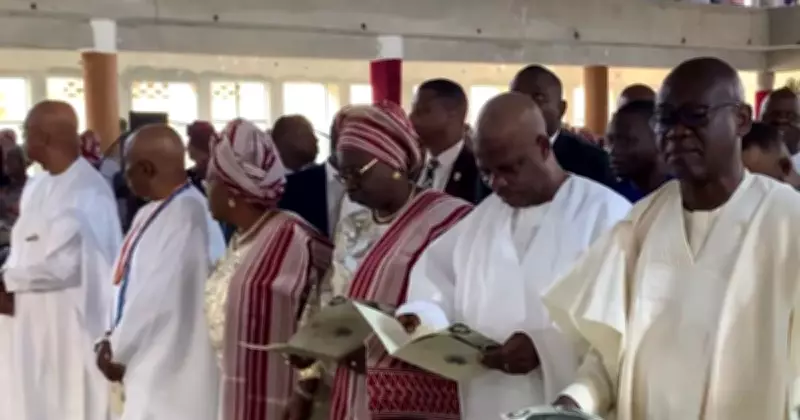
In what was intended to be a solemn occasion of mourning and reflection, a burial service in Ogun State became the center of public attention due to a protocol disagreement involving high-profile political figures. The service for the late Mrs. Lucia Onanbajo, a former First Lady remembered for her grace and service, drew numerous dignitaries but was briefly disrupted by seating arrangements that highlighted deeper political dynamics.
The Incident: Late Arrival and Seating Confusion
According to eyewitness accounts and official statements, Senator Ibikunle Amosun, former governor of Ogun State, arrived after the service had already commenced. In the process, he took a seat that had been reserved for the sitting Speaker of the House of Assembly, located within the section designated for current office holders. This section was clearly marked for serving officials of the current administration, including Governor Dapo Abiodun, the Deputy Governor, Chief Judge, and other senior government functionaries.
The opposite side of the church was reserved for former governors and deputy governors, honoring their past service while maintaining constitutional hierarchy. When the Speaker arrived and found his designated seat occupied, event organizers were forced to make quick adjustments, creating momentary confusion in what had been a meticulously arranged ceremony.
Official Intervention and Viral Aftermath
At the center of the controversy was Secretary to the State Government Tokunbo Talabi, whose calm clarification of seating arrangements has been variously interpreted. Multiple accounts indicate that Talabi simply pointed out the established seating structure: current officials on one side, former officials on the other. His intervention was described as corrective rather than confrontational, with observers noting that his role as chief administrative coordinator includes safeguarding protocol at official functions.
Footage from the service shows other former leaders, including elder statesman Olusegun Osoba, seated according to the established arrangement, reinforcing that the structure was uniform and not selective. The controversy gained momentum after short video clips surfaced online, often accompanied by sensational captions portraying a dramatic standoff. However, extended footage and official statements suggest a less theatrical reality: a protocol correction amid the logistical pressures of a high-profile event.
Political Context and Broader Implications
Though at its core a seating issue, the episode quickly took on political overtones. Amosun governed Ogun State from 2011 to 2019, while the current administration under Governor Abiodun has pursued its own policy direction. Political transitions often carry residual tensions, and symbolic moments, even those as minor as seat placement, can become proxies for deeper rivalries.
Analysts note that public events involving former and current office holders frequently test the delicate balance between honoring legacy and affirming present authority. The incident highlights several enduring principles of public service:
- Protocol as Institutional Safeguard - Ceremonial order exists not to inflate egos but to prevent confusion and ensure fairness. In events involving constitutional offices, seating reflects hierarchy, not personal preference.
- The Value of Punctuality - Arriving early to official functions allows dignitaries to be guided properly and avoids unnecessary disruption. In tightly scheduled state events, timing is critical.
- De-escalation as Strength - Moments of tension can define leadership. By keeping the exchange brief and procedural, organizers prevented a potentially larger confrontation.
Moving Forward: Focus on Governance
Governor Abiodun's administration has signaled a desire to move past the incident and refocus attention on governance. In the days following the burial, official communication emphasized unity, respect for institutions, and the need to avoid inflaming minor misunderstandings.
For Ogun State, a political landscape shaped by influential past and present leaders, the episode serves as a reminder that public conduct matters. At solemn occasions especially, attention should remain fixed on the purpose of the gathering, not on personalities.
The burial service of Mrs. Lucia Onanbajo was intended as a tribute to a life of dignity and quiet service. In the end, perhaps the most enduring takeaway from the brief disruption is a simple one: protocol is not about power. It is about preserving order so that avoidable distractions do not overshadow moments of collective reflection.