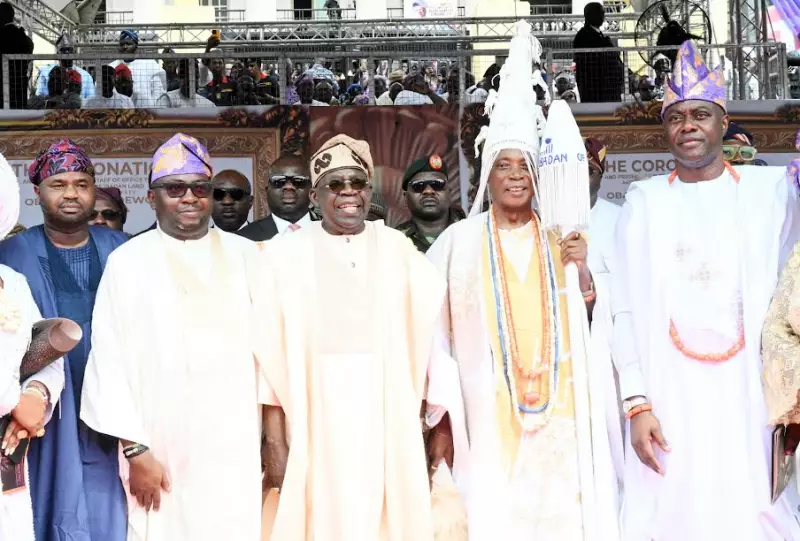
The recent coronation of the 44th Olubadan of Ibadanland, Oba Rashidi Ladoja, was a grand affair attended by President Bola Ahmed Tinubu and Oyo State Governor Seyi Makinde. While the event was filled with laudatory speeches about preserving traditional institutions, it starkly highlighted a constitutional reality: traditional rulers have no formal role in Nigeria's present-day democracy.
From Power to Pageantry: The Erosion of Authority
The contrast between ceremonial respect and actual power is severe. As noted by commentator Eric Teniola, any traditional ruler who crosses a "red line" is swiftly reminded that he is subordinate to a director in the state’s Ministry of Local Government and Chieftaincy Affairs. This constitutional sidelining is a far cry from the past.
History provides stark examples of this diminished status. In 1984, the military government of General Muhammadu Buhari restricted the Ooni of Ife, Oba Okunade Sijuwade, and the Emir of Kano, Alhaji Ado Bayero, to their domains and seized their passports after an unauthorized trip to Israel. More recently, rulers like the Deji of Akure, the Eze of Akaeze, and the Onojie of Uromi have been dethroned by state governors for various infractions, underscoring their vulnerability to political authority.
A Constitutional History: From Inclusion to Exclusion
The legal journey of traditional rulers in Nigeria's governance has been one of steady decline. The 1963 Constitution granted them a free role, with the Oba of Lagos serving as an ex-officio member of the Senate. The 1979 Constitution offered a diminished but defined place, allowing for one traditional ruler from each state to be appointed to the Council of State.
Section 140 of that constitution specified that this member would be "appointed by the Council of Chiefs of the State from among themselves." However, the 1999 Constitution completely deleted any official role for traditional rulers, leaving them without a constitutional schedule or function.
Idle Palaces and a Political Impasse
Today, many highly educated and wealthy traditional leaders find themselves politically idle, their potential for governance untapped. The situation raises critical questions as the nation contemplates constitutional amendments. Should these custodians of culture and history be given a formal role, or should the pretense of their relevance continue?
The political will for change appears lacking. As Teniola, a former director at the Presidency, concludes, the current class of "greedy and selfish politicians" is unlikely to amend the constitution to share power. This leaves Nigeria's traditional rulers in a perpetual state of limbo—celebrated in pageantry but powerless in polity, representing a significant part of the nation's past with an uncertain future in its democratic present.