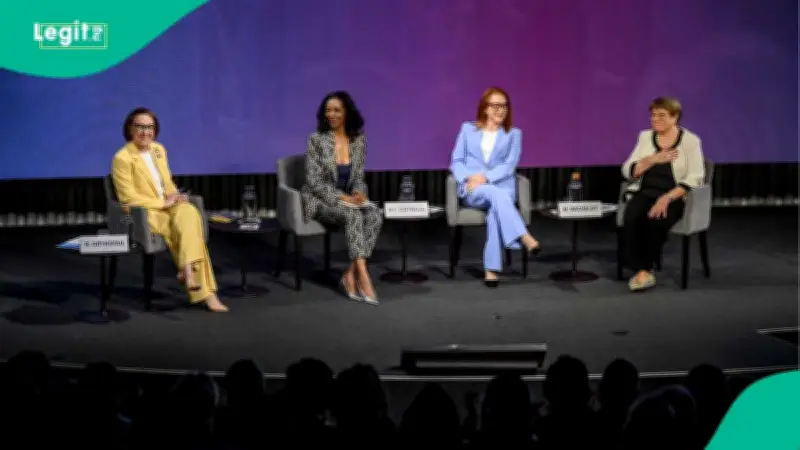
Three women have emerged as prominent contenders in the race to succeed António Guterres as United Nations Secretary-General, as the global body prepares for a leadership transition. Guterres is set to leave office after completing two five-year terms, according to AFP.
Candidates Present Their Visions in Geneva
Michelle Bachelet of Chile, Rebeca Grynspan of Costa Rica, and María Fernanda Espinosa of Ecuador outlined their reform proposals during a public debate in Geneva. Each candidate defended their experience and detailed what they would change if selected for the top global job.
Espinosa argued that the UN has reached a turning point, stating, "I think, of course, a woman -- it's about time, isn't it? After 80 years" of the organisation’s existence. She emphasised that the next leader should be "the best woman, not any woman," describing the role as one requiring strong energy and bold decision-making.
Support for a female UN chief is growing in several countries, particularly in Latin America, where there is also a push for the region to take the post based on informal rotation traditions. However, that convention is not always followed.
Bachelet and Grynspan Offer Contrasting Approaches
Bachelet, a former Chilean president and ex-UN human rights chief, said women could reshape global leadership. "Women can bring more humanism," she asserted, vowing to work independently and remain active on the ground if selected.
Grynspan, who leads the UN trade and development agency UNCTAD, took a different tone. She said she is in the race "because I think I am the best person for the job." She argued that leadership selection should not be based on gender preference and warned against giving automatic advantage to any group.
Common Concerns About UN Challenges
All three candidates agreed that the United Nations is facing serious pressure. They pointed to funding shortages, global conflicts, and weakening trust in international cooperation.
Espinosa noted, "The UN is not the only game in town," but stressed that it remains essential as the only global platform where all countries can meet and address shared problems. Grynspan added that the organisation has a "culture problem" and must build stronger partnerships beyond its walls. Bachelet promised to be "an independent secretary-general, always on the ground," while defending her record on human rights amid criticism from some U.S. lawmakers.
Security Council Holds Key to Selection
The selection process will be decided first by the UN Security Council, where the five permanent members hold veto power, before moving to a final vote in the General Assembly. Other contenders in the wider race include Argentina’s Rafael Grossi, head of the International Atomic Energy Agency, and former Senegalese President Macky Sall, who contributed a video message to the debate.
The Security Council is expected to begin early discussions in July, setting the stage for one of the most politically sensitive leadership decisions in global diplomacy.