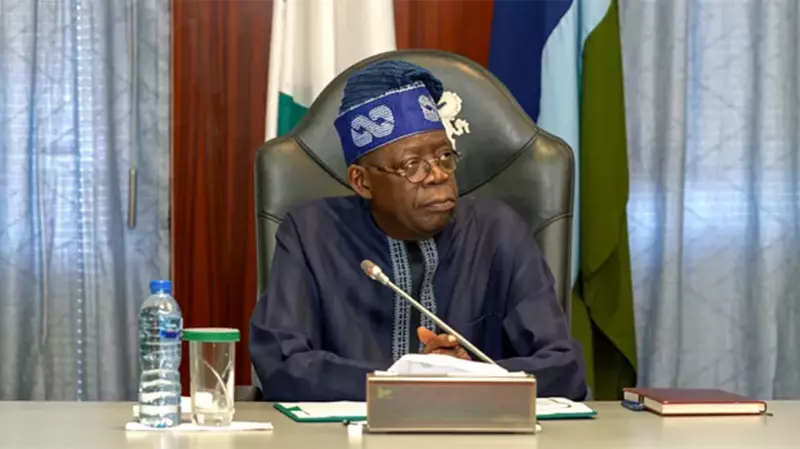
President Bola Ahmed Tinubu has officially declined to give his assent to the Central Gaming Bill recently passed by the National Assembly. The President made this commitment to state governments, affirming his stance as a constitutional democrat who respects the boundaries of legislative powers.
Constitutional Commitment at APC NEC Meeting
President Tinubu gave this assurance over the weekend in Abuja, during a meeting of the All Progressives Congress (APC) National Executive Committee (NEC). He emphasized his dedication to obeying the Constitution of Nigeria, clearly stating that he understands where his exclusive legislative capacity begins and ends. This position appears to be a direct response to legal advice concerning the bill's constitutional validity.
Legal Warnings and Supreme Court Precedent
The move by the National Assembly to pass the Central Gaming Bill on December 2, 2025, aimed to grant the Federal Government legal authority to regulate lottery and gaming activities nationwide, including in states and the Federal Capital Territory (FCT). However, this action faced immediate legal pushback.
The Attorney-General of Lagos State, represented by legal luminary Wole Olanipekun (SAN), wrote to the Attorney-General of the Federation, Lateef Fagbemi (SAN), on December 12, 2025. The letter strongly advised against signing the bill into law, warning that doing so would disregard a clear order from the Supreme Court.
The basis for this warning was a landmark judgment from the apex court delivered last year. In that ruling, the court nullified the National Lottery Act, declaring that legislation on lotteries falls outside the powers of the federal legislature. The Supreme Court firmly established that gambling and lottery matters are residual issues, meaning they are exclusively within the legislative jurisdiction of individual State Houses of Assembly.
Upholding the Rule of Law
By heeding this advice and refusing assent, President Tinubu has effectively prevented a potential constitutional crisis. His decision reinforces the principle of federalism and respects the separation of powers as defined by the nation's highest court. It signals to state governments that the current administration intends to operate within the legal framework established by the Constitution and judicial precedents.
The President's action at the APC NEC meeting underscores a commitment to the rule of law over political expediency, setting a significant precedent for how similar issues concerning the legislative lists in the Nigerian Constitution may be handled in the future.