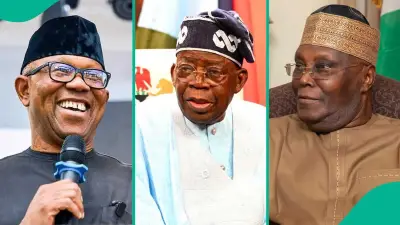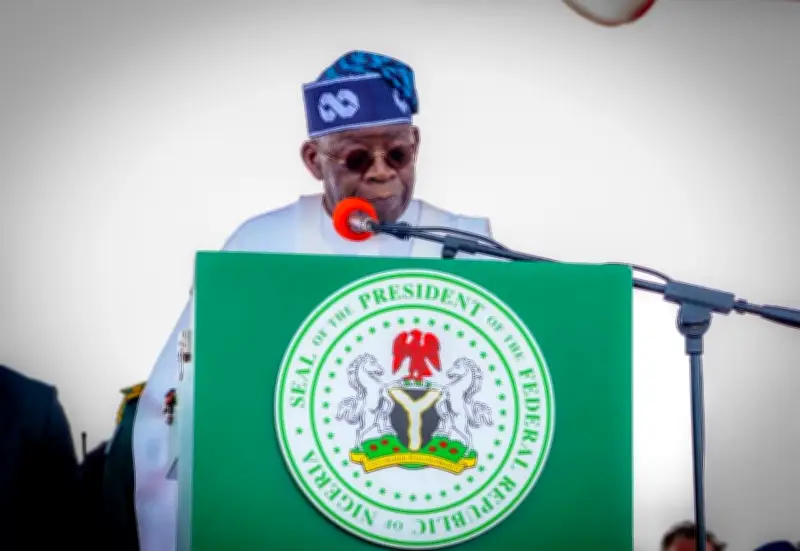
President Bola Tinubu has declared that his administration is laying a solid foundation for Nigeria's prosperity, emphasizing transformative reforms in the economy, security, and infrastructure sectors. Speaking at a town hall meeting in Abuja, the President outlined key achievements and future plans aimed at repositioning the nation for sustainable growth.
Economic Reforms and Growth
Tinubu highlighted the removal of fuel subsidy and unification of exchange rates as critical steps toward fiscal stability. These measures, he said, have saved the government trillions of naira previously lost to subsidies and arbitrage. The President noted that the economy is expected to grow by 3.76% in 2024, according to the International Monetary Fund (IMF), up from 2.9% in 2023. He also cited a reduction in the budget deficit from 6.1% to 4.4% of GDP.
Security and Infrastructure
On security, Tinubu reported significant progress in combating insurgency, banditry, and kidnapping. He stated that over 5,000 terrorists have been neutralized and more than 7,000 hostages rescued in the past year. The government has also launched a new national security architecture to enhance intelligence sharing and rapid response. In infrastructure, the President mentioned ongoing projects such as the Lagos-Calabar coastal highway and the rehabilitation of the Port Harcourt refinery, which is expected to resume operations by December 2024.
Social Investments and Education
Tinubu announced the expansion of the National Social Investment Programme (NSIP) to reach 50 million households, with a focus on cash transfers, school feeding, and micro-credit. He also highlighted the student loan scheme, which has already benefited 100,000 students, and plans to increase tertiary education funding by 20% in the 2025 budget.
“Our goal is to create an enabling environment where every Nigerian can thrive. We are not just making promises; we are delivering results,” Tinubu said. The President urged citizens to support the reforms, noting that the initial pains are necessary for long-term gains.
Criticism and Response
The town hall also saw questions from participants about rising living costs and unemployment. Tinubu acknowledged the challenges but defended his policies, stating that the era of easy money is over and that Nigerians must embrace productivity. He cited the revival of the textile industry in Kaduna and the expansion of the digital economy as examples of job creation efforts.
According to the President, the government is working with state governors to implement agricultural reforms that will ensure food security and reduce imports. He also announced a new export processing zone in Ogun State to boost manufacturing and foreign exchange earnings.
Looking Ahead
Tinubu concluded by reaffirming his commitment to leaving a legacy of prosperity. He promised to complete the ongoing railway modernisation project linking Lagos to Kano and to extend the Abuja rail mass transit system. The President also assured that the 2024 electricity tariff review would be followed by improved supply, with a target of 10,000 megawatts by 2025.
“We are building a Nigeria that will be the pride of Africa. The foundation is being laid, and the roof will soon be on,” Tinubu said. The event ended with a call for unity and patience as the administration implements its ambitious agenda.