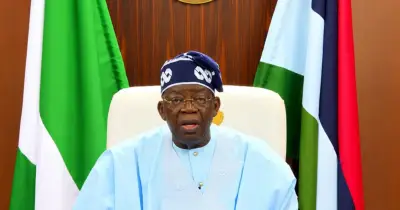
President Bola Tinubu has directed the National Security Adviser (NSA) to conduct a comprehensive 90-day national security threat assessment and develop a five-year defence plan aimed at overhauling Nigeria's security architecture. The directive was announced in a statement issued by the presidency on Thursday, August 19, 2026, following a high-level security meeting at the Aso Rock Villa.
Presidential Directive on Security Overhaul
According to the statement, the 90-day assessment will cover all current and emerging threats across the country, including terrorism, banditry, kidnapping, and separatist agitations. The NSA, Mallam Nuhu Ribadu, is expected to submit a detailed report within the stipulated timeframe, outlining the severity and geographic distribution of these threats.
President Tinubu also ordered the Ministry of Defence and the Armed Forces to collaborate on a five-year defence plan that will prioritize modernisation of equipment, enhanced intelligence gathering, and improved inter-agency coordination. The plan is set to be presented to the Federal Executive Council for approval before the end of 2026, the presidency confirmed.
Scope of the Threat Assessment
The threat assessment will involve input from the Department of State Services (DSS), the National Intelligence Agency (NIA), the Defence Intelligence Agency (DIA), and the Nigeria Police Force. The presidency emphasized that the exercise is not limited to military threats but will also address cyber security, economic sabotage, and food security risks linked to farmer-herder conflicts.
"The President has directed that the assessment must be comprehensive and actionable, with clear timelines for implementation," the statement read. "This is part of his commitment to ensuring that every Nigerian can live in peace and security."
Funding and Implementation Strategy
To fund the five-year defence plan, the presidency indicated that the Ministry of Finance and the Budget Office have been instructed to identify dedicated funding sources, including potential reallocations from non-essential expenditures and increased allocations in the 2027 budget. The plan is expected to require significant investment in new military hardware, drone technology, and surveillance systems.
President Tinubu also directed the NSA to establish a monitoring and evaluation framework to track progress against the plan's milestones. Quarterly reports will be submitted to the President, with the first report due in November 2026, according to the statement.
Reactions and Next Steps
The directive has been welcomed by security analysts who have long called for a holistic approach to Nigeria's security challenges. However, the presidency cautioned that the assessment and plan must not be seen as a panacea. "The President is clear that this is a starting point, not an end," the statement noted. "Implementation will require the full cooperation of all security agencies and the support of the National Assembly."
The 90-day assessment is expected to conclude by mid-November 2026, after which the five-year defence plan will be drafted and submitted for legislative approval. The presidency confirmed that the President has directed the NSA to brief the National Security Council on the findings before the end of the year.