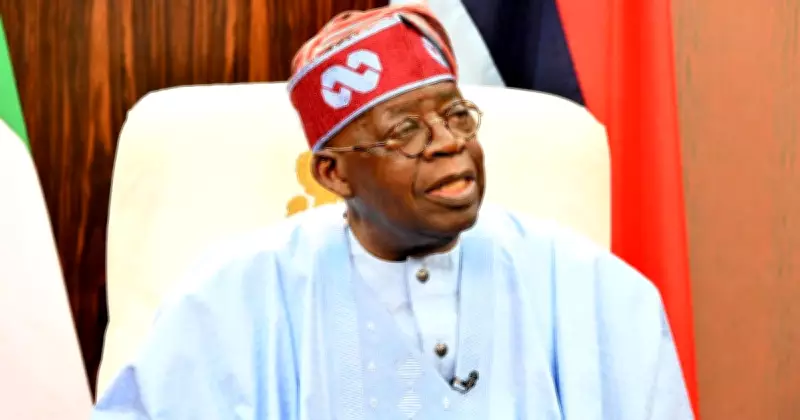
President Tinubu Sets March 31 Deadline for Cabinet Resignations Ahead of 2027 Elections
In a significant political development, Nigeria's President Bola Ahmed Tinubu has issued a firm directive requiring all members of his cabinet who plan to contest for elective positions in the 2027 general elections to submit their resignations by March 31, 2026. This ultimatum comes as the country's political atmosphere intensifies with the elections now less than eight months away.
Implications for Political Appointees and Government Operations
The presidential order applies comprehensively to all political appointees serving under the current administration, including ministers and principal aides. Those affected must step down from their official roles to focus entirely on their political campaigns, while President Tinubu will appoint replacements to ensure continuity in governance.
This directive is expected to trigger a substantial reshuffling within the federal executive cabinet, which under Tinubu's leadership has become the largest since Nigeria's return to democratic rule in 1999. The president has previously reorganized his cabinet twice, most recently reassigning former Junior Minister of Finance Doris Ogala to the Ministry of Budget and Planning and appointing Taiwo Oyedele, former Chairman of the Presidential Tax Reform Committee, to fill the vacancy.
Key Figures and Political Ambitions
Among the cabinet members reportedly considering political runs is Minister of Power Adebayo Adelabu, who is anticipated to seek the ruling All Progressives Congress (APC) nomination for the Oyo State gubernatorial election. Adelabu, a trained accountant and banker, previously served as Deputy Governor of the Central Bank of Nigeria under President Goodluck Jonathan in 2014 and was the APC's gubernatorial candidate in Oyo State during the 2019 elections, losing to People's Democratic Party candidate Seyi Makinde.
The timing of this directive coincides with President Tinubu's departure for the United Kingdom, accompanied by the First Lady and other senior officials, for Nigeria's first state visit to the UK in nearly four decades. This international engagement underscores the administration's ongoing diplomatic activities alongside domestic political management.
Broader Political Landscape and Party Dynamics
The impending resignations are poised to further energize the 2027 electoral cycle, as politicians strategically align their interests with appropriate political platforms. The ruling APC continues to consolidate its influence, now holding 31 of the 36 state governorships across Nigeria. Recent political shifts include the defection of 12 lawmakers from the People's Democratic Party to join the APC and the emerging African Democratic Congress, which is positioning itself as a leading opposition force.
Notably, several prominent opposition figures have migrated to the African Democratic Congress, including former Vice President Atiku Abubakar, former Anambra State Governor Peter Obi, and former Rivers State Governor Rotimi Amaechi. These movements indicate a dynamic and evolving political arena as the 2027 elections draw nearer, with Tinubu's cabinet resignation mandate adding a new layer of strategic calculation for aspiring officeholders.