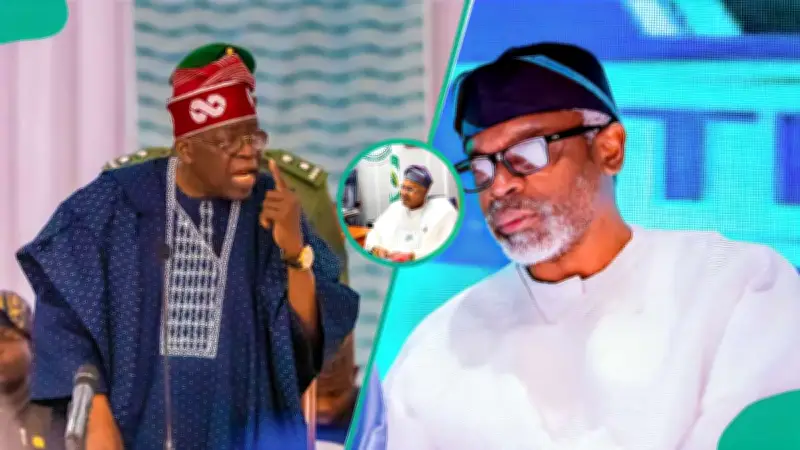
President Bola Tinubu has directed the Independent Corrupt Practices and Other Related Offences Commission (ICPC) to conduct a thorough investigation into the activities of the Presidential Foreign Intervention Promotion Council (PFIPC) and all related matters, following a public dispute between Femi Gbajabiamila, the Chief of Staff to the President, and Adeniyi Adeyemi, who is accused of forging government appointment letters and posing as the director-general of the non-existent agency.
According to a statement issued on Tuesday evening, July 7, by presidential spokesperson Bayo Onanuga, Tinubu ordered that the investigation be concluded and a comprehensive report submitted to him within 30 days. The probe will examine the alleged forgery of appointment letters and other official government documents, the use of false claims of presidential appointment to seek official recognition and diplomatic support—including visa facilitation—and the opening of multiple bank accounts in the names of purported government agencies using allegedly forged documents.
Background of the Dispute
The controversy erupted after Adeyemi accused Gbajabiamila of demanding 48% of the N1.3 billion appropriated for the agency in the 2026 budget. In response, Gbajabiamila gave Adeyemi 72 hours to withdraw what he described as false and defamatory allegations or face legal action. The presidency insists that the PFIPC does not exist as a legitimate government agency, and Adeyemi has been declared wanted by the Nigeria Police Force.
Onanuga stated: "President Tinubu directed the ICPC to investigate not only the conduct of the principal individual and other collaborators involved but also the wider circumstances that may have enabled a fictitious body and a false claim of presidential appointment to acquire an appearance of official legitimacy."
Scope of the ICPC Investigation
The presidency outlined a broad mandate for the ICPC, including examining the provenance and use of false official documents; the processes through which official recognition or diplomatic support may have been sought or obtained; the opening and operation of any related bank accounts; the source and movement of any funds involved; and the role of any public officer, private individual, financial institution, intermediary, or other entity that may have facilitated, enabled, or participated in the alleged scheme.
Additionally, Tinubu directed the ICPC to identify any weaknesses in government and institutional procedures that may have been exploited and to recommend immediate measures to prevent similar abuses in the future. This directive underscores the administration's commitment to transparency and accountability in public service.
Legal Proceedings and Denials
The Nigeria Police Force has arraigned Adeyemi and two others before the Federal High Court on an eight-count charge. The case, filed on November 27, 2025, is scheduled for hearing on July 27. However, Adeyemi has remained in hiding since he was declared wanted. In a recent interview with Premium Times, he denied forging any appointment letters, describing the government's allegations as an attempt to silence him. He maintained that the agency was established in 2024 and claimed his life was in danger.
Gbajabiamila, through his solicitors at Pinheiro LP, has demanded a public apology from Adeyemi, the removal of the alleged defamatory publications from all media platforms, and a written undertaking that no further allegations would be made against him. The cease-and-desist letter was issued by Kemi Pinheiro (SAN).
Political and Public Reactions
The saga has drawn nationwide attention and ignited widespread criticism. Many Nigerians have called for a thorough investigation to uncover the truth behind the allegations and counter-allegations. The presidency has reiterated its support for Gbajabiamila, who remains in his position as Chief of Staff amid the controversy. The ICPC investigation is expected to provide clarity and determine the extent of any wrongdoing.
Observers note that the case highlights potential vulnerabilities in government procedures that could allow fictitious agencies to gain legitimacy. The outcome of the investigation could lead to reforms in how government agencies are created and recognized, as well as stricter oversight of appointment letters and official documents.