President Bola Tinubu has declared that the reforms initiated by his administration since 2023 have restored stability and credibility to economic management in Nigeria. Speaking during his 2026 Democracy Day speech on Friday, Tinubu emphasized that his government's mission is to secure economic freedom for the masses, honoring the heroes of June 12, 1993, who secured political freedom for Nigerians.
Democracy Must Improve Lives
Tinubu stressed that democracy must be reflected in the quality of people's lives, including opportunities for youth, prosperous farmers, successful entrepreneurs, and the dignity of workers. He noted that the reforms were not chosen for ease but out of necessity. Three years ago, public finances were under severe strain, investment was discouraged, and economic uncertainty threatened the nation's future.
"We chose to act, embracing reforms to advance Nigeria's economic freedom," Tinubu stated. "Since 2023, our reforms have restored stability and credibility to economic management. Federation revenues have risen, providing states and local governments with more resources for infrastructure, education, healthcare, and security. Fiscal transparency has improved, leakage has been reduced, and public funds are better directed to national priorities. Investor confidence has returned, with investments in agriculture, energy, manufacturing, technology, mining, transportation, and the creative industries growing."
Energy Sector Achievements
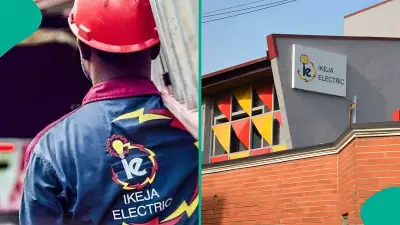
Celebrating successes, Tinubu announced that domestic refining capacity has increased, strengthening energy security and reducing Nigeria's reliance on imported petroleum products. On electricity, he noted that by 2023, the sector was characterized by chronic generation shortfalls, an unreliable gas supply, and fragile transmission infrastructure that could not evacuate available power. Distribution companies were burdened by massive losses and a metering deficit of over four million.
"Worst of all, the value chain was drowning in legacy debt. The result was a sector that generated less than the 13,500 Megawatts installed capacity, a sector that transmitted less than it generated, distributed less than it transmitted, and collected revenue far below what it needed to sustain itself," he said.
To address these problems, the President signed the Electricity Act, which grants states authority to generate, transmit, and distribute power. The Presidential Power Sector Task Force is working to reduce the metering deficit and has been authorized to raise a N4 trillion bond to settle verified legacy debts. The Rural Electrification Agency, supported by the World Bank and the African Development Bank, has deployed off-grid and mini-grid power to underserved communities, universities, markets, and hospitals.
"Electricity is a democratic dividend we owe every Nigerian. We intend to deliver it," Tinubu affirmed.
Infrastructure and Agriculture
On infrastructure, Tinubu stated that projects across the country are connecting producers to markets and creating opportunities for enterprise and employment. The National Agricultural Development Fund is deploying 10,000 tractors over five years. He revealed that over 1,000 SMEs have been certified for export, and non-oil exports grew by 21 percent last year.
The President acknowledged that many Nigerians still face economic hardship but expressed his administration's focus on reducing inflation, expanding food production, creating jobs, improving living standards, rebuilding confidence in the economy, and creating conditions for sustainable prosperity.