Tinubu's Renewed Hope Agenda: Six Major Federal Reforms Since 2023
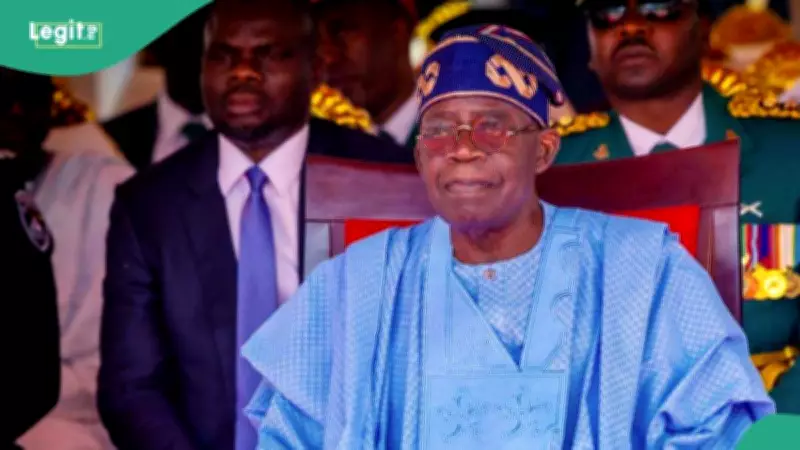
Since assuming office in May 2023, President Bola Ahmed Tinubu, Nigeria's 16th president, has introduced several transformative changes under his Renewed Hope agenda. These reforms aim to address long-standing fiscal challenges and restructure the nation's economy, though they have also contributed to short-term difficulties like inflation and increased living costs.
1. Reversion to Old National Anthem
On Wednesday, May 29, 2024, President Tinubu signed into law a bill to revert to Nigeria's old national anthem, which had been dropped by a military government in 1978. The re-adopted anthem, Nigeria, We Hail Thee, was written by Lillian Jean Williams in 1959 and composed by Frances Berda. Tinubu stated that this anthem symbolizes Nigeria's rich diversity and national unity.
2. Cabinet Restructuring and Ministry Mergers
In October 2024, a major cabinet reshuffle was implemented, scrapping the Ministry of Niger Delta Development and replacing it with the Ministry of Regional Development to oversee all regional commissions. Additionally, the Ministry of Tourism was merged with the Ministry of Arts, Culture, and Creative Economy. The presidency announced that the National Sports Commission would now assume the role of the Ministry of Sports, streamlining governance structures.
3. Suspension of N-Power Programme
In 2023, the federal government suspended the N-Power programme, a flagship initiative regarded as one of Africa's largest post-tertiary job schemes. The programme included popular components like N-Teach, part of the National Social Investment Programmes covering health, agriculture, and public finance sectors.
4. Comprehensive Tax Reform Acts
Nigeria's 2025 Tax Reform Acts, effective January 1, 2026, aim to simplify tax administration, remove nuisance taxes, and shift the burden from low-income earners to high-income individuals and large corporations. The legislation includes:
- Higher income tax thresholds for lower-income earners
- Exemptions for small businesses with lower turnover
- Corporate tax reduction to 25%
- Introduction of a 4% development levy and 15% minimum tax for large multinationals
- Zero-rated VAT for essential goods like food and healthcare
The Federal Inland Revenue Service has been renamed the Nigeria Revenue Service to serve as the central tax agency.
5. Cancellation of BEA Scholarship Programme
On April 29, 2025, Education Minister Tunji Alausa announced the cancellation of the Bilateral Education Agreement scholarship programme, describing it as a waste of resources. The programme had enabled Nigerian students to study in partner countries including China, Russia, Algeria, Hungary, Morocco, Egypt, and Serbia. Alausa noted that Nigerian universities already offer the same courses, and expressed displeasure over what he called blackmailing behaviour by some scholars on social media.
6. Education System Overhaul
In February 2025, the federal government announced the abolition of all Junior Secondary Schools and Senior Secondary Schools nationwide, introducing a compulsory 12-year uninterrupted basic education model. This move effectively replaces the 6-3-3-4 education system with a 12-4 structure, after which Nigerian children can pursue higher education.
These six reforms represent significant shifts in Nigeria's governance and policy landscape under President Tinubu's administration, with impacts expected to unfold across various sectors in the coming years.