Ibrahim Traoré's Military Option and the Fate of Democracy in Africa
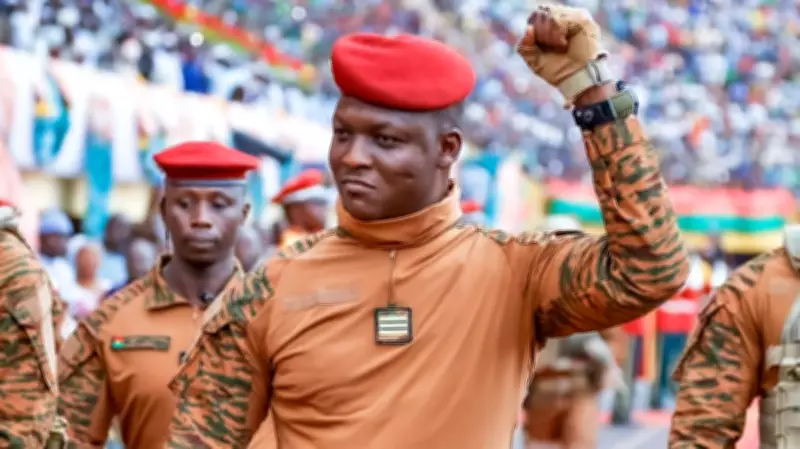
The military leader in charge of Burkina Faso, Ibrahim Traoré, has recently issued a stark admonition to African countries, urging them to forget about democracy. He asserts that the democratic system is another form of slavery and is inherently bloody. Traoré declared, "People must forget about democracy. If an African wants to tell you about democracy, you should run away. Democracy kills. Democracy as a western ideal amounts to slavery, and it is killing. Wherever they want to install it in the world, it’s in the blood. There is no democracy in this world. They impose it when they want and they also kill it. Imperialism is the individual who wants to dominate the other, keep him in slavery and oppress him."
Traoré's Consolidation of Power and Shifting Promises
Initially, Traoré's government and the regime he overthrew were intended to be brief and transitory. However, Burkina Faso now appears entrenched under military control. Traoré has explicitly told his people to forget about democracy until at least 2029, sending clear signals to nations with fragile democratic systems to avoid military incursions. This situation is not immutable. After the successful coup in September 2022, Traoré promised to restore democracy within two years. He had ousted the military regime led by Lieutenant Paul-Henri Damiba, who had seized power just nine months earlier by toppling President Roch Kabore. As the July 2024 deadline approached, Traoré extended the handover by another five years to 2029, banning political parties and instructing Burkinabes to "forget" about democracy for the time being.
Historical Context and Traoré's Appeal
Before 2022, the democratic environment under Roch Kabore was markedly unstable, with the government failing to provide political stability. Kabore struggled to address the threat of terrorist jihadists who had seized vast territories. The military believed they could achieve results more swiftly. Under Traoré, the fight to reclaim nearly 30 percent of the country from Islamist fighters remains daunting, yet he has leveraged this crisis to consolidate power and promote patriotism as a political theory. He argues that patriotism surpasses democracy, encouraging citizens and young Africans to recognize western democracy as a false concept. Traoré cites Libya as an example, where Western attempts to impose democracy led to chaos, killings, and endless violence.
At 37 years old, Traoré resonates with a significant portion of Africa's population, estimated to be 75 to 80 percent under the age of 37 as of 2026. This demographic, vibrant but often jobless, has not experienced quality democratic governance since the turn of the millennium. They yearn for leadership that can channel their energies into productive ventures but frequently find themselves migrating aimlessly and dangerously in search of better opportunities. This generation missed the pre- and post-independence transitions driven by African nationalism and the brief periods of political stability. They are inspired by historical figures like Muammar Gaddafi, Murtala Mohammed, and Thomas Sankara, viewing Traoré, along with Mali's General Assimi Goïta and Niger's General Abdourahamane Tchiani, as reincarnations of that era, willing to experiment with alternative governance models.
Restrictions and Traoré's Influence
Military rule in Burkina Faso has brought numerous restrictions, including the banning of political parties and the deregistration of over 100 civil societies due to security concerns. The media environment has also become increasingly restricted, with critical outlets self-censoring to avoid trouble, and reports of suspensions for VOA and France 24. Despite these measures, Traoré has cultivated a cult-like following at home, seen as a savior connected to the people. Across the continent and in the diaspora, many showcase him as the new face of African leadership, admiring his blend of patriotism, radical anti-imperialism, and advocacy for economic self-reliance through what he terms a "people’s progressive revolution." He denounces Western democracy for the underdevelopment of former colonies and promotes a pan-African governance model focused on sovereignty, national security, and indigenous development, gaining disciples in the process.
Broader Democratic Challenges in Africa
Unfortunately for democracy in Africa, younger populations often struggle to make sense of the democratic offerings in many countries, where systems are frequently manipulated to frustrate multiparty representation, promote family oligarchies, and perpetuate corruption. Scholars and political scientists debate how to situate these flawed democracies. Pro-democracy advocates and media have attempted to counter Traoré's rhetoric to prevent its spread, citing thriving examples like Ghana, Cape Verde, Botswana, South Africa, and Namibia as models to emulate rather than military or autocratic systems. The United Nations Human Rights Office has expressed concern over the deteriorating political situation in Burkina Faso, particularly the ban on political parties and restrictions on pro-democracy activists, urging the junta to lift these bans and avoid exacerbating the humanitarian crisis, which includes over two million internally displaced citizens.
Erosion of Democracy in Other African Nations
Beyond Burkina Faso, democratic erosion is evident across the continent. In Zimbabwe, the ruling Zanu-PF is considering a constitutional amendment to allow parliament to elect the president instead of voters and extend the presidential term from five to seven years, with opposition leaders calling it a "slow coup." In Cameroon, President Paul Biya appointed his son, Frank Emmanuel Biya, to key positions, consolidating family power. In Uganda, President Yoweri Museveni's son, Gen. Muhoozi Kainerugba, serves as Chief of Defence Forces, merging executive and military authority within the family. In Nigeria, the opposition African Democratic Congress (ADC) was denied venues for its national convention, with officials dismissing their applications, while the ruling All Progressives Congress (APC) showed no remorse, even as international observers witnessed the intimidation. Nigeria has seen party primaries replaced by coronation ceremonies, undermining popular mandates. In The Gambia, President Adama Barrow, who promised a three-year transitional term, has sought extended rule, citing divine ordination, reminiscent of past autocratic leaders.
While Traoré and his military junta are vilified, it is crucial to address those who make peaceful democratic change impossible through constitutional manipulations and oppressive tactics. The future of democracy in Africa hangs in the balance as leaders like Traoré challenge its very foundations, urging a reevaluation of governance models across the continent.