
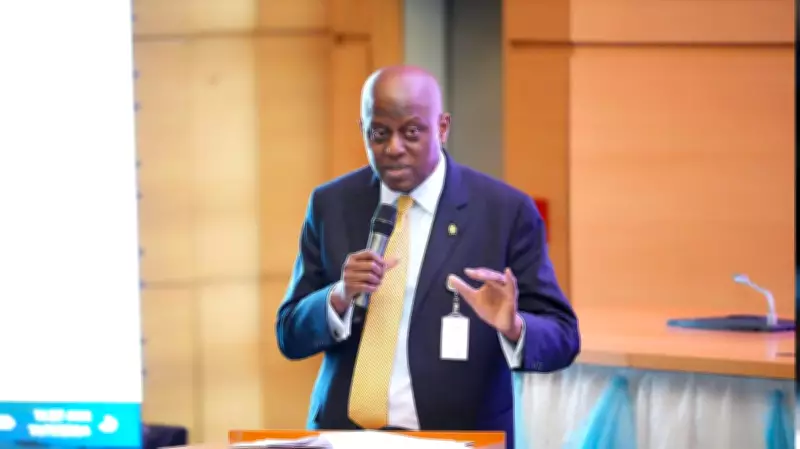
The Central Bank of Nigeria (CBN) Governor, Olayemi Cardoso, has announced that a new Foreign Exchange (FX) manual outlining operational behaviors in the Nigerian foreign exchange market will take effect on June 1, 2026. Cardoso made this disclosure in Abuja while unveiling the fourth edition of the CBN Forex Manual.
Commitment to Reforms
Cardoso stated that the revised manual reflects the apex bank's dedication to reforms aimed at promoting macroeconomic stability, transparency, accountability, and sustainable economic growth in Nigeria. Speaking on the theme "Building Confidence in Nigeria's FX Market: Revised Framework for Transparency and Accountability," he emphasized that the foreign exchange market is a critical pillar of every modern economy, and its effectiveness depends on clarity, consistency, compliance, and public confidence.
Strategic Timing
The governor noted that the revised manual comes at a strategic moment in Nigeria's economic reform journey, as the government implements fiscal and non-fiscal measures to stabilize the economy and reposition it for growth. He explained that the revised framework became necessary due to structural changes in the domestic economy, increasing global economic uncertainties, inflationary pressures, and ongoing reforms in Nigeria's foreign exchange market.
Cardoso said the manual, last reviewed in 2018, was developed through extensive consultations with banks, regulators, and other stakeholders to ensure that diverse industry concerns were adequately reflected. He emphasized that successful implementation would require cooperation from authorized dealer banks, exporters, importers, regulators, ministries, departments, agencies, and the broader private sector.
Shared Responsibility
Cardoso declared that stability in the foreign exchange market is a shared responsibility between the regulator and market participants. He stated that the CBN would continue strengthening its monitoring systems to ensure consistency, fairness, accountability, and compliance across the foreign exchange ecosystem.
Liquidity Improvements
Cardoso also highlighted improvements in market liquidity, noting that average daily turnover in Nigeria's FX market has increased from about $100 million at the beginning of the current administration to between $400 million and $600 million. The market has recorded $1 billion in turnover on several occasions in recent months. He expressed optimism that the reforms would deepen market liquidity, reduce excessive reliance on external reserves for interventions, and foster greater confidence among investors and market participants.
Key Provisions
Deputy Governor of the Economic Policy Directorate at the CBN, Dr. Muhammad Sani Abdullahi, explained that the manual harmonizes the disbursement structure for Personal Travel Allowance (PTA) and Business Travel Allowance (BTA) with the revised BDC Guidelines. Under this, 75 percent shall be disbursed through electronic channels, while the remaining 25 percent may be paid in cash.
The manual also reviews the allowable advance payment for imports, increasing it from 15 percent to 30 percent. Processing of Form NXP shall now be free of charge from June 1, 2026. New provisions relating to service exports include documentation requirements and reporting obligations. From June 1, payments for services, fees, and charges can be made in foreign currency when receipts are generated in that currency.
Provisions for tuition fee payments for undergraduate and postgraduate studies have been included, subject to a maximum limit of $25,000 per semester. The mandatory requirement for Form A for remittances using ordinary domiciliary accounts has been removed, ensuring that authorized dealer banks continue to verify the legitimacy and purpose of such transactions.
Industry Support
Group Managing Director and Chief Executive Officer of United Bank for Africa, Oliver Alawuba, commended the CBN for its interventions and policy reforms in the foreign exchange market. Alawuba noted a significant improvement in confidence in the Nigerian economy, observing that unlike previous years when customers constantly sought foreign exchange from banks, banks are now increasingly asking customers whether they have FX to trade. He assured the CBN that banks would uphold discipline, transparency, and compliance in implementing the revised FX manual.




