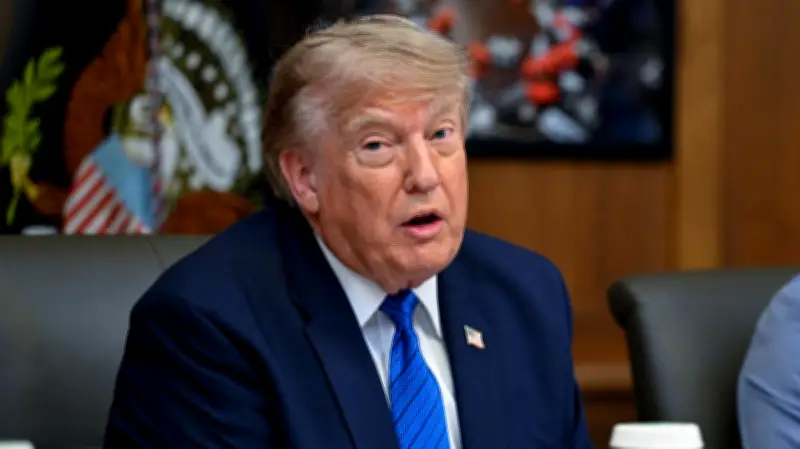
President Donald Trump has issued a stark ultimatum to Iran, warning that the nation faces "decapitation" if it does not agree to a new deal aimed at ending hostilities between the two countries. Speaking to reporters at the Oval Office on Monday, August 3, Trump emphasized that Tehran has one final opportunity to reach an agreement.
Trump's Warning and the Push for Talks
"Iran did not want to be hit, and they said we want to talk," Trump told reporters. He noted that the talks are being held at Iran's request, with support from Saudi Arabia, the UAE, and Qatar. "We're talking at the request of Iran, backed by Saudi Arabia, backed by UAE and backed by Qatar in particular, but others also," he said.
Trump stressed the urgency, stating, "This is the last chance for them to sign a good document." When pressed further, he added, "I want to give him every last chance before decapitation."
Ongoing Negotiations and Denials
Asked whether talks with Iran were now off, Trump replied, "They're going on right now." He explained that while Iran may publicly deny the talks, they are indeed happening. "When they're talking, they don't like saying that they're talking… We're in talks, and they'll sometimes deny it, even though they spend hours and hours together talking," he said.
The talks are planned to proceed in two phases. The first phase focuses on reopening the Strait of Hormuz, with Trump claiming, "We're talking about the Strait, the opening of the Strait, having it open literally by tomorrow, completely open, and that's phase one. And phase two is we then will talk about the nuclear capacity."
Location and Economic Implications
Regarding the location of the talks, Trump said it would be decided "today or tomorrow," adding that discussions would move quickly. He also ruled out any charges for ships passing through the Strait of Hormuz, stating, "There's not going to be charging. We're not talking about charging at all."
Trump predicted that oil prices will drop after the US is "finished with Iran," while criticizing top US oil producers ExxonMobil and Chevron for making "too much money." He noted, "When you look at one company where they made 12 times what they made the year before, they would give some of that back to the public, and they better cut the retail price, the consumer price. Too much money."
Iran's Response and Omani Mediation
Iran, however, has denied any direct negotiations with the US. Foreign Ministry spokesperson Esmaeil Baqaei stated that Tehran is working with Oman to establish "a temporary route" in the Strait of Hormuz to ensure safe navigation. "Our current discussions with Oman are focused on ensuring the safe passage of ships in the Strait of Hormuz," Baqaei said at a press briefing. He firmly rejected reports of negotiations, saying, "We are not having negotiations with the United States."
The situation remains fluid, with the US pressing for a deal while Iran publicly distances itself from talks. The outcome could significantly impact global oil markets and regional stability.