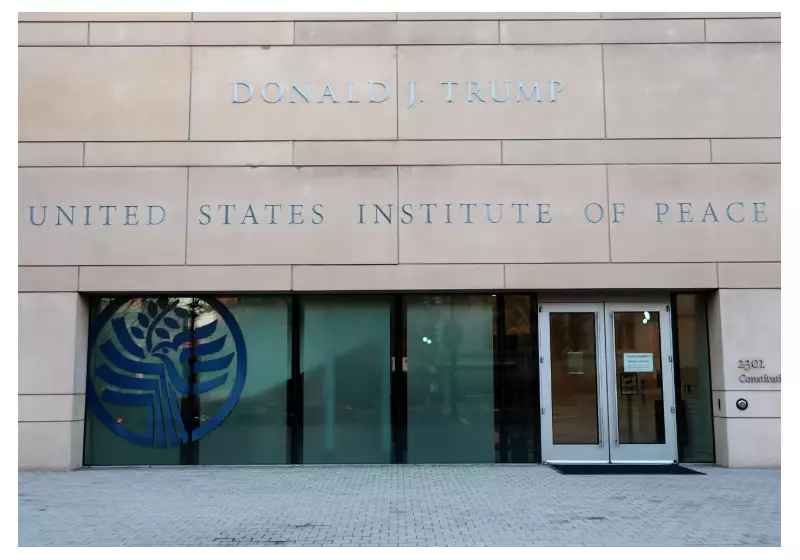
In a move that has sparked significant discussion, the administration of former President Donald Trump has officially changed the name of a key American institution. The U.S. Institute of Peace, an independent think tank, now bears the former president's name.
A New Name for a Historic Institution
The State Department made the announcement on Wednesday, December 3. The agency confirmed that the institute would now be known as the Donald J. Trump Institute of Peace. Officials stated the renaming was done to honour what they called "the greatest dealmaker in our nation's history."
Photographs from the scene show the new signage clearly installed above the building's main entrance, placing Trump's name in a prominent position for all visitors to see.
Political Praise and Legal Struggles
Secretary of State Marco Rubio publicly supported the decision on the social media platform X. He wrote, "President Trump will be remembered by history as the President of Peace. It's time our State Department display that."
This name change did not happen in a vacuum. It occurred during a protracted legal struggle over who has ultimate control of the agency. The institute was originally founded by President Ronald Reagan in 1985 with a mission to promote international conflict resolution and peace.
According to reports from CNN, while the institute receives its financing from Congress, it operates independently and owns its headquarters building. The Trump administration's move involved seizing control of the agency and significantly reducing its funding before proceeding with the rebranding.
Implications and Reactions
The decision to rename a federally-funded, independent institution after a sitting or former president is highly unusual. It raises questions about the legacy of presidential administrations and the use of public institutions for commemorative purposes.
Analysts note that the action, combined with the funding cuts, represents a major shift in the operation and symbolic identity of an agency dedicated to the peaceful resolution of global conflicts. The long-term impact of this change on the institute's work and its perception both domestically and internationally remains to be seen.