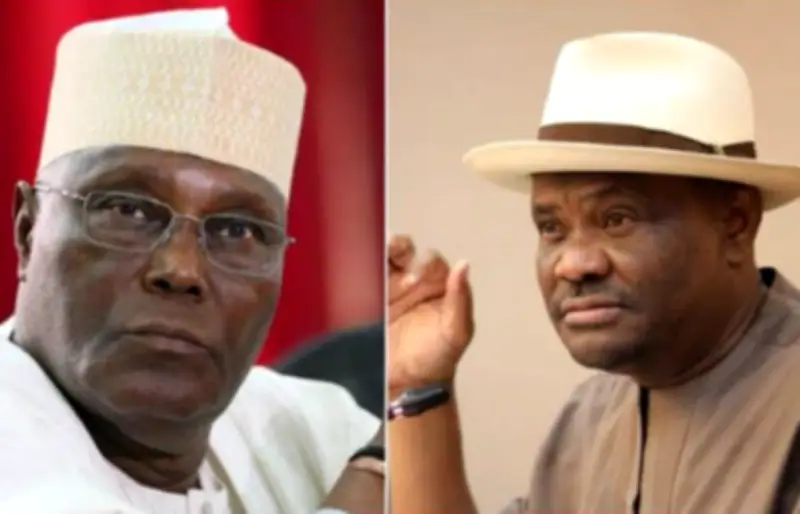
Nyesom Wike, the Minister of the Federal Capital Territory (FCT), has launched a blistering attack on former Vice President Atiku Abubakar over his recent promise to reintroduce fuel subsidy if elected president in 2027. Wike described the pledge as 'voodoo economics' and a dangerous step backward for Nigeria's economic reforms.
Wike's Strong Reaction to Atiku's Fuel Subsidy Pledge
Speaking at a public event in Abuja on Tuesday, Wike did not mince words when addressing Atiku's campaign promise. He stated that the return of fuel subsidy would undermine the progress made under President Bola Tinubu's administration, which removed the subsidy in May 2023 to free up funds for infrastructure and social programs.
'This is voodoo economics. You cannot be serious about leading a country and promise to bring back a policy that has been proven to enrich a few while bleeding the nation dry,' Wike said. 'We have moved past that era. Nigerians are already seeing the benefits of subsidy removal, and any talk of reversal is a disservice to the people.'
According to Wike, the fuel subsidy regime cost Nigeria over N4 trillion annually in lost revenue, with much of the benefit going to smugglers and corrupt officials. He argued that Atiku's proposal would plunge the country back into fiscal crisis and dependency on oil revenues.
Atiku's Campaign Promise and Its Implications
Atiku, the presidential candidate of the Peoples Democratic Party (PDP) for the 2023 election, had earlier stated during a campaign rally in Yola that he would reintroduce fuel subsidy to cushion the effects of high living costs on Nigerians. He claimed that the removal of subsidy under Tinubu had worsened poverty and hardship for millions.
'We will bring back the fuel subsidy to ensure that the common man can afford transportation and basic goods,' Atiku said. 'The current government's policy is anti-people and has only benefited a few cronies.'
However, Wike countered that Atiku's approach was outdated and lacked economic sense. He noted that the subsidy removal had already led to increased investment in the oil sector, including the rehabilitation of refineries and the expansion of domestic production capacity.
Political Fallout and Economic Debate
The exchange highlights the deepening divide between the ruling All Progressives Congress (APC) and the opposition PDP ahead of the 2027 general elections. Wike, a former governor of Rivers State who defected to the APC in 2023, has become one of the most vocal critics of the PDP's economic policies.
Economic analysts have weighed in on the debate, with some supporting Wike's position that subsidy removal is a necessary reform for long-term growth. Others, however, caution that the government must do more to alleviate the immediate pain of subsidy removal on vulnerable populations.
According to the International Monetary Fund (IMF), Nigeria's fuel subsidy removal is expected to save the government about N3.6 trillion in 2024 alone, which could be redirected to education, healthcare, and infrastructure. However, the IMF also warned that the government must implement targeted social safety nets to protect the poor.
Wike concluded his remarks by urging Nigerians to reject any candidate who promises to reverse the subsidy removal. 'We cannot afford to go back to the days of waste and corruption. The future of this country depends on our ability to make tough decisions, not populist promises,' he said.