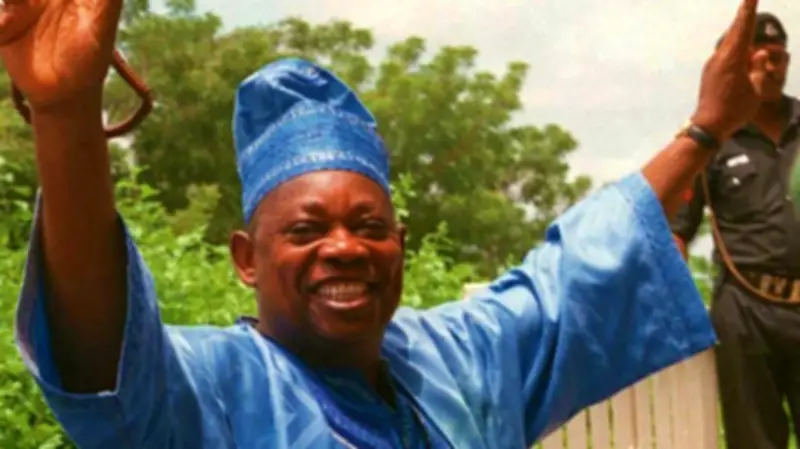
As we commemorated Democracy Day last week, it becomes imperative for us to appreciate the sacrifices of our fallen heroes who put their lives on the line for the democracy we currently have, and learn the vital lessons it teaches us, using it as a model for our present democracy.
The Essence of Democracy
In a democratic society, power ultimately belongs to the people. It is a form of governance where citizens have the right and opportunity to participate, directly or indirectly, in making decisions that affect their lives. Leaders are chosen through free, fair, and regular elections, and government authority is derived from the consent of the governed. However, in our nation, that is not the narrative. Our democracy has been marred by various forms of electoral irregularities, vote-buying, election rigging, political intimidation, weak electoral institutions, political apathy, and a system where citizens no longer exercise their franchise.
In the words of Abraham Lincoln, democracy is the “government of the people, by the people, and for the people.” He gave this definition during the American Civil War (1861–1865), at a time when the United States was deeply divided over issues such as slavery, states’ rights, and national unity. It behooves our leaders to understand that sovereignty lies with the people who voted them into office. They must be accountable to them and protect their interests.
Challenges to Nigerian Democracy
A good democratic society must provide an enabling environment where citizens’ pains are reduced and the challenges of governance are addressed. Government must be alive to its responsibilities by securing lives and property. Today, our democracy is being infiltrated by many anomalies, where our electoral body is no longer fully independent and has been compromised by discrepancies in election results. It, therefore, becomes imperative for our nation to borrow from the June 12, 1993 election and use it as a model for our present-day democracy.
The Significance of June 12, 1993
The June 12, 1993 presidential election remains one of the most defining moments in our nation’s political history, not only because of what it represented at the time, but also because of the long-lasting impact it had on our democratic journey as a nation. It was an election that carried the hopes of millions of Nigerians who were eager to see an end to prolonged military rule and the beginning of a stable democratic system.
After years of political instability, transitions that never fully materialised, and repeated interruptions by military regimes, the 1993 election was seen as a final test of whether our nation could genuinely return to civilian governance. In many ways, it succeeded in proving the political maturity of the Nigerian electorate, despite the fact that it was later annulled by the then military President, Ibrahim Badamasi Babangida.
Electoral Integrity in 1993
What made the election significant was not just that citizens exercised their franchise, but the quality of the process. There were reports from polling stations that it was one of the most credible elections in the history of our nation up to that point. It demonstrated that citizens were capable of conducting and participating in a democratic process that reflected their true will.
In many areas across the country, there was minimal violence, reduced manipulation compared to previous elections, and a collective sense among citizens that the country was finally on the right path. It becomes imperative for us to learn from it and follow the model of the June 12, 1993 presidential election as a benchmark for electoral integrity in the country.
The Annulment and Its Aftermath
The annulment decision shocked Nigerians and triggered widespread protests, unrest, and a deep political crisis across the country. The annulment was seen by many Nigerians as a direct violation of their democratic rights and an attempt to subvert the will of the people. It also led to a breakdown in trust between the citizens and the military leadership, as hopes of a smooth transition to civilian rule were abruptly dashed. The aftermath witnessed increased political activism, resistance movements, and calls for the restoration of the mandate believed to have been freely given to M.K.O. Abiola.
Even though the election did not produce an immediate democratic government, its long-term gains for our nation were profound. One of the most important outcomes was the strengthening of political consciousness among ordinary Nigerians. Citizens became more aware of their power in shaping leadership and more determined to participate actively in political processes.
Unity and Civil Society Activism
The events surrounding June 12 also helped to unite people across ethnic and religious lines in a way that had rarely been seen before. Nigerians from different backgrounds came together to defend what they believed was a stolen mandate, showing that national identity could, at critical moments, rise above sectional divisions.
Another major gain from the June 12 experience was the development of civil society activism in Nigeria. Lawyers, journalists, students, human rights organisations, and political groups became more vocal and organised in their demand for democracy and accountability. This period marked the growth of resistance against authoritarian rule and helped strengthen the foundation for future democratic governance.
Lessons for Strong Institutions
The struggle that followed the annulment also exposed the importance of strong institutions in protecting democracy. It became clear that elections alone were not enough; there needed to be independent electoral bodies, a free press, and a judiciary capable of defending democratic principles without interference.
The June 12 experience also served as a critical lesson in leadership and governance. It demonstrated that the legitimacy of government is derived from the consent of the people, and when that consent is ignored, political instability becomes inevitable. It reinforced the idea that democracy is not just about conducting elections but about respecting outcomes, no matter how politically inconvenient they may be. Furthermore, it highlighted the dangers of military interference in politics and the need for a clear separation between the armed forces and democratic governance.
Legacy and Recognition
Over time, the legacy of the election became even more significant. It eventually led to reforms in Nigeria’s democratic structure and influenced the transition that brought the country into the Fourth Republic in 1999. The June 12 struggle also became a symbol of resilience and the continuous pursuit of justice. It reminded Nigerians that democracy is not a one-time achievement but an ongoing process that requires vigilance, participation, and sacrifice.
In later years, the importance of the election was formally recognised when June 12 was adopted as Nigeria’s Democracy Day, replacing the earlier May 29 celebration. This symbolic change reflected national acknowledgment of the significance of that moment in shaping Nigeria’s democratic identity and honouring those who fought for the restoration of the people’s mandate.
Conclusion
Ultimately, the June 12, 1993 election stands as both a moment of triumph and tragedy. It was a triumph because it showed the potential of Nigeria’s democracy and the unity of its people in choosing a leader freely. It was a tragedy because that choice was denied. Yet, from that contradiction emerged some of the strongest democratic lessons the country has ever learned. It taught that democracy must be protected, that the voice of the people is sacred, and that true leadership is defined not only by winning elections but by respecting the will of the electorate. The June 12, 1993 presidential election has brought us far to where our democracy is today. I believe our country will be great again.
Tobiloba Ahmed, a public affairs writer, can be reached via [email protected]