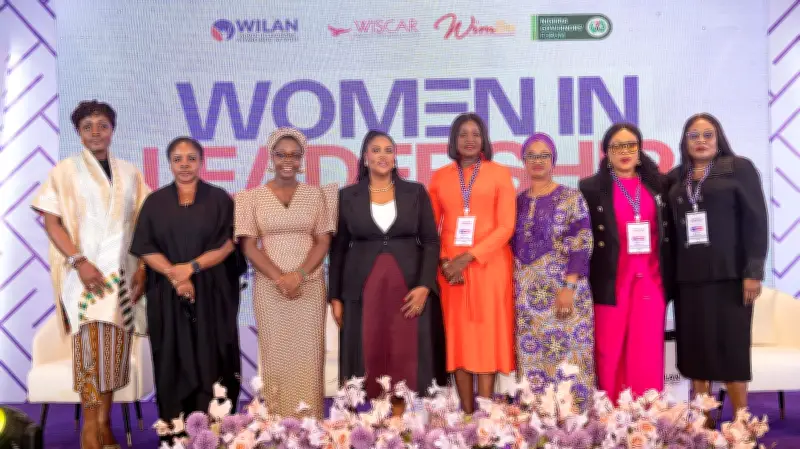
More than 100 accomplished and emerging women leaders gathered in Abuja recently to build strategic alliances and influence decisions that shape national development as Nigeria's future depends on women who can work across sectors.
The Women in Leadership Advancement Network (WILAN) Global, in partnership with Women in Management, Business and Public Service (WIMBIZ), Women in Successful Careers (WISCAR), and the Nigeria Governors Forum, convened the Women in Leadership Cross-Sector Convening at Fraser Suites, Abuja.
With the theme, “Connecting Impact: Cross-Sector Leadership for National Growth,” the gathering dismantled the barriers that often keep women leaders operating in isolation and created pathways for collective influence across governance, business, civil society, and public service.
The programme opened with a welcome address by Abosede George-Ogan, Founder of WILAN Global, who said, “Across Nigeria, we are facing increasingly complex challenges that no single sector can solve alone. We have encountered excellent women leaders across sectors who were working in silos. And silos, no matter how strong they are individually, do not build nations.”
The keynote address, delivered by Madam Elsie Addo Awadzi under the theme, “From Presence to Power: Why Women’s Cross-Sector Leadership Will Shape Africa’s Future,” framed the day’s discussions around the growing importance of collaborative leadership in addressing complex development challenges. Drawing on her experience across governance, finance, and public policy, Madam Awadzi highlighted the need for leaders who can work across institutional and sectoral boundaries to drive sustainable progress.
She noted that, “The era of siloed leadership is ending. The leaders who will define the next generation of African development will not be those who know the most about one sector. They will be those who can connect sectors, align incentives, build coalitions, and mobilise diverse actors around shared national priorities. The future belongs to integrators and collaborators.”
Following the keynote, the Public Sector Roundtable, “Strengthening Subnational Systems for Change,” brought together senior women in public leadership to examine the role of subnational governance in advancing inclusive development outcomes. The discussion explored opportunities for strengthening institutional coordination, improving service delivery, and expanding women’s influence within public decision-making structures.
The first panel session, “From Seats at the Table to Shaping the Table: Women Leading Systems Change Across Sectors,” featured senior women leaders from diverse sectors who reflected on their experiences driving organisational and systems-level change. Discussions focused on institutional reform, coalition building, leadership credibility, and sustaining influence within complex environments.
The second panel session, “The Next Wave: Emerging Women Leaders, Driving Influence and Impact,” convened accomplished early and mid-career women leaders from sectors including health, finance, agriculture, and the environment.