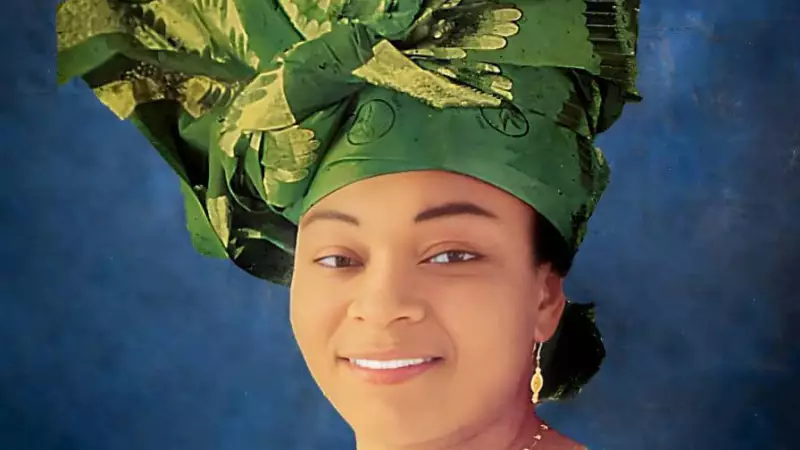
Twenty-five years have passed since a tragic accident abruptly ended the life of Madam Mojisola Ajoke Adelakun, but the pain of her loss and the circumstances surrounding it continue to resonate, raising profound questions about Nigeria's trajectory. Her death on December 6, 2000, left her four children—Adeola, Abimbola, Oladipupo, and Afolabi—devastated and launched a lifetime of lamentation that has now found powerful expression through the pen of her accomplished daughter.
A Memorial That Stirred a Nation's Conscience
On December 18, 2025, family, friends, and well-wishers gathered for a memorial service to honour Madam Adelakun's legacy. The service was a testament to the solid valuational framework she instilled in her children, who have all grown to make her proud. Among the attendees were notable figures from Nigerian media and academia, including Professors Niyi Osundare and Toyin Falola, Mr Joseph Adeyeye (editor-in-chief of Punch newspapers), Dr Lasisi Olagunju, and Dr Festus Adedayo.
The event was deeply moved by a poignant tribute written by Professor Abimbola Adelakun, a renowned columnist and one of the late matriarch's children. Her words transcended personal grief, connecting her mother's fate to the systemic failures of the Nigerian state. She painted a portrait of a dedicated, God-fearing, and hard-working woman whose life was cut short in her prime, forcing her children to bear the brute emotion of losing their world.
From Personal Grief to National Diagnosis
Professor Adelakun's lamentation struck a chord with public intellectual and reformer, Tunji Olaopa, who saw in it a mirror of Nigeria's deep-seated maladies. Olaopa, Chairman of the Federal Civil Service Commission and a Professor of Public Administration, recognized a shared struggle. While Abimbola Adelakun has chronicled Nigeria's developmental and governance malaise through her writing, Olaopa has worked within the dysfunctional public service system whose failures indirectly caused such tragedies.
The tribute forces existential questions: Why must good people like Mojisola Adelakun die needlessly? Why does a nation so rich in intellectual, social, and generational capital persistently misapply its resources, leading to bad politics and catastrophic governance? Her death is framed not just as a personal loss, but as a national waste—a symbol of countless citizens lost to terrible infrastructural dysfunctions, from deadly road networks to collapsing healthcare and education systems.
The Imperative for Institutional and Faith-Based Reform
Olaopa's reflection moves from philosophical questioning to a concrete reform agenda. He acknowledges the spiritual solace Christianity provided Madam Adelakun, who died assured she had instilled strong morality in her children. However, he argues that faith-based institutions in Nigeria must evolve beyond their current roles.
He proposes a dual mandate for religious leaders: first, to genuinely minister hope without exploiting congregants' anxieties through prosperity gospel; and second, to leverage their significant political and moral capital to speak truth to power. As a major bloc in civil society, churches and mosques have a responsibility to demand good governance from the political class, complementing their spiritual duties with civic advocacy.
For over six decades, Olaopa argues, successive governments have played bad politics with Nigerian lives. While some efforts have been made, the results remain invisible, indexed by the countless preventable deaths like Adelakun's. Bad politics breeds anxiety, despair, and death, undermining policy intelligence and democratic dividends.
The ultimate takeaway from this 25-year remembrance is a clarion call. Nigeria must be taken seriously for the sake of its children, who are the infrastructure of the future. This demands a deep commitment to institutional reform, implementing safety nets and social security policies that safeguard lives. The pain of the Adelakun family should motivate a national movement to prevent other children from being left in such a state by a nation that claims to have a future.