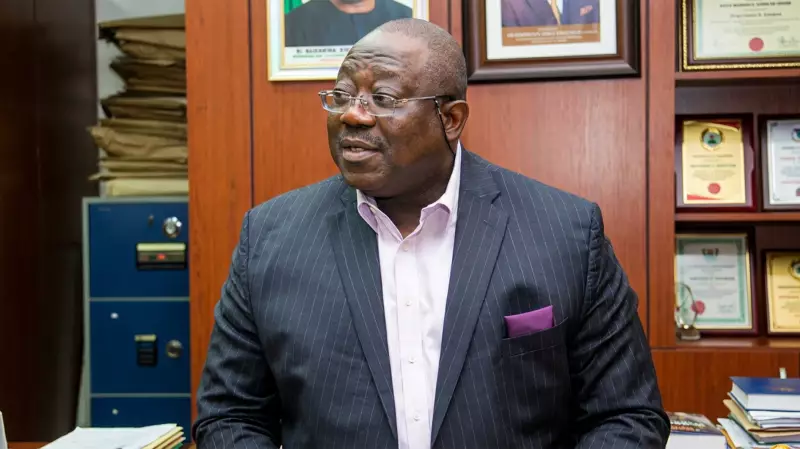
When the renowned writer Franz Kafka depicted bureaucracy, he painted a grim picture of a system detached from its duty to serve. This metaphor finds a stark contrast in contemporary Nigeria, where Professor Tunji Olaopa, Chairman of the Federal Civil Service Commission (FCSC), is leading a vigorous campaign to reimagine and revitalize the nation's civil service. Having spent a significant part of his own career within the system, Olaopa confronts its deep-seated issues not with despair, but with a determined reformer's zeal.
A Mandate for Transformation: Ending the Era of Corruption
Appointed by President Bola Tinubu on December 13, 2023, with a clear directive to transform the FCSC, Olaopa's charge recently marked its two-year anniversary. His mission focuses on the commission's core mandates: recruitment, appointment, and discipline.
Previously, the FCSC was widely perceived as a corrupt institution where government jobs were secured through connections and bribes. Olaopa has fundamentally altered that perception. The notorious practice of "cash-for-jobs" has been dismantled, restoring public trust in the commission as a fair gateway to civil service employment. His leadership insists on recruiting the best and brightest while faithfully upholding the federal character principle.
Institutional Reforms: Merit, Technology, and Discipline
The reform agenda extends deep into the career progression of civil servants. Credible promotion examinations now guarantee that advancement is based on merit, not monetary influence. Olaopa has demonstrated the courage to halt promotions for unqualified candidates, resisting external pressures. By eliminating question paper leaks and sub-standard exams, the commission has also avoided costly legal battles, as failed candidates now trust the system's integrity.
A landmark innovation under Olaopa is the introduction of Computer-Based Tests (CBT) for both recruitment and promotions. This move does more than reduce result manipulation; it compels civil servants to develop digital literacy, a critical skill in today's AI-driven world. This technological shift prepares the workforce for future challenges and aligns the service with global standards.
Furthermore, Olaopa has strengthened the disciplinary process. Cases are now thoroughly investigated and debated by commissioners representing all 36 states and the FCT before conclusions are reached. This robust framework protects civil servants from witch-hunts and undue punishment, ensuring that influence cannot be used to victimize subordinates.
National Influence and Global Resurgence
Olaopa's impact isn't confined to the federal level. Drawing from his experience as a former permanent secretary and professor of public administration, he mentors managers of state civil service commissions. He revitalized the National Conference of Civil Service Commissions after a decade-long hiatus, with recent meetings in Katsina and Abia states producing actionable declarations for sub-national reforms. He has also engaged with local government service commissions.
Perhaps one of the most significant achievements is restoring Nigeria's voice on the global bureaucratic stage. Under Olaopa, Nigeria has become an active leader in the Association of African Public Service Commissions (AAPSCOMS). His influence was recognized with his election as Vice President for West Africa at a meeting in Kenya. Consequently, Nigeria is scheduled to host AAPSCOMS in Abuja in 2026.
For the first time in its over 70-year history, the FCSC now operates with a strategic plan that charts its course from the present until 2030. This blueprint for a world-class bureaucracy symbolizes a departure from an ad-hoc past toward a future of planned excellence.
Olaopa's two-year tenure stands as a powerful testament to the societal gains achieved when public appointments are based solely on competence and a readiness to serve. His reforms signal a decisive break from a Kafkaesque past and a determined effort to bequeath a renewed, efficient, and credible civil service to Nigeria.