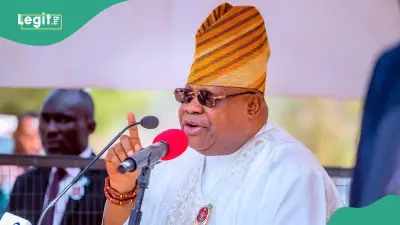
In a significant move aimed at charting a new course for the state, Governor Dauda Lawal of Zamfara State has officially launched a comprehensive 10-year State Development Plan. The ambitious roadmap, which spans from 2025 to 2034, was unveiled at the JB Yakubu Secretariat in Gusau on Friday, December 5, 2025.
A Roadmap Built on Data and Collaboration
Governor Lawal described the plan as a long-term, evidence-based strategy designed to reflect the collective aspirations of Zamfara's people. To ensure its robustness, the state government engaged the global professional services firm, KPMG Advisory, as the lead consultant. The development process was a collaborative effort, taking eight months and involving close work with members of the Zamfara State Executive Council, traditional rulers, religious leaders, and other critical stakeholders.
The governor emphasized that this initiative marks the first comprehensive long-term plan in the state's recent history. It is not a document of empty promises but a detailed blueprint anchored on robust data, extensive stakeholder input, and alignment with broader development frameworks.
Six Pillars for a New Zamfara
The Zamfara State Development Plan 2025-2034 is structured around six fundamental pillars designed to drive holistic growth:
- Economy
- Infrastructure
- Social Welfare
- Human Capital
- Governance
- Environmental Sustainability
Governor Lawal stated that the plan sets clear sectoral priorities with measurable outcomes and includes a monitoring and evaluation framework to guarantee transparency throughout its implementation.
Aligning with Global Goals and Leveraging Local Strengths
The plan is strategically aligned with major national and international development agendas, including the United Nations Sustainable Development Goals (SDGs), Nigeria's National Development Plan 2050, and the African Union's Agenda 2063. This alignment ensures Zamfara's growth is synchronized with global best practices and opportunities.
A key focus of the economic strategy is to maximize the state's inherent strengths in agriculture and natural resources. Governor Lawal highlighted specific partnerships, such as agreements with the Ministry of Finance Incorporated (MoFI) and funding from the African Development Bank, which will be harnessed to revolutionize the sector.
The vision is to boost mechanized farming, enhance agro-processing, and develop entire agricultural value chains. This approach is expected to create numerous jobs, improve food security, open new markets, and crucially, reduce poverty-driven insecurity that has plagued the region.
"We envision Zamfara becoming a benchmark for transformative economic growth– not merely for Nigeria, but the continent of Africa," Governor Lawal declared. "We will use resources, innovation, and governance to promote inclusive growth, stability, and opportunity."
A Turning Point for the State
In his passionate address at the launch, the governor framed the plan as a historic turning point. He called on the people to see it not as a mere political ambition but as a concrete resolve to redefine the state's fate.
"We are rekindling hope for the young, dignity for the vulnerable, opportunity for the enterprising, and stability for all," he said. "Let it be said that when Zamfara was at its lowest, we rose not with rhetoric, but with resolve. Not with empty promises, but with purposeful plans."
Concluding the ceremony, Governor Lawal formally launched the plan, dedicating it to the people of Zamfara "for our today and for our tomorrow." The event was also attended by top state officials including the Secretary to the State Government, Mallam Abubakar Nakwada, the Chief of Staff, Mukhtar Lugga, and the Commissioner for Budget and Planning, Abdulmalik Abubakar Gajam, who all gave remarks prior to the main launch.