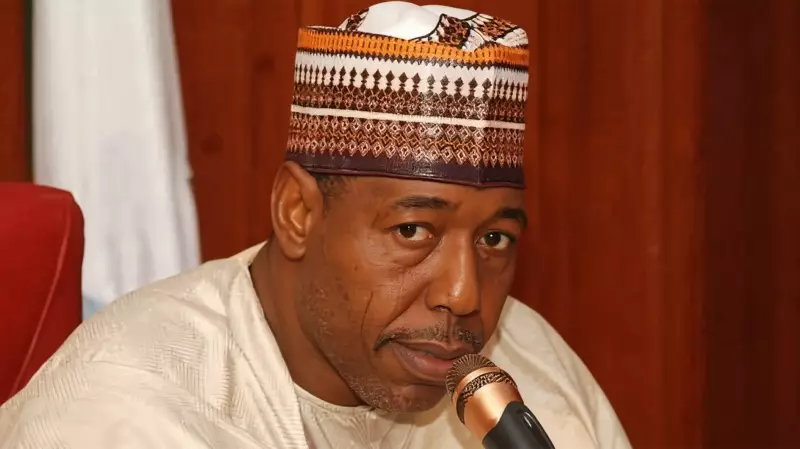
In a significant move to support communities recovering from conflict, Borno State Governor, Professor Babagana Zulum, has provided substantial aid to families returning home after years of displacement.
Substantial Support for Returnee Households
Over the weekend, Governor Zulum personally oversaw the disbursement of N80 million alongside essential food items to 4,000 households in the newly resettled town of Malam-Fatori, located in Abadam Local Government Area. The beneficiaries are primarily women and children who are internally displaced persons (IDPs) returning after spending over a decade as refugees in Niger Republic. They had originally fled their homes due to Boko Haram attacks starting around 2014.
Governor Zulum stated that the intervention was designed to offer immediate relief and assist in rebuilding shattered lives. He emphasized that the goal was to restore confidence and foster resilience among the population as they restart their lives in their ancestral community.
Details of the Relief Package
The governor outlined the specific support given to each family. Each male head of household received N20,000 cash, one bag of rice, one bag of maize, and clothing materials. Similarly, each female head of household was given N20,000 and a wrapper. This targeted assistance acknowledges the distinct needs within the recovering community.
Explaining the rationale behind the aid, Zulum cited the challenging desert environment of Malam-Fatori, which complicates access to basic necessities. He expressed confidence that the food items would significantly reduce hardship and speed up the ongoing resettlement process for the town, which sits on the fringes of Lake Chad.
"This is not just about disbursing funds or food items but about restoring hope by reassuring our people that even in their darkest moments, they are not forgotten," the governor affirmed during the distribution exercise.
Beyond Relief: Inspecting Recovery and Boosting Security
During his visit, Governor Zulum took time to inspect irrigation farms established by the returnees. He noted the rapid emergence of agriculture as a vital pathway for restoring livelihoods. He praised the farms as symbols of resilience and optimism, promising enhanced farming inputs and continued government backing to improve productivity and food security across the seven local government areas in the Lake Chad region.
In a related gesture of gratitude, the governor revealed that similar support had been extended to over 6,000 vulnerable individuals in Bosso, Niger Republic. This was in recognition of the host communities that provided shelter to Nigerian refugees for nearly ten years.
Demonstrating his hands-on approach, Zulum also conducted an unscheduled late-night inspection of Malam-Fatori's council headquarters to personally assess the state government's recovery efforts. He observed that markets were active with engaged traders, and social life was gradually returning, despite the area suffering massive displacement for 16 years.
He interacted with local traders and business owners, assuring them that government support would evolve from immediate relief to include youth and women empowerment programs and improved access to capital, enabling them to restore their livelihoods with dignity.
To bolster security and ensure a stable environment for the resettlement, Governor Zulum donated operational vehicles and critical logistics to the 68 Battalion of the Nigerian Army stationed in Malam-Fatori. This donation is intended to enhance troop mobility, rapid response capabilities, and the patrol of key routes into the council headquarters.