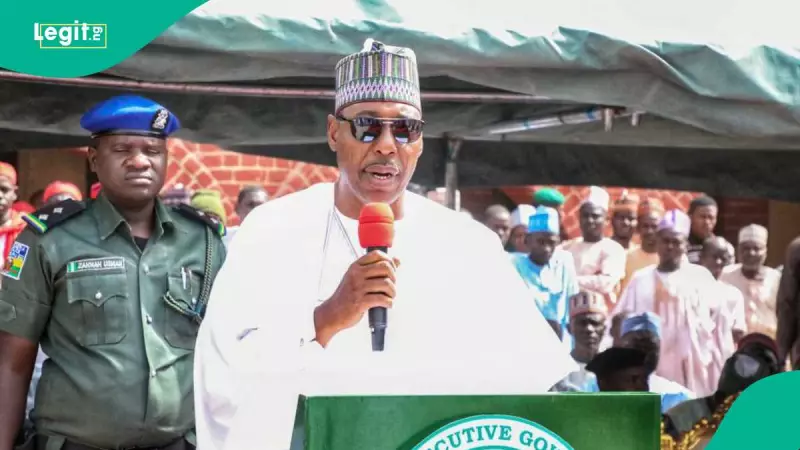
Governor Babagana Umara Zulum of Borno State has firmly rejected assertions that the Boko Haram insurgency constitutes a targeted campaign against Christians, labeling such claims as false narratives. He clarified that the conflict is a broader assault on humanity, not a religious war.
Data Shows Muslim Majority Among Victims
The governor made these statements on Monday, December 2, during a high-level meeting at the Government House in Maiduguri. The gathering included leaders from the Christian Association of Nigeria (CAN) and the Jama’atu Nasril Islam (JNI).
Governor Zulum presented official data to support his position, stating that more Muslims than Christians have been killed since the insurgency began in the North-East. He emphasized that while every life lost is tragic, the overwhelming majority of victims—those who suffered death, abduction, and displacement—are Muslims.
"It is absolutely crucial that we collectively dispel all false narratives that seek to portray our security crisis in religious colouration. Religious conflict is alien to us," Zulum told the religious leaders. "Boko Haram conflict is not a religious crisis. It is an assault on our civilisation, humanity, and all that we hold dear, irrespective of creed."
Borno Government's Reconstruction Focuses on Equity
In a significant revelation, Governor Zulum announced that his administration has reconstructed 45 churches destroyed by Boko Haram fighters across various local government areas. This effort is part of the state's broader post-insurgency recovery and resettlement program.
He stressed that the government's reconstruction policy is driven by need and a commitment to restoring community social fabric, not by religion or ethnicity.
"Our reconstruction policy is not based on religion or ethnicity. We rebuild based on need and on our commitment to restoring the social fabric of every community," Zulum explained.
The governor reaffirmed his government's dedication to protecting all citizens and their right to worship freely, promising continued collaboration with security agencies and community leaders.
Religious Leaders Urged to Promote Unity
Governor Zulum called on religious leaders to use their platforms to foster tolerance and unity, cautioning against divisive rhetoric. He urged them to preach messages of love, compassion, and justice from both minbars and pulpits.
He also appealed to the global community for support in tackling the root causes of extremism, such as poverty, illiteracy, and hunger.
In response, Most Rev. John Bogna Bakeni, the Chairman of CAN in Borno State and Auxiliary Bishop of Maiduguri, commended the governor. He stated that Nigeria's security challenges require local solutions and urged political leaders to act with fairness and justice to build inter-community trust.
"Nobody can solve our problem from outside. We are the ones that can solve our problem... If we take what the governor said and implement it justifiably, we will have a peaceful society," Bishop Bakeni said.
The JNI, represented by its State Director of Administration, Mal. Sa’adu Ngamdu, also praised Governor Zulum's proactive leadership and reiterated the organization's commitment to peacebuilding and interfaith cooperation.