
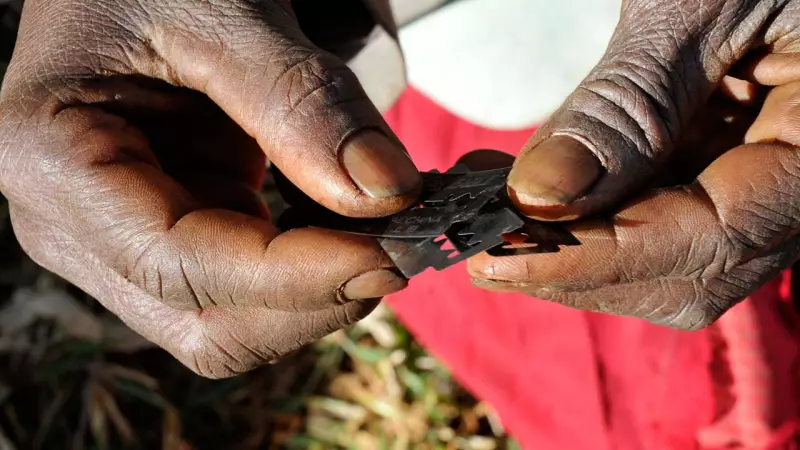
A stark contradiction unfolded in a Maasai village in southern Kenya. As a community elder, draped in a traditional red blanket, declared that female genital mutilation (FGM) had nearly stopped, the women present responded with mocking heckles. They know the painful truth: the illegal practice remains deeply entrenched in their remote communities.
The Hidden Reality Behind Official Denials
In the remote villages of Narok county, hours from the nearest paved road, the ritual cutting of young girls—framed as a rite of passage—continues unabated. A local nurse revealed to AFP that approximately 80 percent of girls in the area are still subjected to FGM, despite Kenya enacting a law against it in 2011. This reality clashes sharply with a 2022 national survey suggesting a decline in prevalence among teenagers.
"Why are you telling people that you have stopped, when we have teenage girls coming to the hospital who have been cut?" a woman challenged the elder during a community meeting in Entasekera village. Her question was met with emphatic nods from other women, while the men sat in stony silence.
Curses, Corruption, and Cross-Border Cutting
The persistence of FGM is fueled by a complex web of tradition, social pressure, and systemic failure. Many believe a girl must be cut before marriage, facing ostracism if she refuses. Activist Patrick Ngigi, whose organisation Mission with a Vision has rescued about 3,000 FGM victims since 1997, says corruption undermines enforcement. "When a policeman comes and finds you doing it, you just give him something and you continue," he explained.
Police officer Raphael Maroa denied corruption allegations but admitted the practice is entrenched, with many girls now taken across the nearby Tanzanian border for the procedure. He cited community pressure, confessing his own two daughters were cut to avoid "conflict with my parents."
For those who resist, the consequences are severe. Cynthia Taruru, now 23, was cursed by her father after her sister saved her from FGM at age 11. "I could see myself dying, or not getting children," she said, eventually paying her father a cow to lift the curse.
Health Crisis and a Sanctuary of Hope
The health impacts are devastating. Nurse Loise Nashipa, 32, at the Entasekera Health Centre, described FGM as "a monster," citing bleeding, pain, and infection from procedures often performed by elderly women in unsanitary conditions. Victims frequently suffer fistulas and obstructed labour, risks worsened by long distances to health facilities. Fear of arrest leads many families to opt for dangerous home births.
Amid this darkness, sanctuaries like Patrick Ngigi's shelter, supported by the United Nations Population Fund, offer refuge. Protected by CCTV and panic buttons, the shelter is a target for those opposing its mission. "It’s a dangerous job… You make so many enemies," Ngigi admitted, having faced curses from elders.
The work is relentless. During the village meeting, women quietly approached Ngigi, pleading with him to take six more girls at risk. His shelter also celebrates triumphs, like the recent graduation of Cecilia Nairuko, 24, who fled FGM and forced marriage at 15 and is now a qualified psychologist. Yet, her achievement is bittersweet; her father and three brothers have not forgiven her. "If I can earn enough money, he’ll forgive me," she said, highlighting the economic dimensions of this social conflict.
While some, like young Maasai men, claim the social curses for refusing FGM are fading, the testimony of survivors and the silent pleas of mothers in village meetings paint a different picture—one where law, health, and human dignity continue to battle a deeply rooted tradition.




