
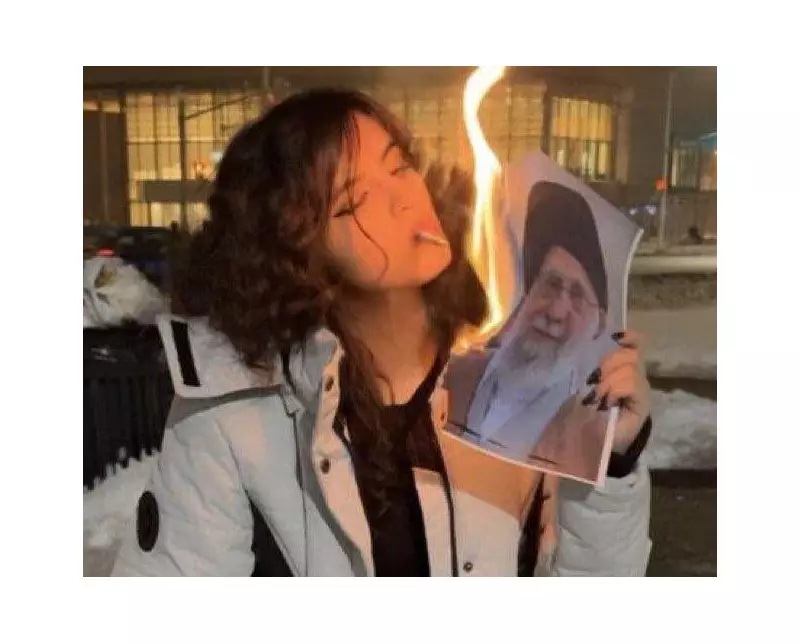
In a powerful and symbolic act of rebellion, women in Iran have ignited a new form of protest that is spreading like wildfire across the internet. They are publicly lighting their cigarettes using burning portraits of the country's Supreme Leader, Ayatollah Ali Khamenei.
A Bold Act of Dual Defiance
This protest is a direct challenge to the Islamic Republic's strictest rules. Burning an image of the supreme leader is a serious criminal offence under Iranian law. At the same time, women smoking in public has long been restricted or frowned upon. By combining these two acts, and openly appearing without the mandatory headscarf, the protesters are striking at both the political and social pillars of the regime's control.
Videos and photos of these defiant moments have been shared thousands of times on various social media platforms. They show women, their hair uncovered, calmly using a flaming picture of the nation's most powerful figure to light a cigarette. Observers note that the symbolism of this quiet, personal act makes it particularly difficult for authorities to suppress compared to large street gatherings.
Digital Spread Amidst Crackdown and Economic Woes
"This kind of protest doesn't rely on mass gatherings that can be dispersed," one analyst pointed out. "It spreads digitally and privately, making enforcement far more complex." The trend has emerged against a backdrop of severe economic hardship and renewed nationwide unrest. Iran is grappling with soaring inflation, high unemployment, and a collapsing currency, the rial, leading to demonstrations in cities across the country.
While the current wave of protests has not yet matched the scale of the mass movements seen three years ago, the situation remains tense. Human rights groups report that dozens of people have been killed in recent weeks during clashes with security forces. In response to the intensifying demonstrations, authorities imposed a nationwide internet and phone blackout on Thursday night, largely severing Iran's connection to the outside world.
Official Response and Accusations
The government's reaction has been one of condemnation and accusation. Ayatollah Khamenei has blamed the protesters for acting on behalf of foreign powers, specifically naming the United States and its former President, Donald Trump. He accused demonstrators of attacking public property and warned that Iran would not tolerate what he called "mercenaries for foreigners."
This new, visually striking form of dissent highlights the deepening frustration within Iranian society, particularly among women who have been at the forefront of challenging the regime's social restrictions. It represents a creative and highly personal method of resistance that leverages digital tools to bypass traditional crackdowns, posing a unique challenge to the authorities in Tehran.




