
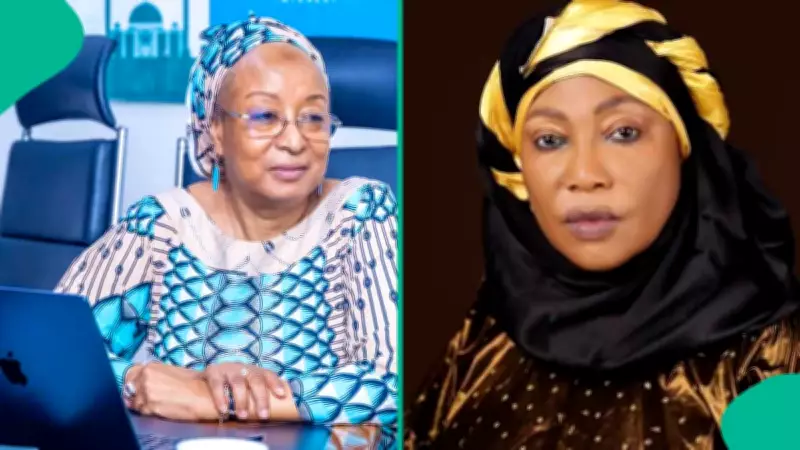
Kano's Political Trailblazers: Four Women Honored on International Women's Day 2026
Today, Sunday, March 8, 2026, marks the celebration of International Women's Day, an annual global event dedicated to honoring the achievements and contributions of women worldwide. The primary theme for International Women's Day 2026 is 'Rights, Justice and Action for All Women and Girls', emphasizing the ongoing struggle for gender equality and empowerment across all sectors of society.
Celebrating Kano's Influential Female Political Figures
In recognition of this significant day, attention turns to Kano State, one of Nigeria's most politically influential regions, where extraordinary women have shaped political landscapes and inspired countless individuals. Four prominent female political figures from Kano are being highlighted for their remarkable contributions and widespread respect across the state.
Naja'atu Mohammed: Seasoned Politician and Activist
Hajiyah Naja'atu Bala Muhammad, aged 69, stands as a seasoned politician and dedicated activist with a rich political heritage. Her father was an associate of the legendary Aminu Kano, providing her with deep roots in Kano's political tradition. Naja'atu Mohammed made history as the Action Congress of Nigeria (ACN) nominee for Kano Central District senator during the 2007 elections.
Her trailblazing achievements include being among the first women to serve as president of the National Students Union of Nigeria at Ahmadu Bello University, Zaria, and the first female vice president of the National Association of Nigerian Students (NANS). Currently, she remains actively involved in political campaigns, notably serving on former Vice President Atiku Abubakar's campaign team.
Maryam Uwais: Legal Expert and Social Investment Advocate
Maryam Uwais brings extensive legal and political expertise to Kano's political scene. She served as Special Adviser on Social Investments to the late President Muhammadu Buhari from 2015 to 2023, playing a crucial role in national development initiatives. Her professional background includes significant positions at the Kano State Ministry of Industry, the Central Bank of Nigeria (CBN), and the Nigerian Law Reform Commission.
Before her presidential appointment, Uwais established herself as an activist focused on poverty alleviation, working extensively with the Federal Government's N-Power program to create economic opportunities for Nigerians.
Sa'adatu Salisu: Local Government Pioneer
Sa'adatu Salisu Yusha'u, often referred to as Sa'adatu Salisu Soja, represents a groundbreaking figure in local government administration. She achieved the historic distinction of becoming the first female chairperson of the Association of Local Government Chairmen (ALGON) for Kano State chapter. Elected in 2024 under the New Nigeria Peoples Party (NNPP), she currently serves as the executive chairperson of Tudun Wada Local Government Area, demonstrating women's growing influence in grassroots governance.
Hafsat Ganduje: Academic and Political Influencer
Hafsat Abdullahi Ganduje, popularly known as Gwaggo, combines academic credentials with political influence as a member of the ruling All Progressives Congress (APC). Married to former Kano State Governor Abdullahi Ganduje, she played significant roles during his administration despite there being no official office of first lady. Her initiatives included comprehensive women's empowerment campaigns featuring educational materials distribution, sewing machine provisions, and small-business grants.
Media reports have suggested her influence extended to political appointments, contract awards, and government operations, though these claims have been dismissed by her husband's administration. Her presence continues to shape political dynamics in Kano State.
Challenges to Women's Political Participation
While celebrating these achievements, it's important to acknowledge the persistent challenges facing women in Nigerian politics. Patriarchy and religious norms have been cited as significant barriers to implementing affirmative action policies for women across Nigeria, Ghana, and other West African countries. As Ghanaian lawmaker Emmanuel Kwasi Bedzrah noted, the African context often creates difficulties for women securing their rightful place in governance structures.
The 35% affirmative action target for women's representation continues to face implementation challenges, highlighting the ongoing need for systemic changes to create more inclusive political environments.
These four women from Kano State exemplify the progress being made while also illustrating the work that remains in achieving true gender equality in Nigerian politics. Their stories serve as inspiration for future generations of women seeking to make their mark in political leadership and public service.




