
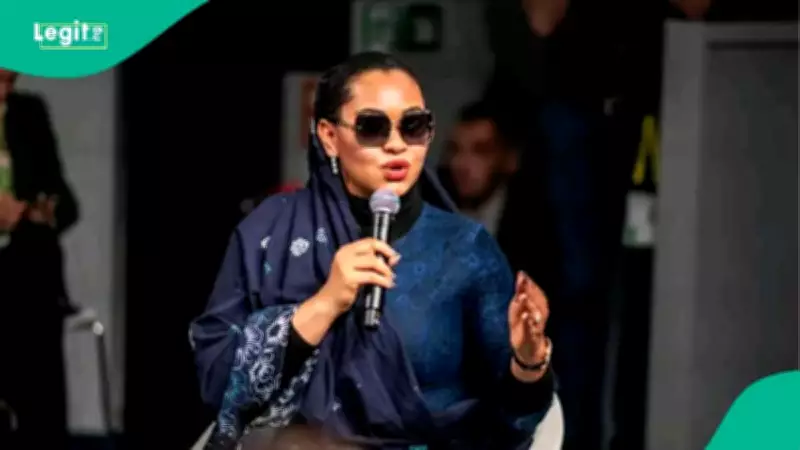
Senator Natasha Announces Major Initiative to Preserve Women's Narratives
In a significant move to bolster the documentation of women's contributions in Nigeria, Senator Natasha Akpoti-Uduaghan has unveiled a N1 million monthly writing competition titled "Our Stories Matter." The announcement was made during the WikiGap Nigeria Symposium 2026 held in Abuja, where the senator emphasized the critical link between visibility in knowledge systems and empowerment in leadership roles.
Addressing Historical Silences in Digital Knowledge
Speaking through her media aide, Michael Idoko, Senator Natasha highlighted the pervasive issue of women's marginalization in recorded history, which she described as a direct pathway to their exclusion from power structures. She stated, "When women are invisible in knowledge, they are excluded from power. That is why WikiGap is not just a project... it is a movement to correct historical silence." The senator pointed out that across Nigeria, women are leading, innovating, and transforming communities, yet too many of their stories remain undocumented, leading to their contributions being unrecognized and undervalued.
She elaborated on the consequences of this oversight, noting, "What is not recorded is often forgotten... and what is forgotten is rarely rewarded." This initiative aims to combat such neglect by encouraging the preservation of authentic stories of remarkable women, both past and present, through digital means.
Financial Commitment and Call to Action
The centerpiece of Senator Natasha's address was her pledge of N1 million monthly to sponsor the writing competition, which will focus on documenting the journeys, achievements, and challenges of Nigerian women. She urged content creators, journalists, and digital contributors to take an active role in reshaping narratives, saying, "I encourage journalists and authors to keep writing about women, write our journeys, our achievements, and even our challenges because that is how we inspire generations yet unborn."
Furthermore, she stressed the importance of women transitioning from being subjects of documentation to becoming creators of knowledge. "Women must not only be the subjects of knowledge... they must be its creators. We must encourage more Nigerian women to write, to edit, and to own their narratives in the digital space," she added.
Broader Implications for Gender Equality
Senator Natasha framed the initiative as more than just filling informational gaps; it is about advancing rights, strengthening justice, and expanding opportunities. She asserted, "By creating and improving articles about notable Nigerian women, WikiGap is doing more than filling gaps in content. It is advancing rights, strengthening justice, and expanding opportunity. Because visibility is power. When women are seen, they are heard. When they are heard, they are supported. And when they are supported, they succeed."
Drawing from her personal experiences in Nigeria's political landscape, she underscored the resilience required to overcome structural and cultural barriers, emphasizing that preserving and amplifying women's narratives is essential for the future of female leadership. "Our stories matter, our struggles matter, and our victories must not go undocumented. The future of women in leadership depends on how well we preserve and amplify these narratives today," she concluded.
Context and Background
The WikiGap Nigeria Symposium 2026, organized by Wikimedia User Group Nigeria, served as a platform to address gender disparities in digital knowledge systems. It featured panel discussions, workshops, and collaborative sessions aimed at increasing women's representation in online repositories. This initiative aligns with broader efforts to promote gender equality and empower women's voices in Nigeria and beyond.
In related developments, Senator Natasha has been active in other legislative matters, including advocating for the repatriation of Nigerian women and children held in Libyan prisons and calling for enhanced anti-smuggling interventions. Her commitment to women's issues and social justice continues to shape her political agenda, reinforcing the importance of initiatives like the writing competition in fostering a more inclusive society.




