
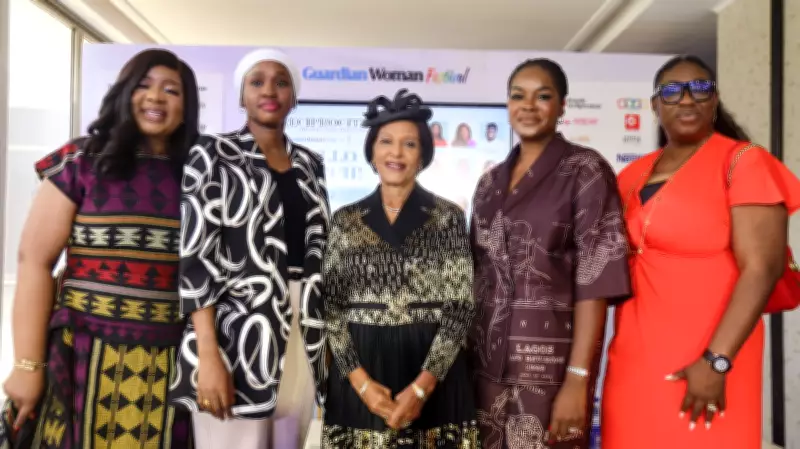
Guardian Woman Festival 2027: Women Demand Reciprocity, Care Infrastructure, and Boardroom Inclusion
From the early morning hours, the Federal Palace Hotel in Victoria Island, Lagos, buzzed with anticipation as participants streamed into the hall. Professionals, entrepreneurs, and policymakers exchanged pleasantries, settling into conversations that reflected both curiosity and ambition. Soft chatter filled the room as attendees gathered for another session of the Guardian Woman Festival, a gathering designed to spark critical dialogues on women's empowerment and leadership.
The ambience blended elegance with purpose. Attendees, many dressed in vibrant attire, moved between networking circles and discussion spaces, embodying the collaborative spirit that defines this yearly event. For many, the festival offered not just dialogue but a platform to exchange ideas, build partnerships, and amplify women's voices across various sectors.
Flexible Structure and Expanded Vision
Chief Executive Officer of The Guardian, Toke Alex-Ibru, described the festival as a deliberate attempt to create flexible spaces where women can engage meaningfully despite demanding schedules. He noted that this year's edition is particularly significant as the festival enters its third year, having launched in March 2024. Alex-Ibru emphasized that the approach centers on choice and flexibility, recognizing the realities many women face while balancing multiple responsibilities.
"Women are constantly juggling different commitments, and numerous events take place during the month, meaning not everyone can attend the same programme on the same day," Alex-Ibru explained. "The month-long structure allows participants to take part in sessions that align with their schedules rather than limiting engagement to a single day."
He further highlighted that the Guardian Woman platform has expanded beyond its original role as a magazine brand. "I am pleased to see that the vision behind creating the Guardian Woman title has grown into a live media platform now known as the Guardian Women Festival," he said. "Guardian Woman now goes beyond publishing articles and has become a space for engagement, conversations, and networking."
Alex-Ibru detailed several events throughout the month, including an opening ceremony on March 1 and a press conference the following day. He acknowledged the role of the Federal Palace Hotel in supporting the initiative, stating that the partnership has helped provide a space where conversations about women's leadership, entrepreneurship, and wellbeing can thrive.
Reciprocity and Digital Innovation
Themed 'Reciprocity,' the event focused on collaboration, digital innovation, and structural reforms to enable women to thrive in business and leadership. Keynote speaker Kehinde Ogundare, Country Head of Zoho Nigeria, emphasized the importance of reciprocity in building strong professional relationships and sustainable business environments.
"Reciprocity involves creating value for others while also building long-term trust," Ogundare explained. "Organizations must prioritize partnerships and knowledge sharing because strong ecosystems are built when individuals intentionally support each other's growth."
He stressed that sustainable professional networks depend on mutual trust and consistent value creation, noting that relationships based purely on transactions often struggle to endure. Ogundare also highlighted the role of digital transformation in shaping modern business relationships, stating that technological advancement has created new opportunities for partnerships across industries.
Confidence and Participation in Professional Spaces
The first panel session, 'Women in the Business of Digital Innovation,' examined how women can strengthen their presence in professional and leadership spaces. CEO of Women Radio, Ayodeji Alakija-Ajeh, spoke about the importance of confidence and participation.
"Early in my career, I often remained silent during meetings despite having ideas to contribute," Alakija-Ajeh disclosed. "The silence was not because I lacked knowledge but because I was waiting for the perfect moment to speak."
She explained that many women struggle with the pressure to appear flawless before contributing in professional settings, which can prevent full participation. Alakija-Ajeh revealed that she changed her approach by focusing on contribution rather than perfection, asking questions earlier and sharing perspectives more openly. "Over time, colleagues stopped questioning whether I belonged in those spaces because my voice became part of the conversation," she said.
Strengthening the Care Economy
Another major presentation focused on the importance of strengthening the care economy in Nigeria. Founder of Caring Africa, Blessing Adesiyan, described care infrastructure as an essential component of economic growth.
"Strengthening care systems will enable more women to participate fully in the workforce," Adesiyan stated. "Nigeria's population growth has made the development of structured care services increasingly urgent."
She noted that Nigeria is projected to become the third most populous country in the world, stressing the need for reliable childcare and eldercare systems. Adesiyan explained that caregiving arrangements in Nigeria are largely informal, with many families relying on untrained individuals. "This situation highlights the need to formalise the sector while creating standards for caregivers," she said, adding that developing structured care services could generate employment opportunities.
Adesiyan revealed that efforts are ongoing to develop a national care policy, with discussions taking place with Lagos State authorities and federal institutions to establish frameworks supporting childcare and caregiving services across the country.
Boardroom Leadership and Financial Inclusion
The second panel session, 'Women in the Business of Boardroom Leadership,' examined ways to expand women's participation in corporate decision-making. Managing Director and CEO of LAPO Microfinance Bank Limited, Cynthia Ikponmwosa, highlighted the impact of financial inclusion on women's economic empowerment.
"Empowering women strengthens families while also supporting community development," Ikponmwosa said. She revealed that more than 65 percent of LAPO Microfinance Bank's customer base consists of women operating small and medium-scale businesses, emphasizing that improving women's access to financial services can significantly increase their economic participation.
Executive Director of WIMBIZ, Omowunmi Akingbohungbe, addressed the importance of professional networks in helping women secure boardroom positions. "Research shows that a large number of board appointments are influenced by referrals and nominations," she said. "More than 70 percent of board positions are filled through professional networks rather than open applications."
Akingbohungbe encouraged women to intentionally build networks that provide mentorship, visibility, and leadership opportunities, noting that board membership requires character, emotional intelligence, and strategic thinking beyond technical competence.
Structural Reforms and Collaborative Efforts
Executive Secretary of Women in Successful Careers (WISCAR), Ekemini Akpakpan, highlighted structural barriers that have historically limited women's representation in leadership positions. "Many governance systems were originally created during periods when women had limited participation in decision-making processes," she explained.
Akpakpan stressed the need for deliberate reforms within institutions to create more inclusive leadership pathways. "Organizations must review existing policies and governance structures to ensure they support women's advancement into senior roles," she said. She emphasized that collaboration between the private sector, civil society organizations, and policymakers will be essential in expanding opportunities for women within leadership spaces.
The Guardian Woman Festival 2027 concluded with a renewed commitment to advancing women's empowerment through reciprocity, care infrastructure development, and increased boardroom inclusion, setting the stage for continued advocacy and action in the coming year.




