Explosions, Silent Implosions, and the Real Threat to National Endurance
We are living in an era marked by loud explosions and quiet implosions. The recent carnage in Maiduguri and the ongoing mayhem in the Middle East serve as stark reminders of echoes from the past that we once hoped were buried. History, like dry gunpowder, waits patiently and silently until the smallest spark ignites it. When it does, the blast is never merely physical; it is psychological, tearing through buildings, memory, hope, and the fragile architecture of ordinary life.
The Familiar Pattern of Tragedy
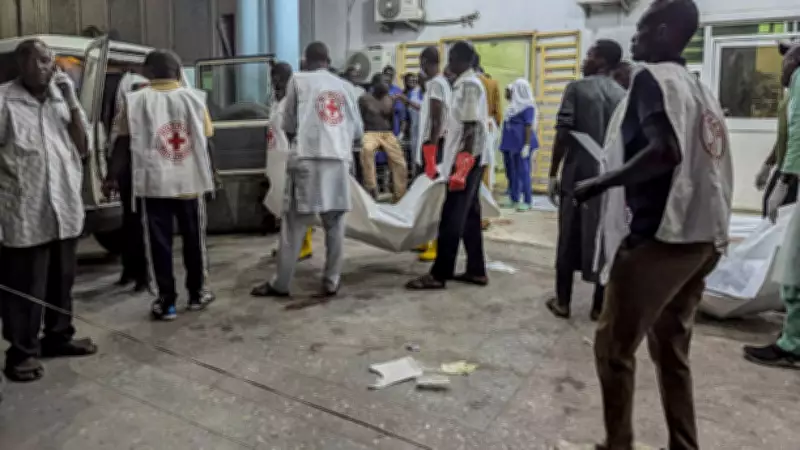
In the aftermath of the recent explosions in Maiduguri in mid-March 2026, the pattern felt all too familiar. The smoke clears, the dead are counted, the wounded are consoled, and the living are instructed once again to endure. But endure what? For how long? And to what end? Endurance has, in our time, become a de facto national policy.
Closer inspection reveals that this is not an isolated Nigerian tragedy but part of a wider geography of grief. In the broader Middle East, the conflict has expanded far beyond the Mediterranean coast, shifting into a terrifying new phase of regional escalation that ignited in late February 2026. Casualty numbers defy human comprehension as the conflict metastasizes across multiple borders in just a few weeks.
In those regions, as in ours, the language of war has become disturbingly routine—terms like precision strikes, collateral damage, and defensive response mask the harsh reality. Beneath these sterile phrases lie lives interrupted, families erased, and generations shaped by trauma. Children grow up learning the vocabulary of survival before they grasp the grammar of hope.
The Maiduguri Bombings and Leadership Response
On March 16, 2026, Maiduguri was jolted by coordinated suicide bombings targeting civilian locations, including the Monday Market and areas around the University of Maiduguri Teaching Hospital. At least 23 people were killed, and over 140 were injured. These were not abstract casualties; they were traders, patients, and passersby engaged in the ordinary business of living until violence intruded.
We were told not long ago that this insurgency had been technically defeated. Yet here we are again, counting bodies, revisiting grief, and rehearsing responses that have become almost ritualistic. The response from leadership follows a deeply familiar script. Our President, like his predecessors in similar moments, issued marching orders: security chiefs were to relocate to the affected region.
This gesture has been repeated across states—Kwara in 2025, parts of the North-West, and now again in Borno. For a fleeting moment, it feels like action. But relocation is not a strategy; it is theatre. It is the movement of authority without necessarily deploying solutions. If proximity to crisis were enough, Nigeria would have long secured itself into stability.
Rethinking Security Strategy
One is tempted, perhaps out of frustration more than satire, to imagine a different approach. What if we could clone these security chiefs? Multiply them, replicate them, station them in every local government area across the country. After all, insecurity has decentralized itself, learning mobility, adaptation, and surprise. Why should our response remain centralized and reactive?
Picture it: a Chief in every one of the 774 local governments, with permanent presence and immediate response. No need for emergency relocation because no place is left unattended. It sounds absurd, but is it more absurd than believing that moving the same officials from one crisis zone to another will outpace a threat that has already mastered dispersion?
The problem is not where the chiefs are; it is what the system enables them to do. Strategy cannot be replaced by symbolism. Structure cannot be substituted with spectacle. Explosions capture attention, dominate headlines, and force reactions. But implosions are quieter and far more dangerous, occurring within institutions that have lost coherence, within communities that have lost trust, and within citizens who are slowly losing faith.
The Deeper Crisis of National Psyche
The Nigerian psyche is under pressure, stretched between repeated trauma and repeated assurances. Every explosion erodes confidence. Every unfulfilled promise deepens skepticism. Every call to endure without a clear path forward begins to sound less like leadership and more like resignation.
We are told that hardship is temporary, that suffering is part of a refining process, and that something good will emerge from all this. But human beings do not live on promises alone; they require evidence, direction, and above all, honesty. There is a cost to constant endurance: it breeds fatigue, normalizes suffering, and lowers the threshold of expectation. A people trained only to endure may eventually forget how to demand accountability.
Yet, some insist: if you do not ask the people to endure, what is the alternative? Should they be told to abandon hope? No, the alternative is not despair; it is truth. Truth does not flatter, console for the sake of quiet, or mask uncertainty with grand declarations. Truth confronts reality as it is and invites responsibility where it belongs.
Moral Dimensions and Leadership Lessons
There is also a moral dimension to this conversation, particularly poignant as we remember the significance of Good Friday in the Christian calendar. The suffering of Jesus Christ is the ultimate model of redemptive suffering. But what gave that suffering meaning was not the pain itself—it was the certainty of its purpose. The Cross pointed unmistakably to the Resurrection, making it bearable and transformative.
Without redemption, suffering is merely prolonged pain. To continually ask a people to endure without articulating clearly and convincingly the path to resolution risks turning suffering into a hollow ritual, less of a sacrifice and more of a sentence. Even Christ did not deceive His followers about the cost of discipleship; He spoke plainly of the cross before the crown, promising no comfort where there would be conflict. That is what leadership requires.
In our context, however, there is often a reversal. The crown is promised while the cross is ignored or normalized. Citizens are told of future prosperity while navigating present insecurity, urged to remain hopeful while evidence remains scarce. Hope, without structure, becomes fragile, cracking under the weight of repeated disappointment.
Preventing Implosions and Rebuilding Trust
The danger, then, is not only in the explosions that shake our cities but in the implosions that quietly take root within the national consciousness. A nation can rebuild from physical destruction, but it is far more difficult to recover from the erosion of trust. We stand at a delicate intersection between blasts and breakdowns, between what is happening around us and what is happening within us.
The challenge is not merely to respond to violence when it occurs but to build systems that prevent its recurrence. Not merely to relocate authority but to reimagine it. Not merely to call for endurance but to justify it. This requires more than movement, messaging, or metaphors. It requires courage to admit what is not working, clarity to define a path beyond crisis management, and truth to speak honestly, even when that honesty is uncomfortable.
Explosions may be inevitable in a fractured world, but implosions—the collapse of hope, trust, and national will—are preventable. That is where the real work lies. In the end, a people can survive the noise of explosions. What they may not survive is the silence that follows, when they begin, quietly and collectively, to stop believing.