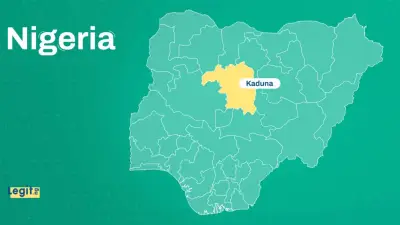
The expansion of the Presidential Forest Guards Initiative has brought the total number of trained guards to more than 9,000, with the latest cohort of over 2,000 personnel ready for deployment to Kaduna, Edo and Kogi states. The Office of the National Security Adviser (ONSA) confirmed that these guards have completed their training and are awaiting deployment to identified security flashpoints within the three states.
This development follows an earlier phase in which more than 7,000 guards graduated in Borno, Sokoto, Yobe, Adamawa, Niger, Kwara and Kebbi states. Together, the two phases bring the initiative's coverage to ten states, marking a significant expansion of the programme since its inception.
Expanding Coverage Across Nigeria
The latest phase specifically targets Kaduna, Edo and Kogi, three states that have faced persistent security challenges from banditry and kidnapping. Over 2,000 guards have been trained for this phase, with each state government playing an active role in the rollout, according to the ONSA.
The ten states span multiple geopolitical regions, reflecting the widespread nature of insecurity that has exploited Nigeria's forests and remote areas. The inclusion of these states was based on their vulnerability to criminal activities that thrive in rugged terrain and poorly monitored corridors.
Local Knowledge and Rigorous Training
A significant number of recruits were drawn from communities directly affected by kidnapping and banditry. Their selection was based on their intimate familiarity with forests, footpaths, rivers, remote settlements and routes that connect communities across state boundaries. Security agencies consider this local knowledge a critical asset, as it is difficult to replicate through personnel deployed from outside these areas.
All recruits went through thorough screening, background checks and security vetting before admission into the programme. The training curriculum covered arms handling, navigation, field craft, patrol operations, intelligence gathering and forest protection, ensuring that the guards are well-prepared for the complex demands of their role.
Key Duties of the Forest Guards
The guards are to be deployed to forests, border communities, remote settlements and other areas where conventional security coverage remains limited. Their primary responsibilities include surveillance, early-warning operations and intelligence sharing between rural communities and established security agencies.
Bandits and kidnappers often use poorly monitored forest corridors to set up camps, hold abducted victims and move across state and local government boundaries. By placing personnel with local knowledge directly in these spaces, the initiative aims to disrupt criminal activities and restrict the freedom of movement that criminal groups currently enjoy.
Coordinated Implementation and Oversight
The programme is coordinated by the Office of the National Security Adviser and implemented under the operational leadership of the Department of State Services (DSS). Other participating agencies include the National Intelligence Agency, Defence Headquarters, the Nigeria Police Force and the National Park Service. State governments in the covered states are also directly involved in the rollout, ensuring alignment with regional security frameworks.
This multi-agency approach reflects the complexity of the security challenges in Nigeria's forested regions, combining intelligence, law enforcement and community engagement to build a more robust response.
State Governors Endorse the Initiative
The governors of Kaduna, Edo and Kogi have commended the National Security Adviser's office for coordinating the programme. All three state governments said the initiative would build on existing security arrangements and pledged to support the welfare and operations of the guards within their states.
The endorsement by state governments underscores the collaborative nature of the initiative, which relies on cooperation between federal security agencies and sub-national authorities to address local security needs effectively.
Strategic Goal: Securing Nigeria's Forests
The broader objective of the Presidential Forest Guards Initiative is to restore government presence in vulnerable communities, protect rural populations and deny criminal groups the use of Nigeria's forests as safe havens. As the programme expands, it is expected to strengthen the overall security architecture in rural areas, where many attacks and abductions originate.
By leveraging the local knowledge of trained guards and combining it with state-backed security operations, the initiative aims to make forested regions safer for residents and less hospitable to bandits, kidnappers and other armed groups operating across the country.